


How Thunai Multilingual AI Assistant Automated Patient Records for a Busy Multi-Specialty Clinic
2+ Hours
99%
20%
Client Overview
The client is a busy clinic that operates in a city with many languages. They treat hundreds of patients every day, where departments can range from general practice to heart health.
Their goal is to give accurate and personal care; however, the patients speak more than three different languages, which can be an issue when taking notes.
The Challenges: High Volume, Language Barriers, Manual Work
The clinic doctors faced a serious operational problem. Patient visits were fast. But the paperwork took a long time.
Doctors spent hours every evening on notes. They moved handwritten notes to digital files. This was not just a clerical issue but a risk to care quality.
This busy setting caused serious problems:
- Severe Paperwork Fatigue: Doctors spent 15 minutes with a patient. Then they spent 10 minutes typing data, making them tired and taking time away time for patient care.
- Language Barriers: Patients spoke mixed languages. They used local words and English. Doctors struggled to translate this fast. They missed small details. This caused holes in patient history records.
- Slow and Split Data: Staff wrote data in different places. Some used paper. Some used digital notes but had to copy them to a main Google Sheet later. This caused a delay where the full team could not see serious patient issues for hours.
Our Intelligent Solution
We changed how the clinic works. We set up Thunai.AI meeting assistant to help with clinical data.
Thunai acts as a medical scribe, joining patient visits quietly, listening for key medical facts.
In doing so, it takes note of symptoms mentioned and medicine names, notes dosage amounts, and patient worries. The AI does this during the talk.
This tool lets us automate all the paperwork with:
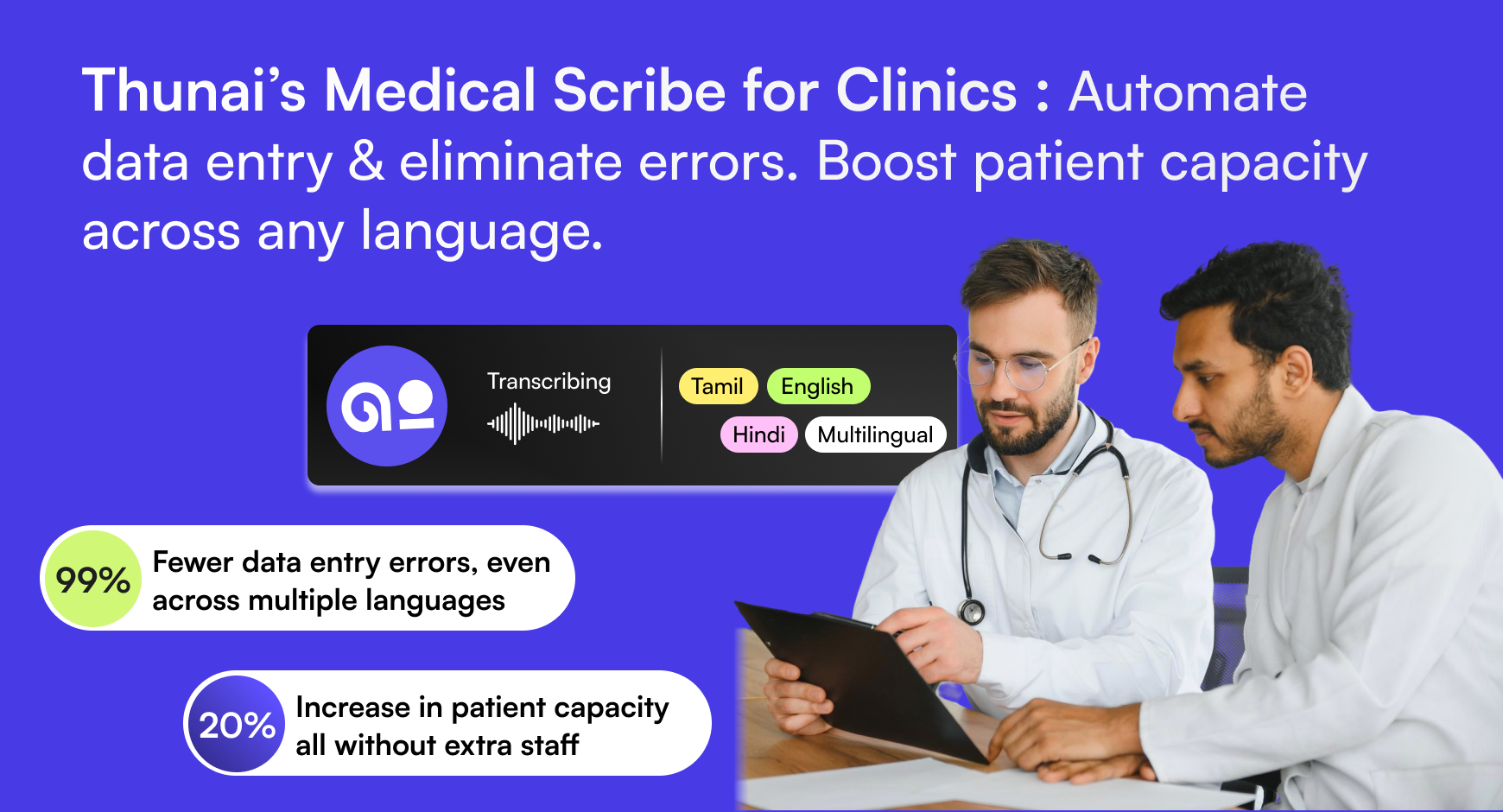
- Instant Data Tracking: Thunai listens during the visit. It organizes data right away. It separates what the patient says from what the doctor sees. This stopped the need for typing data later. It saved doctors over 2 hours a day.
- High Quality Language Engine: This was the main change. Thunai understood mixed languages. It handled English, Hindi, and Marathi in one sentence. It found the medical meaning in local words for pain. This lowered translation errors by 99%.
- Automated Data Sync: We removed split data storage. Thunai formats the clinical data. It sends the data to the main Google Sheet. This happens right after the visit. The front desk gets instant access. Specialists see the structured patient issues.
Conclusion
Thunai changed the clinic paperwork process. It used to be manual and full of errors. Now it is automated and accurate.
The platform gave language accuracy to help track symptoms instantly. After this, even went to sync data automatically, saving over two hours a day on files. With this, the clinic removed the clerical load and grew daily patient capacity by 20% without new staff
