
By 2026, more than 77% of insurance providers will have implemented AI technology in underwriting, claims, customer service, and agency operations. The time consuming nature of doing everything manually forces most insurance agents to spend several days on tasks that could otherwise be completed by AI within minutes.
The modern customer expects immediate quotes, efficient claim processing, and 24/7 availability. On the contrary, insurance agents spend an average of 2.5 hours every day working with paperwork and performing other administrative tasks.
This article will serve:
- Property & Casualty (P&C) Agents
- Agents for Life Insurance
- Agencies for Health Insurance
- Independent Insurance Brokers
- Insurance Enterprise Teams
We'll explore the 11 top AI tools for insurance agents in 2026 and evaluate their price, ROI, features, compliance, and practical use case scenarios.
What Is AI for Insurance Agents?
- In 2026, AI for insurance professionals refers to a dynamic world of agentic artificial intelligence and natural language processing that handles complex tasks without ongoing human work.
- Unlike the rigid automation of the past that followed set rules, these modern AI tools for Insurance agents can reason through doubt.
- They can find out what a client wants, learn from your past data, and give answers that look like human thought with high accuracy.
- In today's landscape, these AI tools for Insurance agents have three main parts. First is Conversational AI, which handles talk across voice, chat, and email to cut out wait times. Second is Predictive Analytics, used for guessing which clients are about to leave or which claims look like fraud.
- Third is Agentic AI, which is a set of goal-led systems that can actually finish the loop, meaning they do not just tell you a claim was filed, they check it against the policy and update the CRM.
- I see these AI tools for Insurance agents as a layer of info that helps your team. Because insurance agents have deep knowledge, they are in the best spot to check these AI results and find any wrong answers that might confuse a normal person.
- We are building a virtual workforce that supports human choice rather than taking it away.

What Are AI Tools for Insurance Agents?
Software solutions for insurance agents are programs that streamline routine activities and aid in customer communication, risk analysis, and decision making.
Types of AI Used in Insurance
Conversational AI
Handles customer interactions across calls, chat, SMS, and email through all mediums.
Agentic AI
Autonomously completes tasks such as:
- Filing claims
- Updating CRM records
- Scheduling follow-ups
- Triggering workflows
Predictive AI
Uses historical data to:
- Predict customer churn
- Detect fraud
- Improve underwriting
- Recommend policy upgrades
Why Insurance Agents Need AI Now
The urgency is not just about new ideas, it is about staying alive in a tight job market where 85 million roles could go empty by 2030. In our sector, we see people quitting at a rate of 40 percent because agents are drowning in desk work.
Old ways of working are breaking under the weight of complex products, and customers now expect 24/7 engagement through various AI tools for Insurance agents.
Licensed agents are currently wasting over 2.5 hours every single day on routine work. That is time they are not selling. When you pick the best AI tools for Insurance agents, you are not just saving time, you are changing the math of your business. Look at these verified results:
- Response Speed. AI can cut query times by 80 percent and service costs by 35 percent.
- Operational Savings. Automated claims work can cut manual effort by up to 73 percent, saving the industry 6.5 billion dollars every year.
- Revenue Growth. Agencies are seeing up to an 8X ROI within the first month by making sure every call is answered.
- Accuracy. Systems in underwriting are lifting pricing accuracy by 53 percent, protecting your money from bad risks.
By early 2026, 77 percent of insurers were already growing these AI tools for Insurance agents. If you are not one of them, your rivals are already doing in 12 minutes what takes your team 5 days.
1. Thunai AI
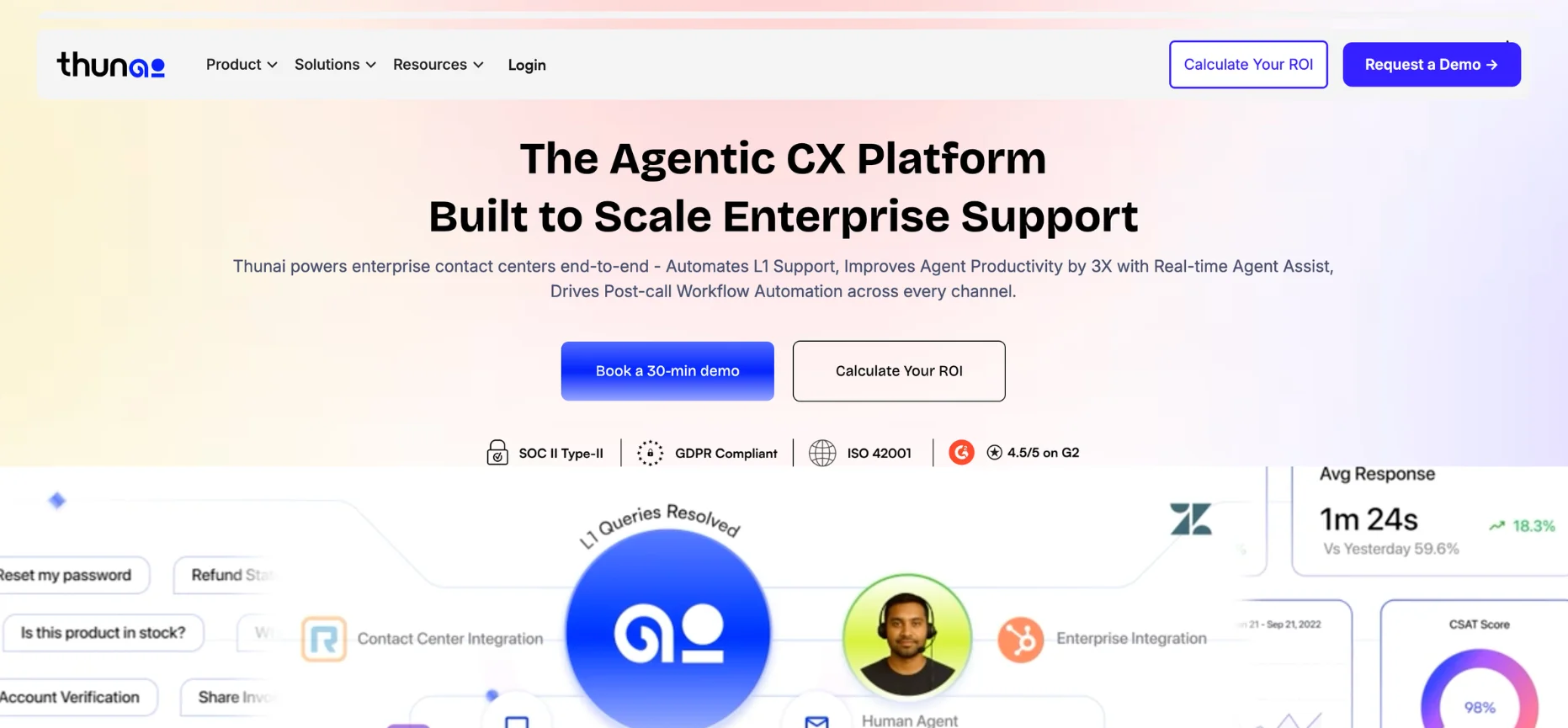
If I had to pick one tool that acts as the heart of a modern agency, it is Thunai AI. It works as a broad AI hub that bridges the gap between your messy data and real actions. While many AI tools for Insurance agents struggle with data silos, Thunai fixes this by putting everything into one place that gives your team the right answers fast.
Features:
- Thunai Brain. This part acts as a central smart knowledge system that takes in all your papers and records to make sure teams have the right info. It cuts out the messy data gaps that often cause many projects to fail by giving one single place for all your rules and guidelines.
- Agent Studio. This is a strong set of tools that lets you start using automated voice and text agents in just a few minutes of work. These agents use your knowledge base to handle many incoming questions and qualify what the client needs to make sure no lead is lost.
- Revenue AI. This part is a big change for growth because it looks at every call and email to find out how likely a deal is to close. It flags risks and spots buying signs that a human might miss to help your leaders move from data to a choice in a few seconds.
Pros:
- Thunai supplies a flat rate of 99 dollars a month for any number of users, which is better for growth than other AI tools for Insurance agents.
- It follows SOC 2 and GDPR rules, giving you the safe setup needed for a high-level business.
Cons:
- Initial Setup: While it is strong, the deep analysis for very specific insurance types might need a few days of work to match your style.
2. CloudTalk
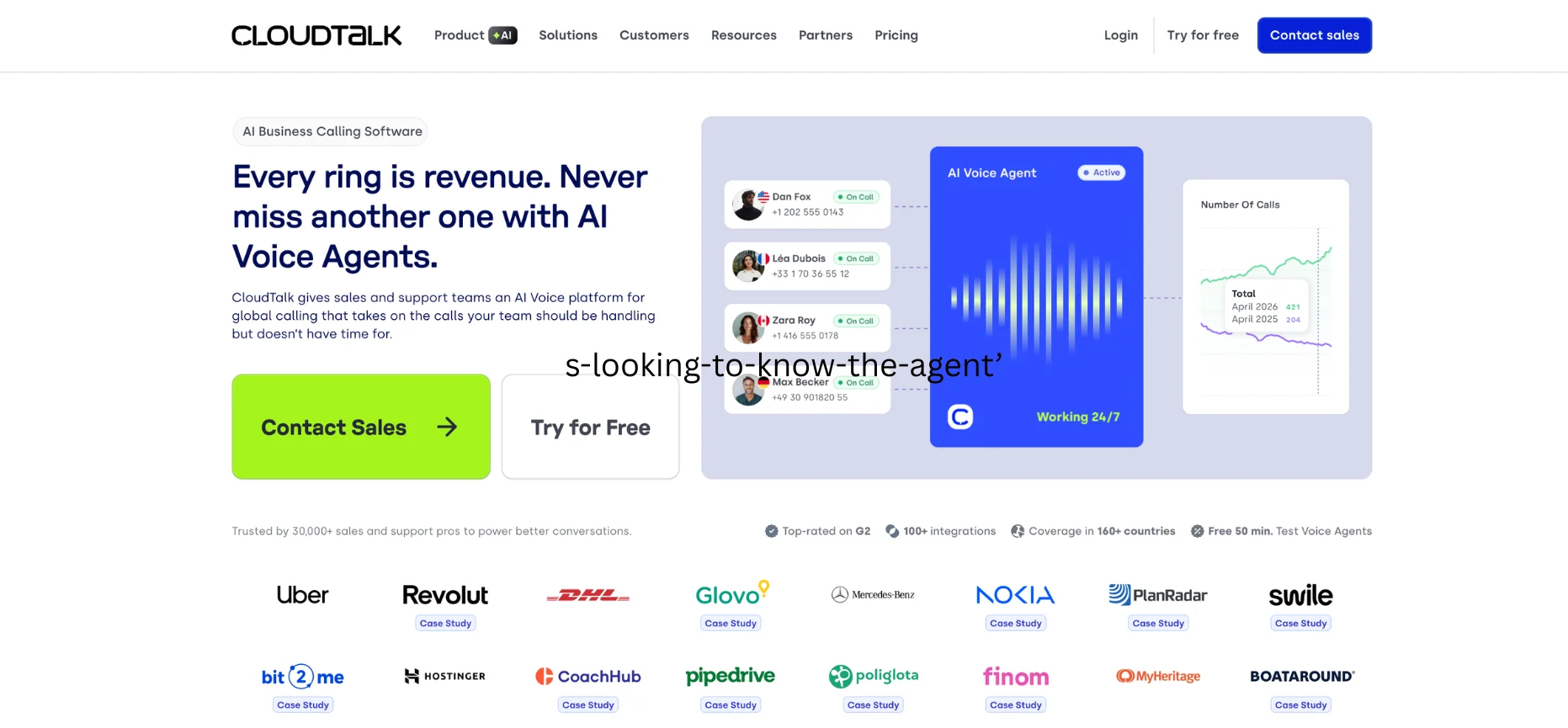
CloudTalk is a business talk platform made for top sales teams. While it is good for calling out, it works best when paired with a knowledge hub like Thunai to give the AI tools for Insurance agents needed for hard calls.
Features:
- Conversation Intelligence AI. This tool records and looks at every talk to show where agents need more help from their managers. It finds when agents do not follow the rules and gives the data needed to train them on complex policy details.
- Intelligent Call Routing. Using smart logic, this part makes sure that policyholders are sent to the right expert right away. It cuts out the tension of long wait times and being sent to the wrong person, which lifts the client experience.
- Power and Smart Dialer. This software lifts sales work by making dialing automatic, letting your team spend more time talking to people. It cuts out the manual work of typing in numbers, letting agents aim purely at building bonds and closing new deals. This tool is a key part for agencies looking to grow their sales without hiring more people.
Pros:
- Global Reach: It gives clear call quality across 160 countries, making it a good fit for agencies with clients in many places.
- Linking: It connects to Applied Epic and HubSpot to make sure every call is noted and no data is typed twice.
Cons:
- Setup Time: Some users might find it takes time to set up the complex routing for their AI tools for Insurance agents.
- Market Fit: It is made more for small to mid size agencies, so it might lack the deep brain power of an enterprise hub like Thunai.
3. LivePerson
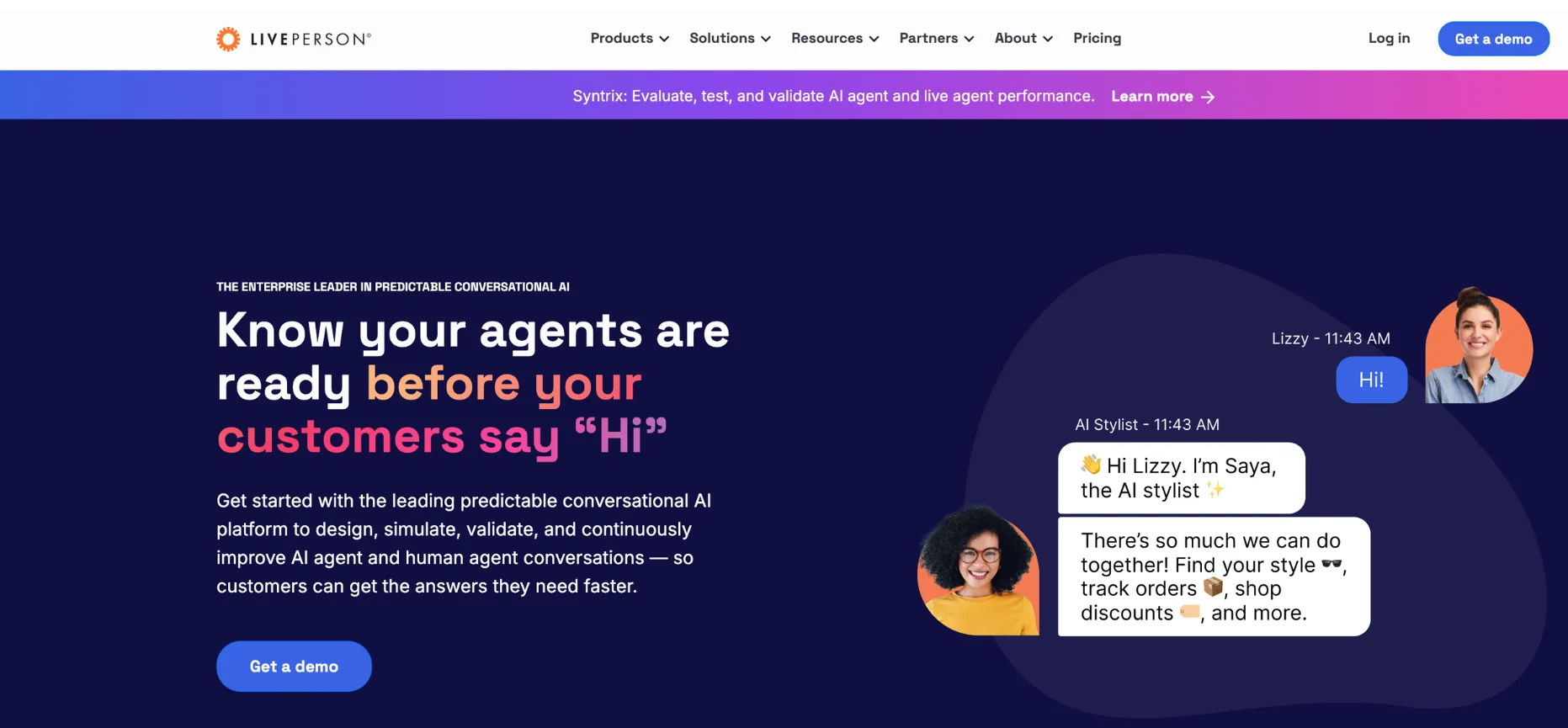
LivePerson aims at growing messages and voice talks with a deep aim at how the client feels. For my team, this is one of the solid AI tools for Insurance agents for finding the mood of a claimant.
Features:
- Real Time Sentiment Analysis. This part watches live talks to flag angry or high risk policyholders, giving agents the mood context they need. It lets your team soften hard claims situations and put the most worried clients at the top of the line. By finding human emotion, the AI helps your agency give a more kind service that builds client loyalty.
- Omnichannel Messaging. This tool brings together SMS, WhatsApp, and the web into one place, letting agents handle many questions at once. It keeps the same talk history through the whole customer path, making sure the client never has to say the same thing twice.
- Automated Appointment Scheduling. This part helps lead capture by letting the AI book meetings right into an agent's calendar. It makes sure that good prospects move through the sales path fast without the back and forth of manual email talk. By making the hand off to human agents automatic, you can make sure your producers stay on closing deals.
Pros:
- Strong Security: It uses EKM security ways to give a higher level of protection for private policyholder data.
- Growth: It is proven to manage 250,000 talks a month, making it a fit for very large business operations.
Cons:
- Deep Detail: The complexity of the routing can be a burden for smaller agencies that do not have their own IT team.
- Data Needs: It needs a lot of data to learn how to find moods, unlike Thunai which can start using your papers right away.
4. InsuredMine
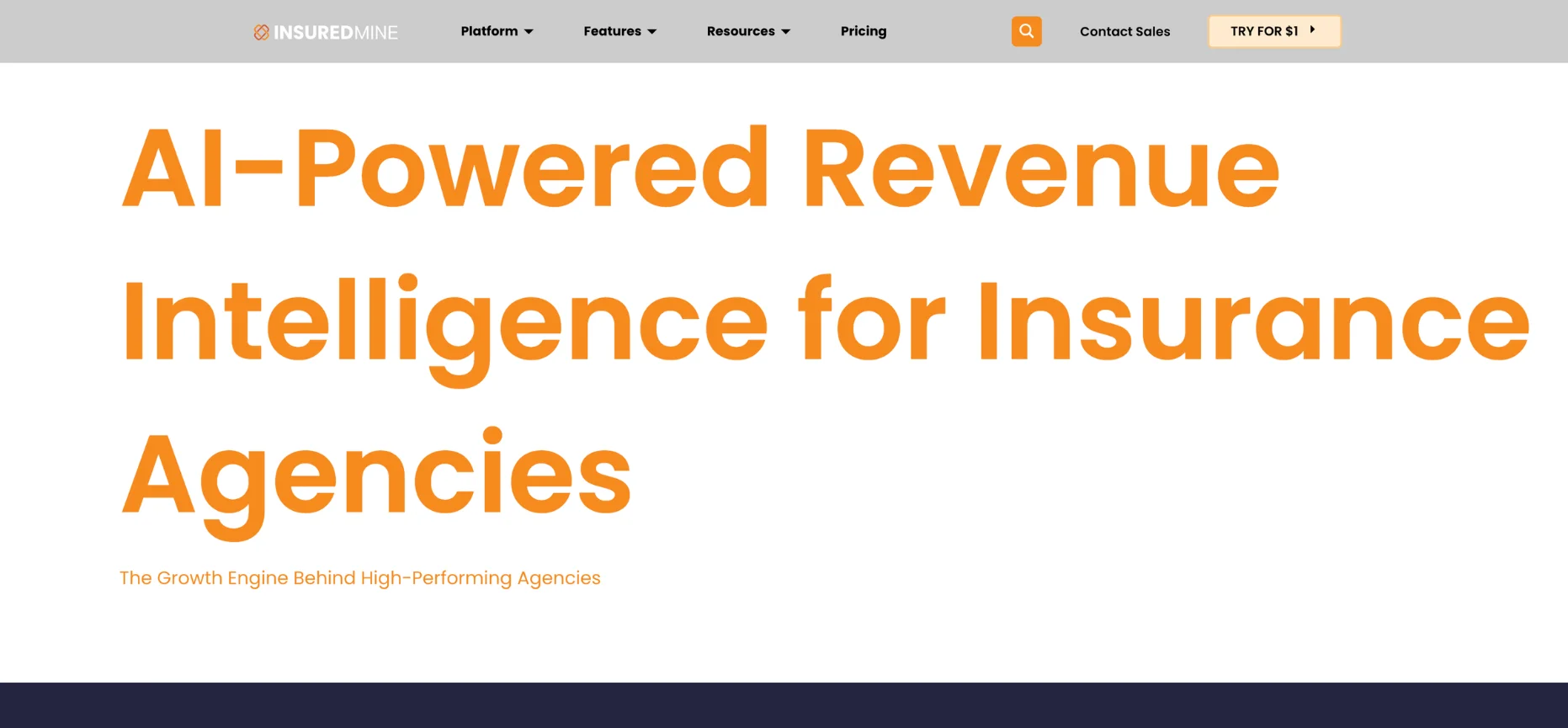
InsuredMine is an AI-based customer engagement platform specifically created for insurance agencies. This system enables insurance agents to automate their correspondence, increase the rate of renewals, and streamline lead management.
Features:
- Customer Engagement Using Artificial Intelligence: Enables automated email, text, and other kinds of correspondence with the policy holders.
- Renewal Management: Provides an alert to the user and makes sure that nothing expires.
- Lead and Pipeline Management: Provides management of leads and priorities opportunities.
Pros:
- Built specifically for insurance agencies.
- Strong automation for renewals and customer retention.
Cons:
- Advanced features may require onboarding.
- Limited claims automation compared to enterprise platforms.
5. Zendesk Answer Bot
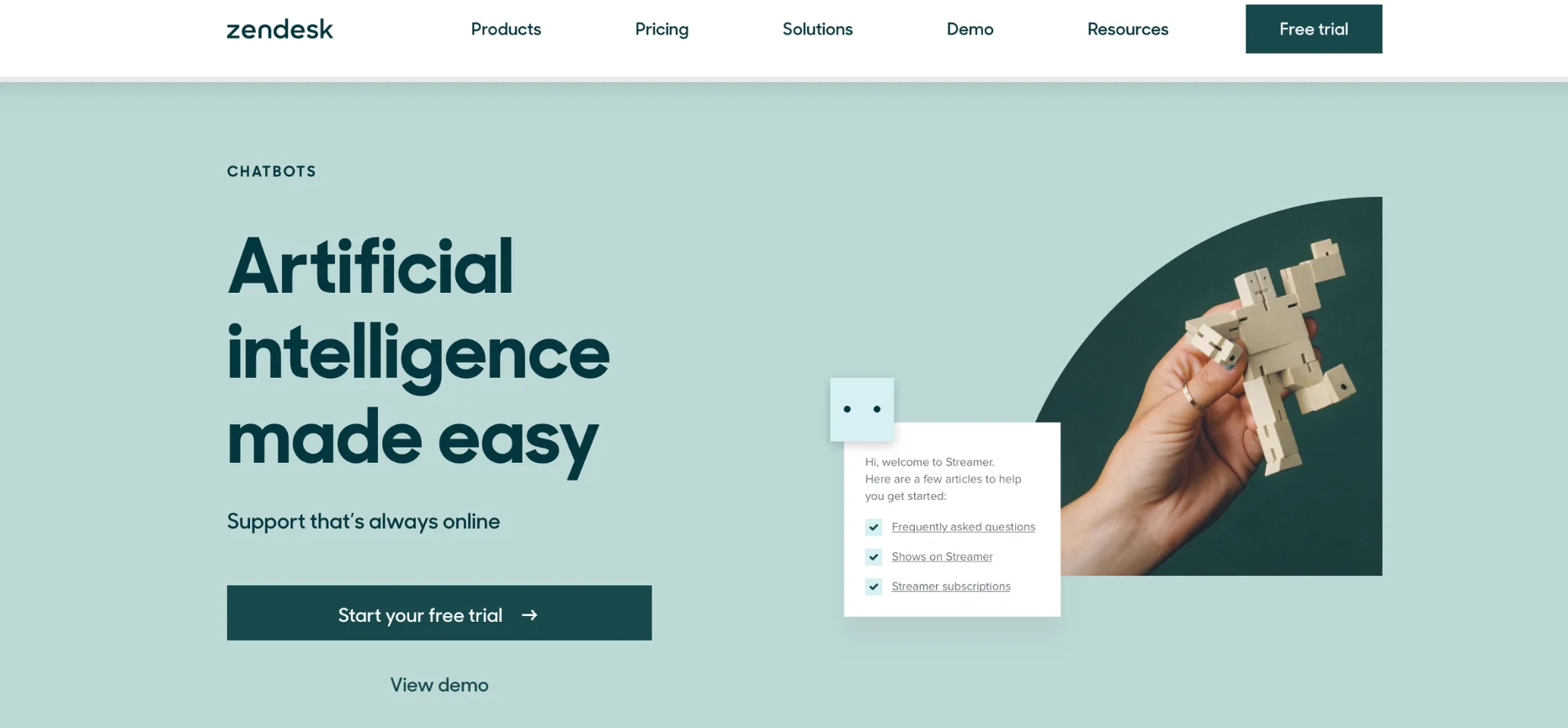
Zendesk Answer Bot is part of a broad world made to solve routine questions using an agency's existing knowledge base. It is one of the most used AI tools for Insurance agents for cutting ticket numbers.
Features:
- Knowledge Base Linking. This part uses machine learning to pull up help papers from your records, letting clients help themselves. It solves basic questions like payment dates or paper requests without a person, which helps to lower your costs.
- AI-Powered Flow Builder. This visual tool lets your team design automated talk paths without code, making it easy to set up logic. You can match the AI's answers to different types of business or policy updates, giving a custom experience for every user.
- Automated Issue Detection. This part watches incoming tickets to find trending problems before they get big, giving your leaders real data. It lets you spot blocks in your service or potential issues with a carrier's claims way before they hurt your scores. This level of visibility is key for keeping your business as a trusted partner for your clients.
Pros:
- Ready World: It is easy to pick up for teams already using Zendesk, cutting the drag of starting new technology.
- Speed: Users say they see a 40 percent drop in response times, which is a key way to keep clients happy.
Cons:
- Limited Range: It struggles with requests that go past basic FAQs, meaning a person must take over for anything hard.
- Rising Cost: The seat based pricing can get very high as you grow, unlike the flat rate model of Thunai AI.
6. Gradient AI
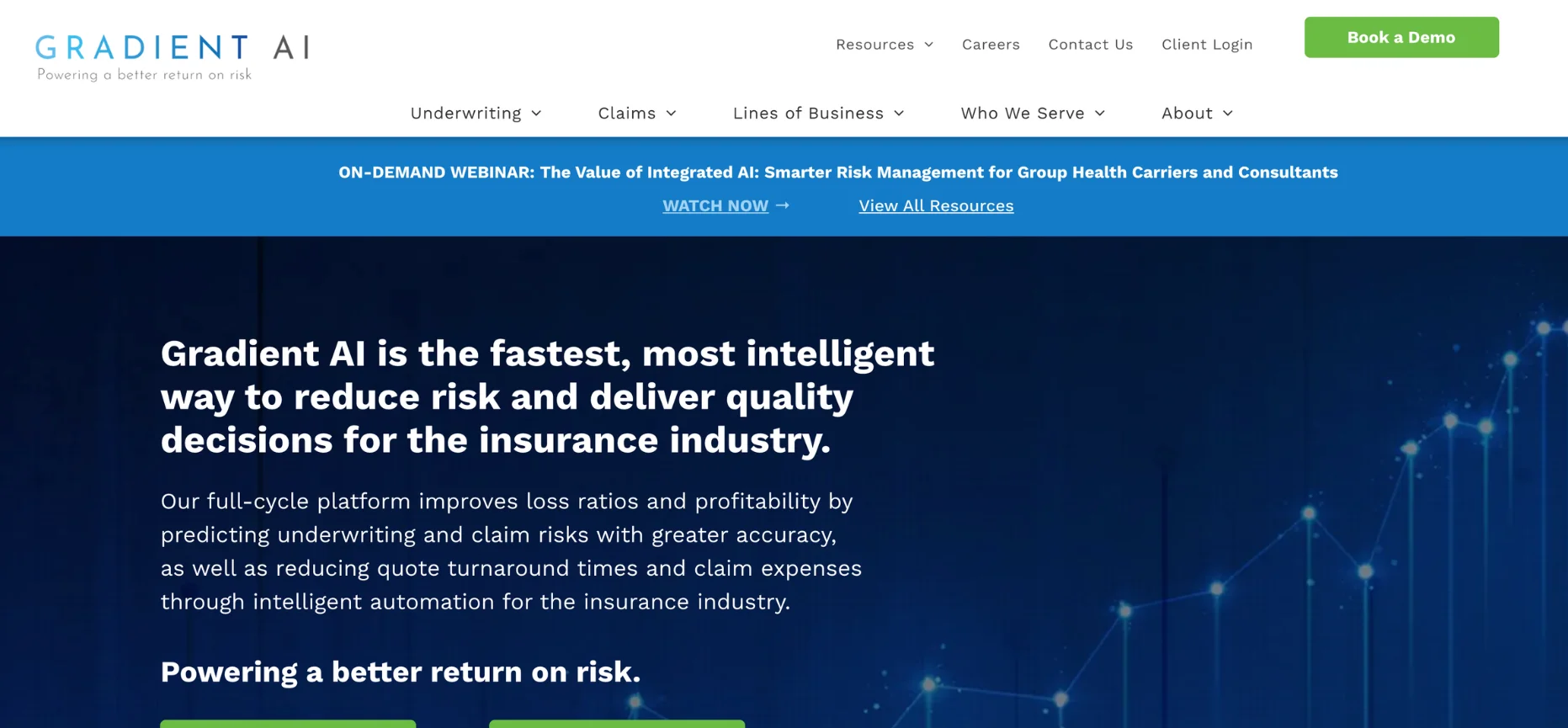
Gradient AI is an insurance-oriented predictive analytics solution that leverages artificial intelligence to enhance underwriting, claim management, and fraud prevention. This solution is perfect for agencies and insurers who wish to base their decision-making on data.
Features:
- Predictive Underwriting Model: Improves the accuracy of risk and pricing.
- Claim Risk Score: Identifies costly and fraudulent claims before they become problematic.
- Data Driven Decisions: Provides useful insights for underwriters and claims managers
Pros:
- Strong predictive analytics for insurance operations.
- Helps improve risk selection and reduce losses.
Cons:
- Primarily designed for carriers and larger insurance organizations.
- Requires quality historical data for optimal results.
7. Botsify
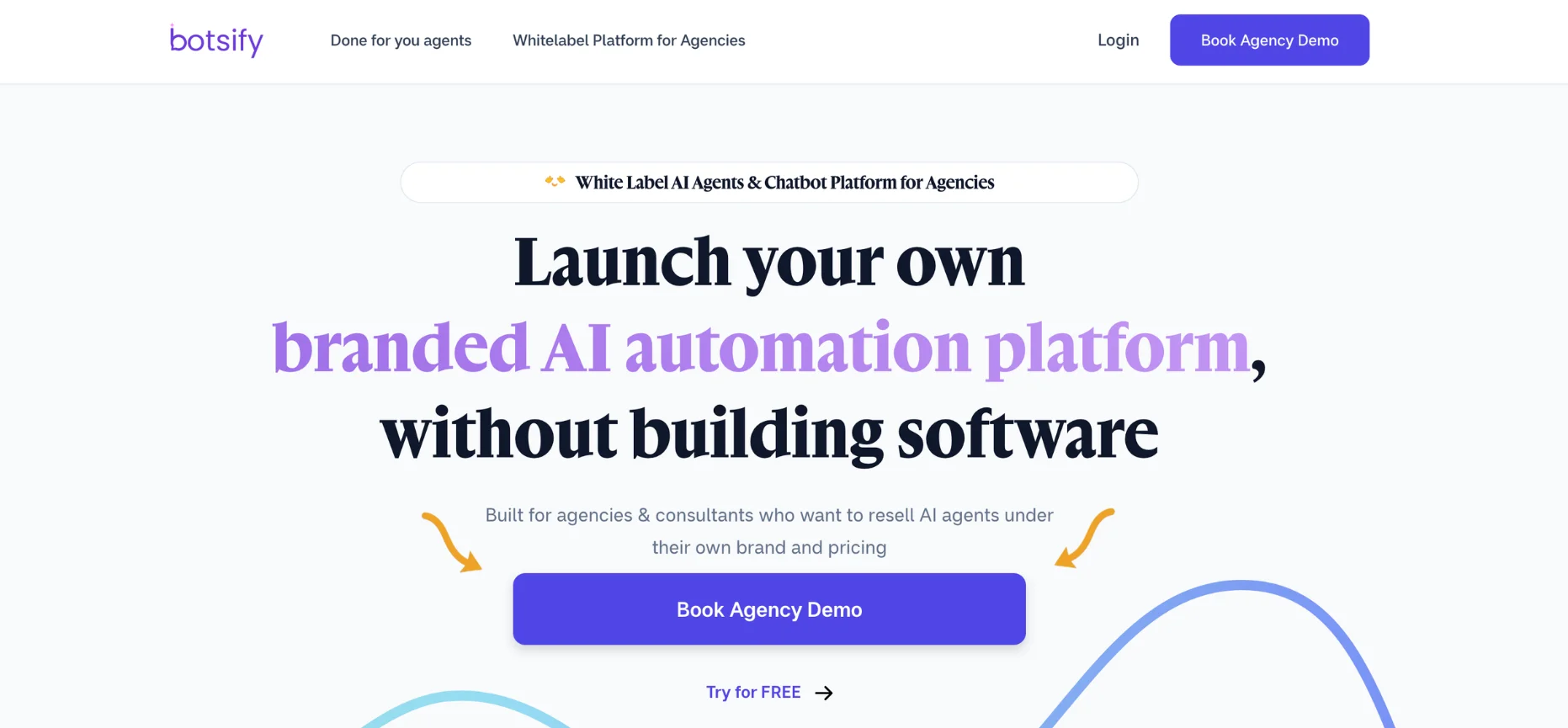
Botsify is a user-friendly chatbot platform that gives pre made insurance templates. While I like its simplicity, I suggest it mainly for agencies just starting to look at AI tools for Insurance agents.
Features:
- Pre built Insurance Templates. This library has ready talk flows for leads, sales, and claims, saving you hours of setup work. It lets you start a working chatbot fast, giving quick value to your digital marketing and sales efforts. These templates are made to handle the common questions that insurance buyers have every day.
- Automated Lead Qualification. This part takes in specific client details and what they want before sending them to the right team. It makes sure that your sales team only spends time on good prospects who are ready to talk about a specific price. By acting as a 24/7 digital desk, the AI makes sure your agency is always taking in new business.
- Human Handover Option. This part lets a live agent jump into a talk the second a question gets too hard for the AI to handle. It makes sure the client has a smooth experience, keeping the human touch that is so key for building trust. This hybrid way gives the speed of automation with the knowledge of your experts, creating a good service balance.
Pros:
- No Code Builder: The drag and drop tool is perfect for users who are not tech experts, letting managers fix bot answers fast.
- Lead Capture: It is made for proactive talk on social media and websites to take in leads every hour of the week.
Cons:
- Regular Work: It needs regular manual updates to make sure the AI knows all the changing policy terms and rules.
- Plan Gaps: Many of the best features are locked behind high cost plans, which can be hard for a new business.
8. Arteria AI
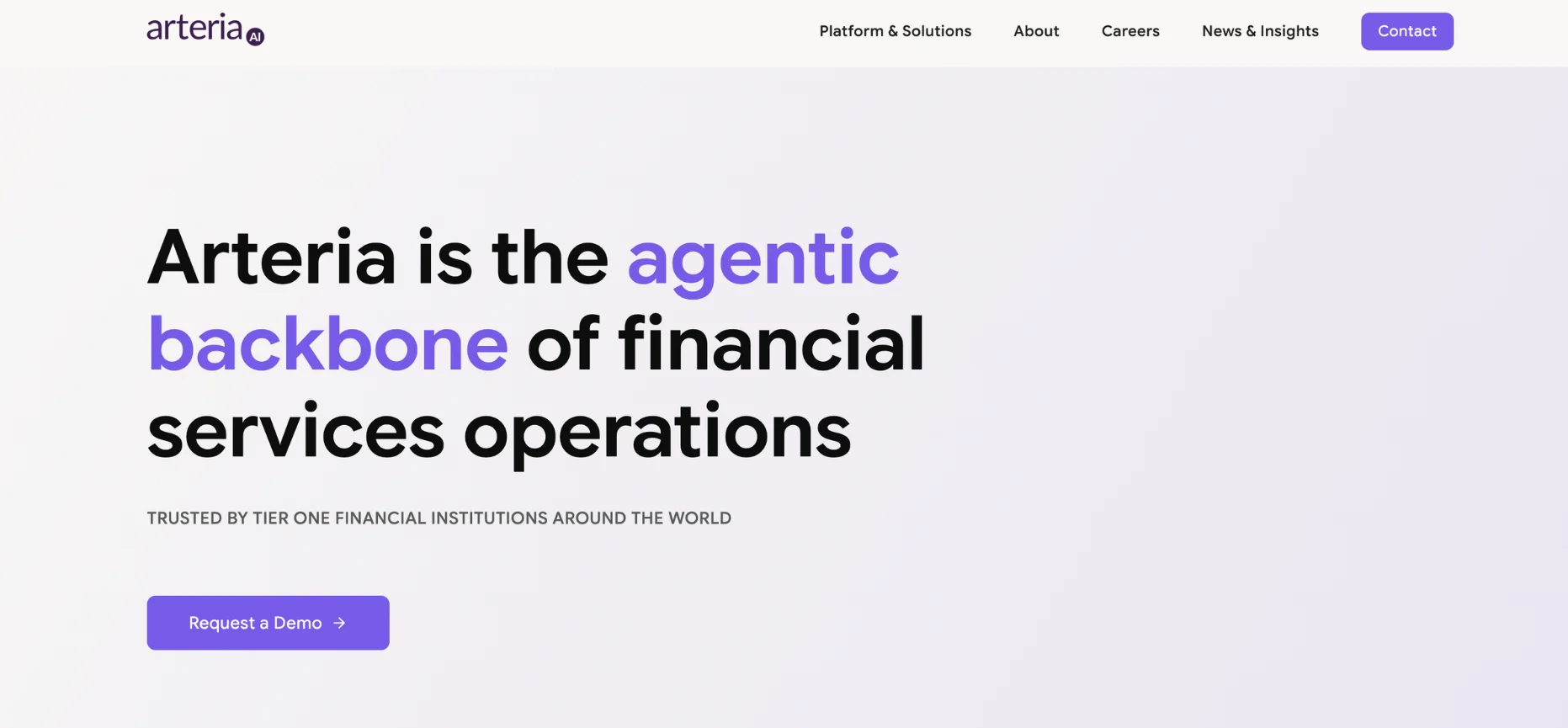
Arteria AI aims at the document heavy side of insurance, which is contracts, compliance, and risk. It is a motor for excellence in underwriting and one of the best technical AI tools for Insurance agents.
Features:
- Contract AI Drafting: This part uses machine learning to make the creation and review of complex policy papers automatic and fast. It builds first drafts from many templates based on terms you have used before and your specific business rules. This cut in manual work helps your legal and ops teams move from a contract to revenue at a much faster pace.
- Automated Policy Comparison: This tool lets agents find gaps in coverage or limits across different carrier papers with high precision. It cuts out the need for hours of manual line by line review, making sure your clients get the most correct advice.
- Arteria Flow Analytics: This dashboard gives real time visibility into where every paper is in the sign off cycle, letting you spot blocks. It gives your leaders the data needed to trim the ways you work and solve delays right away so no sale is held up.
Pros:
- Curbing Risk: It lifts underwriting accuracy and lowers the chance of human error that can lead to high cost claims.
- Settlement Speed: It makes paper review and payouts move much faster, turning weeks into a few hours.
Cons:
- Setup Effort: It is not a plug and play tool, it needs a real effort to connect to your existing paper systems.
- Learning Curve: The high level of detail means smaller agencies might find it too much for their simple daily needs.
9. HubSpot Smart CRM
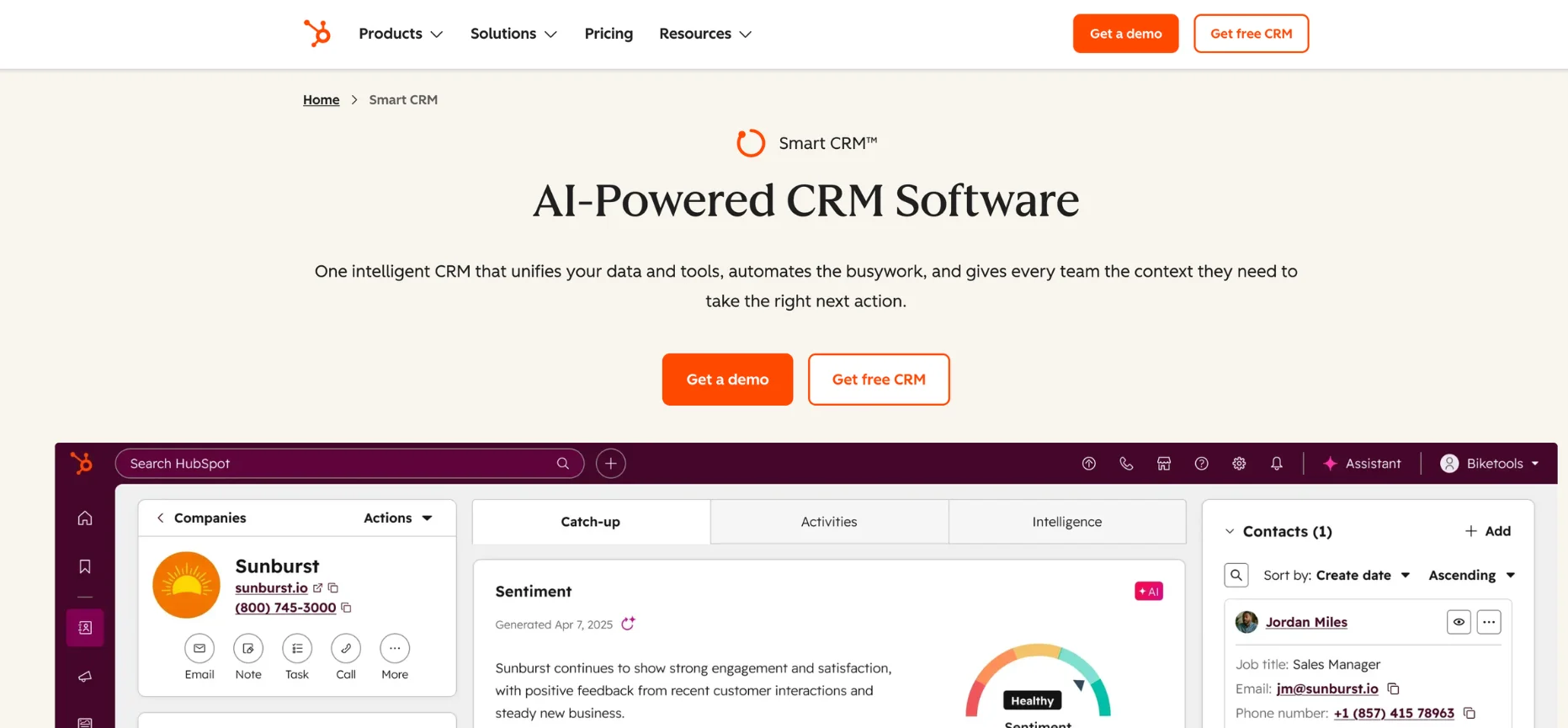
HubSpot is more than a database, it is an AI powered engine for growth. In my view, its greatest part is the Breeze AI that unifies the platform into a set of AI tools for Insurance agents.
Features:
- Breeze AI Agents. These assistants help your team by making sales searches and lead finding automatic through an AI agent. They handle basic service questions 24/7, making sure your clients always get a fast response when they need help.
- AI Conversation Summaries. This tool builds recaps of every call and email automatically, making sure agents always have the full story. It saves your staff hours of manual notes and makes sure client records are complete for the people who check your rules. By giving instant info on past talks, it helps your team give a more professional experience to every client.
- Predictive Lead Scoring. Using past data and buying signs, this part puts your pipeline in order by finding which prospects are ready to buy. It lets your sales team aim their energy at the hot leads, which lifts your agency's overall conversion rates.
Pros:
- Full View: It gives a total history of a lead from the first click to the final claim, which is key for custom service.
- Simple UI: It is praised for being easy to use, which helps your staff pick it up fast without needing to be tech pros.
Cons:
- Plan Gating: Many of the best automation and guessing tools are only in the high cost tiers of the software.
- Non Specific: It is not made just for insurance, so you will need to spend time setting up the steps for a policy lifecycle.
10. Kenyt.AI
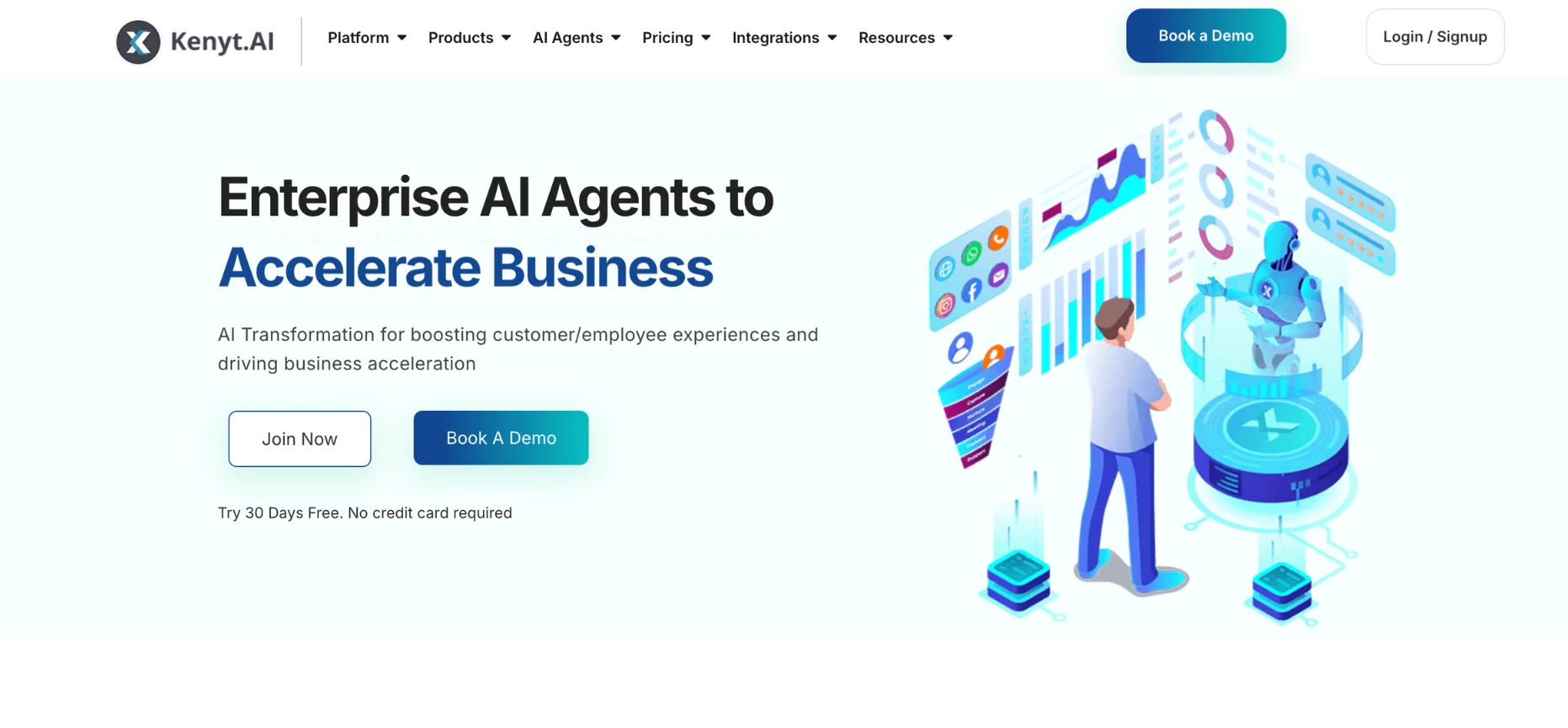
Kenyt.AI gives smart virtual assistants made for insurance policy questions and 24/7 claims work. It is a cost effective choice for those looking for specific AI tools for Insurance agents.
Features:
- Automated Claims Submission. This part lets clients send in claim photos and details through the chat, which are then sent to the triage team. It makes the first notice of loss move faster and cuts the paper burden for your agents, making for quicker payouts.
- Personalized Recommendations. By looking at client data, this tool suggests policy options based on age, risk, and past history. It tells users about products they may have missed, acting as a virtual sales buddy that drives more policies per home.
- 24/7 Virtual Support. This assistant gives round the clock help for urgent matters like a crash or a medical need, making sure help is always there. It cuts out the wait for Monday morning, giving instant answers to coverage questions when your clients need them most.
Pros:
- Cutting Work: It makes routine paper checks and pricing automatic, letting your human agents stay on hard advisory roles.
- Engagement: It gives responses that match the context and feel kind, moving away from the robotic style of old bots.
Cons:
- Learning Time: Like most specific bots, it needs a period of learning with your agency's data to reach top performance.
- Plan Limits: Some of the best parts, like finding moods, are only in the high tier premium plans of the software.
11. Five Sigma
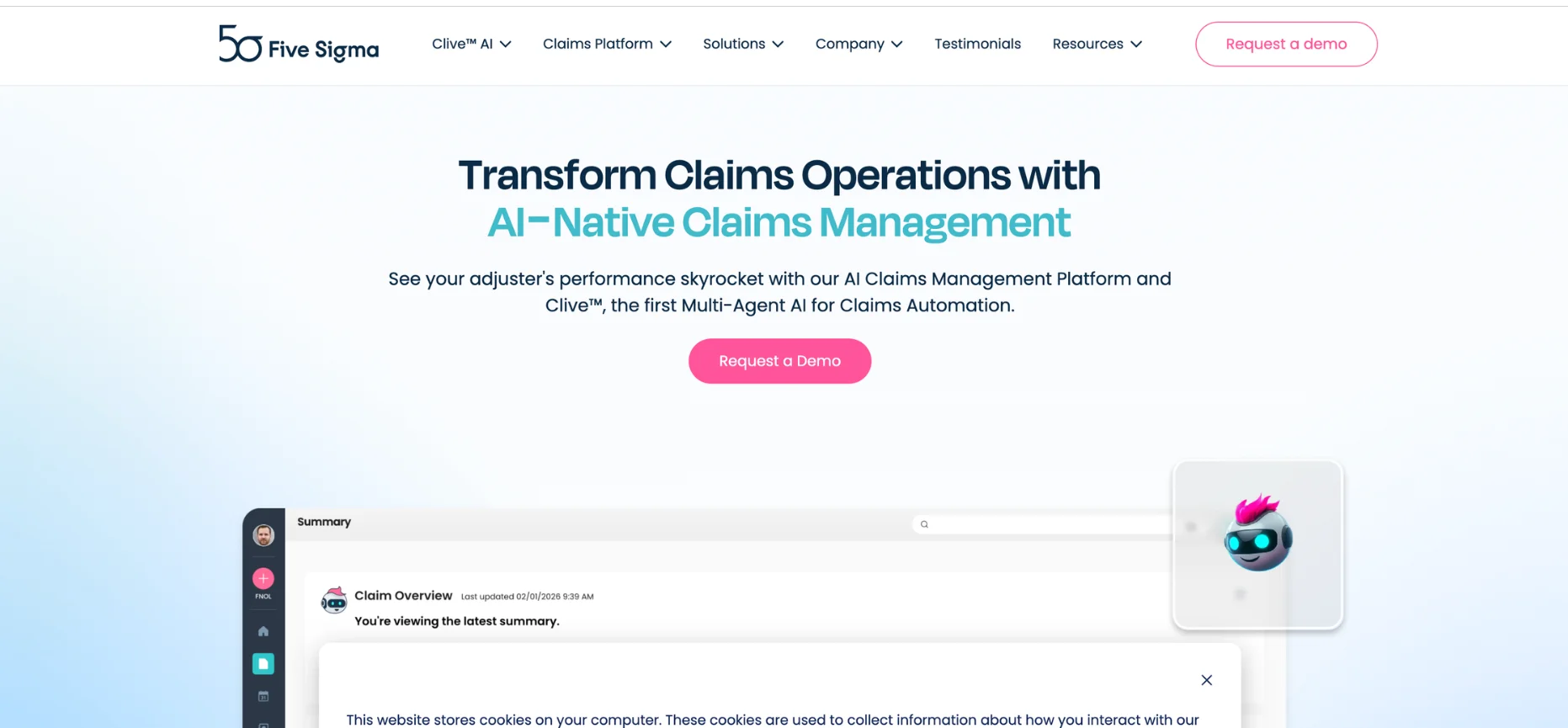
Five Sigma is an AI-powered claims management platform that helps insurers automate claims processing and improve customer communication. It is a strong choice for agencies looking to reduce manual work and speed up settlements.
Features:
- Automated Claims Workflow: Automates claim intake, assignments, and follow-ups to reduce processing delays.
- AI Fraud Detection: Flags suspicious claims and identifies potential fraud risks early.
- Customer Communication Automation: Sends real-time claim updates and notifications to policyholders.
Pros:
- Speeds up claims processing and improves efficiency.
- Provides real-time visibility into claims performance.
Cons:
- Better suited for large insurers and enterprises.
- Requires integration effort during setup.
How to Choose the Right AI Tool for Your Insurance Agency
Consider:
Team Size
- Small Agency (1 to 20): Botsify, Thunai
- Mid-Market (20 to 100): CloudTalk, HubSpot
- Enterprise (100+): Thunai, LivePerson, Arteria AI
Use Case
- P&C → Claims automation
- Life Insurance → Lead nurturing
- Health Insurance → HIPAA-compliant support
AMS Integrations
Look for support with:
- Applied Epic
- EZLynx
- Vertafore
Compliance Requirements
- HIPAA
- GDPR
- SOC 2
- State insurance regulations
High level Strategy: Moving toward Intelligence
The shift toward an AI native business needs more than just buying software, it needs a change in your team's mindset. As a leader, your job is to build a data first culture where staff are trained to see AI as a way to reach excellence. When you look at AI tools for Insurance agents, you must look past the features and into the business logic.
Consolidation beats Complexity
- In 2026, the biggest change is moving from a mess of co-pilots to a total platform.
- Insurers often work with a patchwork of systems held together by weak links, which is a drag on growth.
- My advice is to simplify, making your tech stack lean and working with partners who can show true linking is the only way to grow without new costs.
- This is where Thunai AI stands out, it does not just add a bot, it adds a layer of process intelligence that unifies your agency.
Closing the Loop
- Guessing power is not enough in 2026. Real value comes when that info triggers a real act.
- For example, if your Revenue AI flags a client who might leave, the system should not just send a note, it should start an outreach plan or flag a priority call for the agent.
- We are building systems that people trust to act for them through advanced AI tools for Insurance agents.
The Human Touch in an AI Era
- As AI handles more of the boring work, the human touch becomes your best way to win.
- AI cannot build a bond based on trust or make a choice in a hard edge case.
- By using AI tools for Insurance agents like Thunai AI or HubSpot to handle the time wasted on desk work, you are buying your agents the time they need to be truly human with their clients.
Conclusion: Our Pick — Thunai AI
If you're looking for one platform that combines conversational AI, agentic automation, knowledge management, and revenue intelligence, Thunai AI is our top recommendation for insurance agencies in 2026.
Instead of adding another disconnected tool, Thunai creates a unified intelligence layer that helps agents work faster, answer customers instantly, and convert more opportunities into revenue.
Ready to transform your insurance operations with AI? Book a free demo and see Thunai in action.
FAQs on AI Tools for Insurance Agents
What AI tools do insurance agents actually use?
Insurance agents commonly use platforms like Thunai, CloudTalk, HubSpot, Zendesk, LivePerson, and Five Sigma. These tools help automate customer support, claims processing, lead management, and agent productivity.
Can AI replace insurance agents?
No, AI is designed to assist rather than replace insurance agents. It handles repetitive tasks so agents can focus on advisory services, relationship building, and complex customer needs.
How much does insurance AI cost?
Insurance AI solutions range from affordable plans starting around $49 per month to enterprise platforms with custom pricing. Costs vary depending on features, integrations, and agency size.
What is Agentic AI in insurance?
Agentic AI refers to systems that can autonomously perform multi-step tasks such as claims processing, policy updates, and CRM workflows. It goes beyond answering questions by taking actions on behalf of users.
Is AI HIPAA compliant?
Many insurance AI platforms offer HIPAA-compliant features and security controls to protect sensitive customer data. However, agencies should always verify compliance before implementation.
How fast can AI be deployed?
Deployment timelines can range from a few hours for simple chatbots to several weeks for enterprise-grade implementations. The speed largely depends on integrations and customization requirements.
What is the best AI for insurance claims?
Thunai and Five Sigma are among the leading platforms for claims automation and customer communication. They help reduce manual work and accelerate claims processing.
Does AI work for independent agents?
Yes, independent agents can benefit significantly from AI by automating routine tasks and improving customer response times. Smaller agencies often see some of the fastest returns on investment.
How does AI answer policy questions accurately?
AI uses knowledge bases, natural language processing (NLP), and retrieval systems to provide accurate responses. Modern platforms also continuously learn from agency data and documentation.
What ROI can agencies expect from AI?
Many insurance agencies report between 3X and 8X ROI within months of implementation. Savings typically come from reduced administrative work, faster response times, and improved operational efficiency.


.png)