

Do you know what most buyers ask before they sign a ServiceNow contract? "Do we really need the biggest tool on the market?"
The question comes up because most teams don't leave ServiceNow for a lack of features.
Aside from this, the price is also hard to predict, the setup takes months, and every change seems to need a developer.
Those difficulties add up quickly. ServiceNow's module-based licenses, reliance on outside partners, and custom code can slow down mid-sized and large IT teams.
Before comparing ServiceNow competitors, it helps to understand what a help desk is and how it fits into enterprise workflows. From there, match the tool to how your IT team works.
Consider AI-native tools that resolve tickets without an agent at all. To help you decide, here are 12 other alternatives to ServiceNow, compared by price and capability.
Quick Picks
Side-by-Side Comparison
Why Teams Look for ServiceNow Alternatives
Teams rarely leave ServiceNow because it lacks features. As covered in our ServiceNow review, the frustration comes from unpredictable costs, long setups, developer dependence, and forced upgrades. Four pain points come up again and again.
Four pain points come up again and again:
- License cost at scale
- Long setup
- Developer dependence
- Over-buying and forced upgrades
1. License cost at scale.
ServiceNow doesn't publish a price list. You get a custom quote, so you don't see the full cost until late in the talks. Requesters are free, but you pay for every fulfiller, approver, and stakeholder.
Add a new department and the bill grows fast. Admins say it takes real effort just to learn how subscription units differ from configuration items.
2. Long setup.
A ServiceNow rollout is closer to a software project than a SaaS setup. Six to twelve months is common. Certified partners are almost a must, and their hourly rates make scope creep easy.
Users report implementation costs anywhere from half of the first-year license to five times that. By launch day, your needs may have changed.
McKinsey and Oxford found large IT projects run 45% over budget on average, which is why a months-long rollout carries real risk.
3. Developer dependence.
The platform leans on custom scripts, workflow setup, and complex database links. Regular IT admins can't run it without heavy training.
Many firms hire full-time developers at $150 to $200 per hour. The subscription turns into a permanent payroll cost.
4. Over-buying and forced upgrades.
Many teams just want ticket routing and asset tracking. One practitioner said using ServiceNow for a small team is like using a surface-to-air missile to kill a squirrel.
Add-on rules make it worse. The push to include the Impact support package acts like a flat 10% price hike at renewal. You pay for advice you may never use.
ServiceNow Pricing: What It Actually Costs
The monthly seat price is only part of the story. Real cost includes the license, setup, add-on modules, and ongoing dev support. Rivals often win mid-market deals just by being clear about price.
Industry data puts the median yearly contract for a mid-market deployment near $124,364. Big global rollouts often pass $1 million a year.
- Foundation: about $70 to $100 per fulfiller per month. It covers incidents, standard requests, and basic asset management.
- Advanced: about $115 to $160. It adds problem and change management, plus basic AI routing.
- Prime: about $160 to $200 or more. It unlocks custom AI skills, DevOps change speed, and wider automation.
Licenses are only a slice of year one. A 50-agent rollout might cost $90,000 in software. It could then need another $300,000 to $400,000 in services. IT Operations Management and Customer Service Management cost extra, often billed by monitored node or user.
Now Assist AI adds another twist: metered billing. Base usage is included, but heavy generative AI use triggers overage fees. A fixed-seat contract now has a variable part.
The 12 Best ServiceNow Competitors
Match the ServiceNow competitor or alternative to how your IT team works. A cloud-native startup that wants dev speed has different needs than a regulated manufacturer with old on-premises hardware.
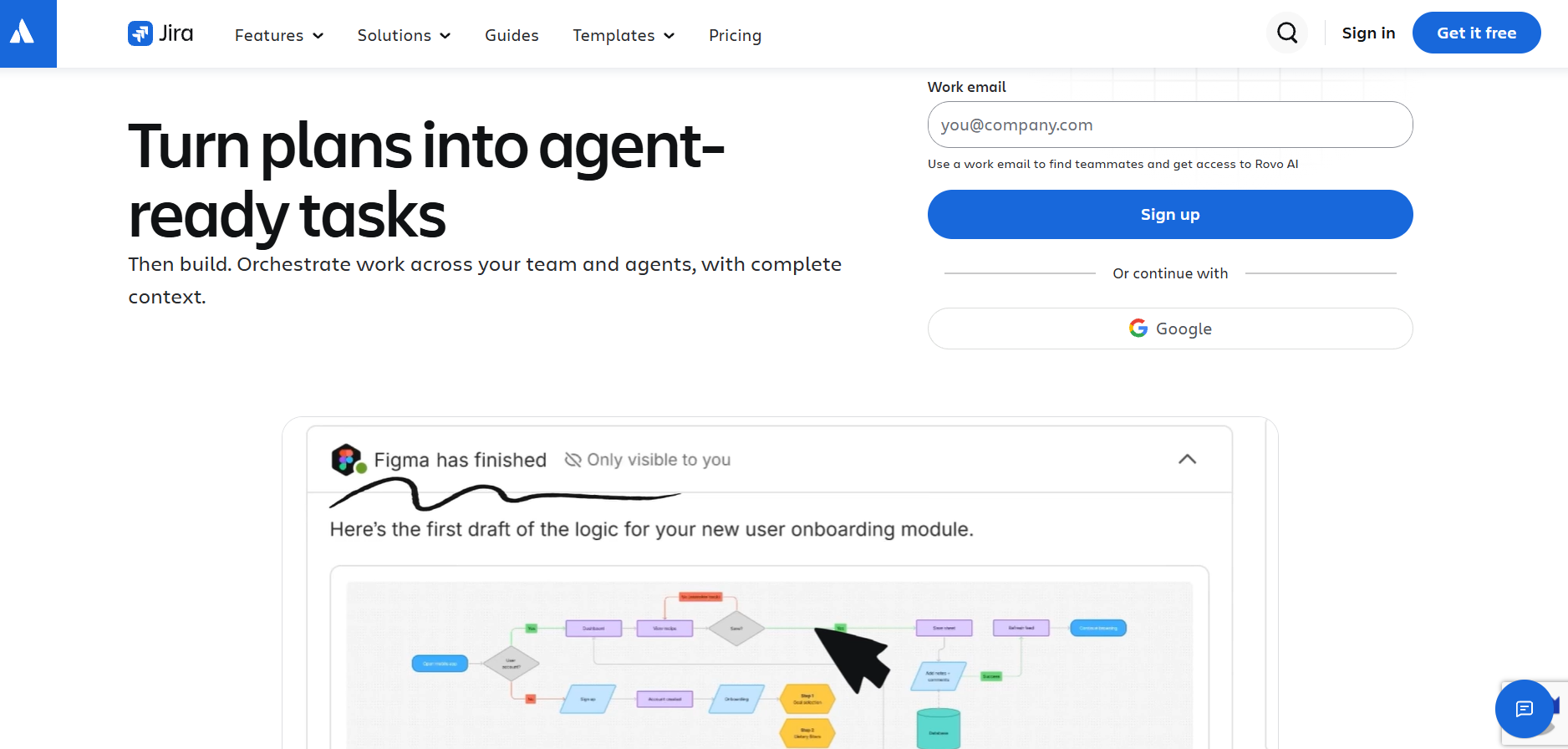
Jira Service Management - Best for DevOps and engineering teams
What it is
Jira Service Management is Atlassian's service management product for handling requests, incidents, and changes.
Teams use the ServiceNow competitor as a single front door where employees and customers raise issues and track them to resolution.
Features
- Jira Service Management brings the Atlassian world into IT support by turning Jira's issue tracker into an ITIL-aligned service desk.
- Native integration with Jira Software and Confluence lets IT and DevOps share one data model.
- Incident tickets can be linked straight to a developer's sprint board, with no middleware needed.
Pros
- Pricing is clear, and setup is quick compared to ServiceNow.
- Shared data across IT and DevOps means an incident traced to a bug can go directly to the developer who needs it.
Cons
- Huge, tightly linked enterprise setups are a struggle.
- Flat issues linked to an Assets schema lack the inheritance of ServiceNow's Common Service Data Model, making large CMDB tracking harder to maintain.
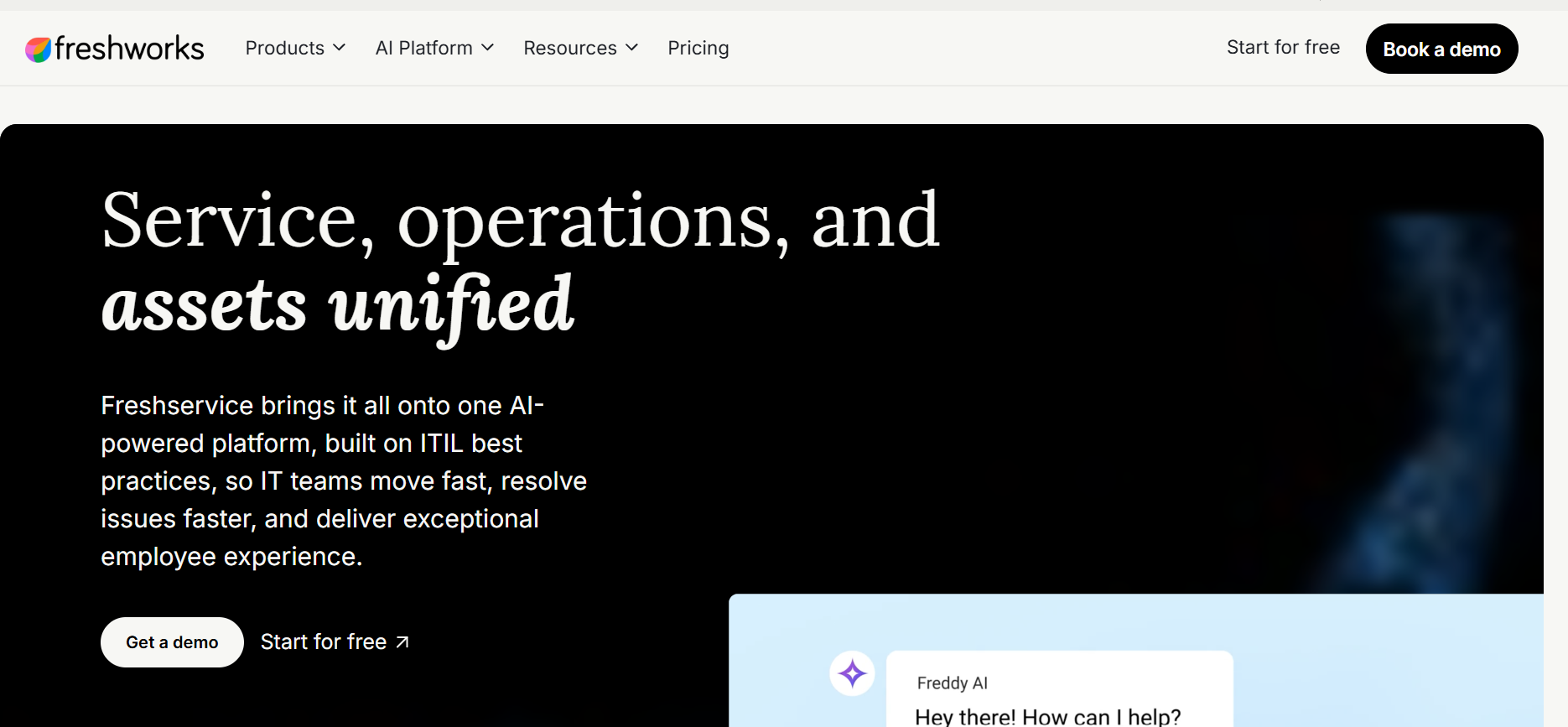
Freshservice - Best for Mid-market teams that want ITIL now
What it is
Freshservice is Freshworks' cloud-based IT service management product for handling employee requests, incidents, and IT assets.
Companies that want a structured help desk without a heavy enterprise platform often shortlist this top ServiceNow competitor.
Features
- Freshservice, from Freshworks, is a cloud service management and asset tool built for mid-market speed.
- Core ITIL is delivered without custom code or consultants.
- Regular IT staff can build workflows, set SLAs, and manage assets with drag-and-drop.
Pros
- Speed is a major advantage, with teams often going live in two to six weeks versus six to twelve months for legacy suites.
- The learning curve is gentle, so workflows can be built without specialist skills.
Cons
- Deep IT Operations Management is lacking.
- Huge hybrid-cloud shops will miss automated service mapping, event management, and advanced discovery probes.
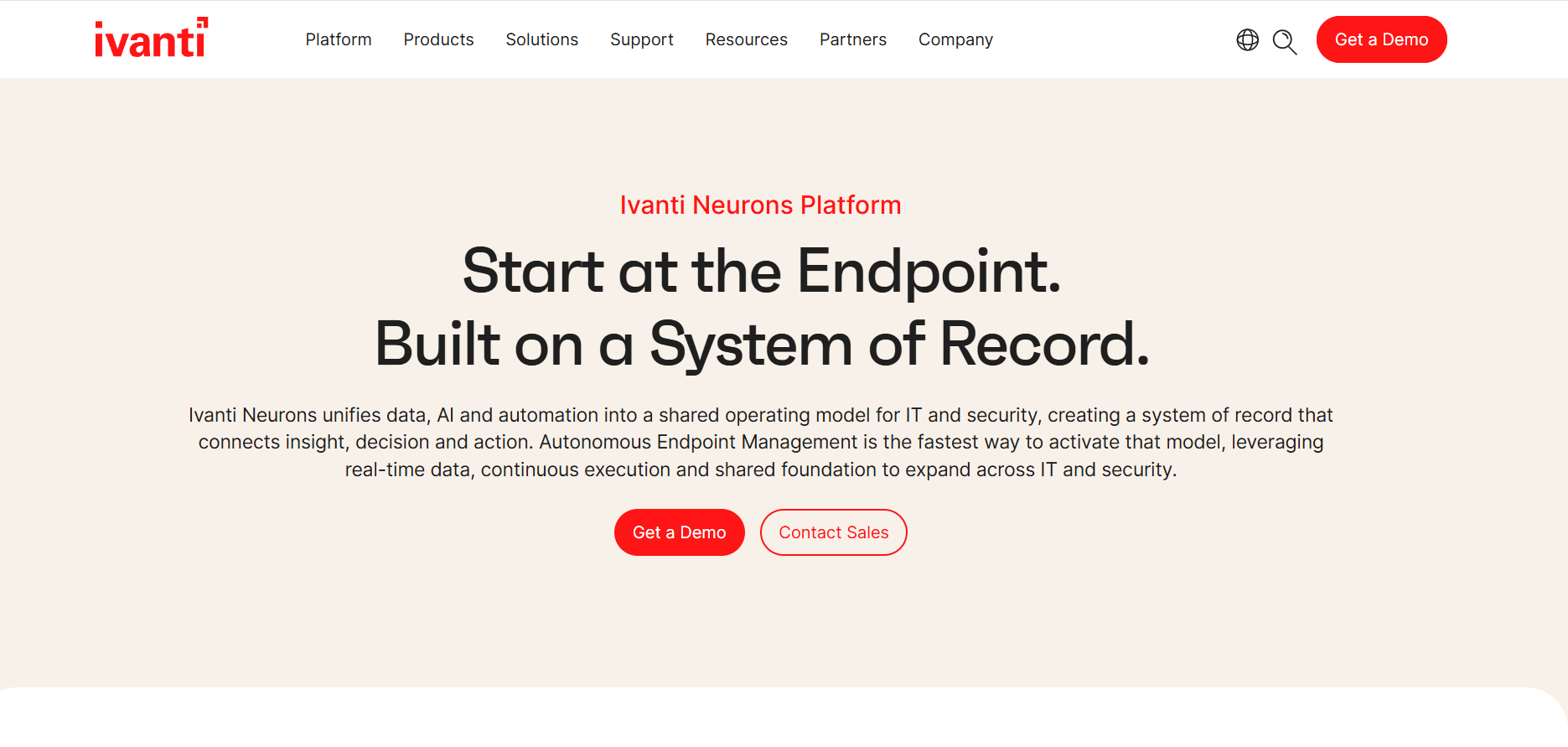
Ivanti Neurons - Best for Endpoint discovery and self-healing
What it is
Ivanti Neurons is a family of cloud products from Ivanti that covers service management, asset management, and endpoint management.
IT teams use the ServiceNow alternative to keep track of company devices and the support requests that come with them.
Features
- Ivanti Neurons blends service management with unified endpoint management, aiming to find and fix device problems before users notice.
- Bots probe devices and run fix scripts in the background.
- Machines are healed without an agent, which cuts ticket volume.
Ivanti's 2025 Report estimates a 2,000-person company loses about $4 million a year to tech interruptions, which is the cost self-healing tools aim to cut.
Pros
- Endpoint visibility and digital employee experience are standout strengths compared to ServiceNow.
- Background self-healing of devices reduces ticket volume.
Cons
- The ServiceNow competitor’s interface is often called dated and hard to navigate compared to pure SaaS tools.
- Setup is heavy and needs specialists to map discovery correctly.
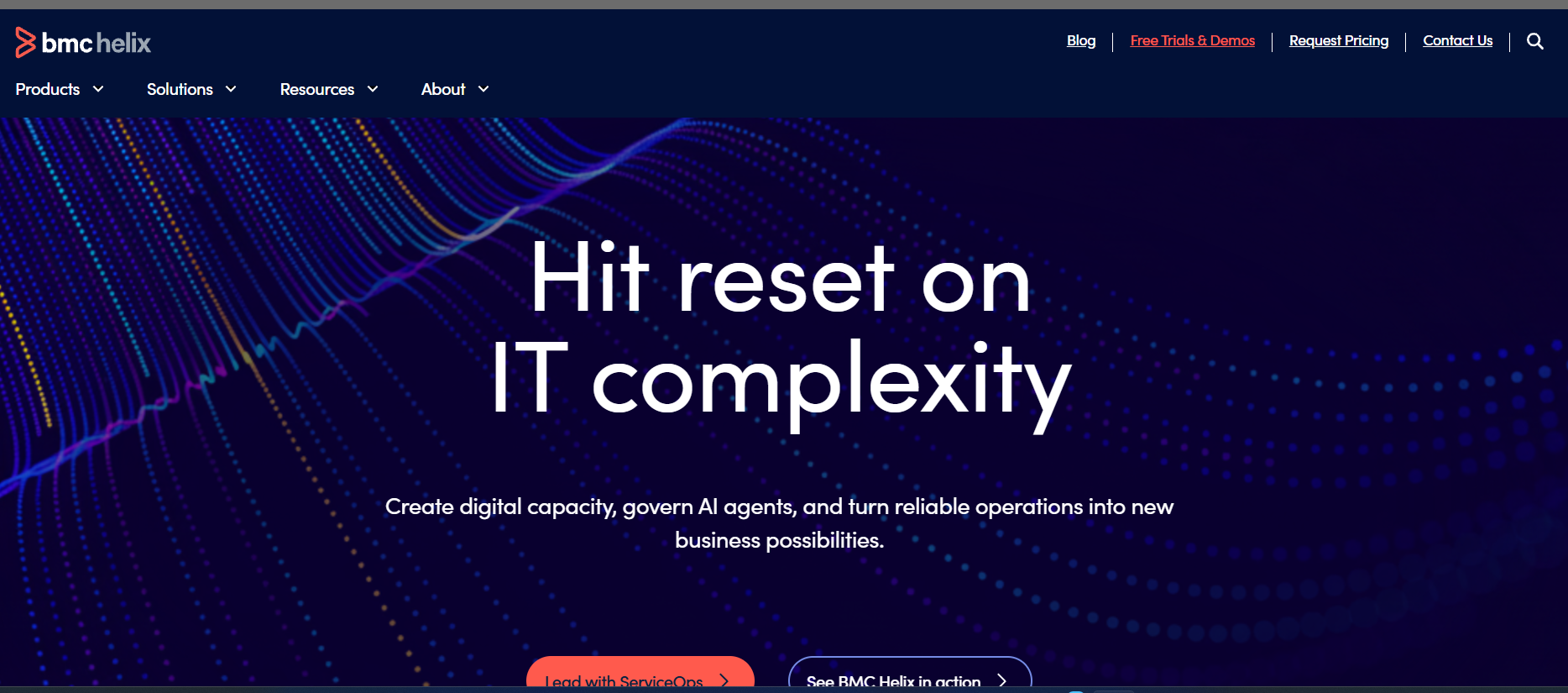
BMC Helix - Best for Legacy multi-cloud enterprises
What it is
BMC Helix is BMC Software's platform for enterprise service management and IT operations. Long-running IT departments know the brand from its earlier Remedy service desk products.
Features
- BMC Helix is an old infrastructure giant that has modernized into an AI-driven, cloud-agnostic ESM suite.
- It supports multi-cloud, hybrid, and strict on-premises setups.
- Fortune 500 buyers are its target, like ServiceNow.
ServiceNow reports that approximately 85% of the Fortune 500 use its platform, which shows how well it holds up at enterprise scale.
Pros
- Deployment choice is a clear advantage, since ServiceNow is SaaS only.
- Aggressive discounting on big bids helps BMC win share.
Cons
- The ServiceNow competitor’s interface trails newer cloud-native tools in user ratings.
- Rollouts are heavy, with big change management needs and specialist consultants.
SolarWinds Service Desk - Best for Lean IT teams with network ties
What it is
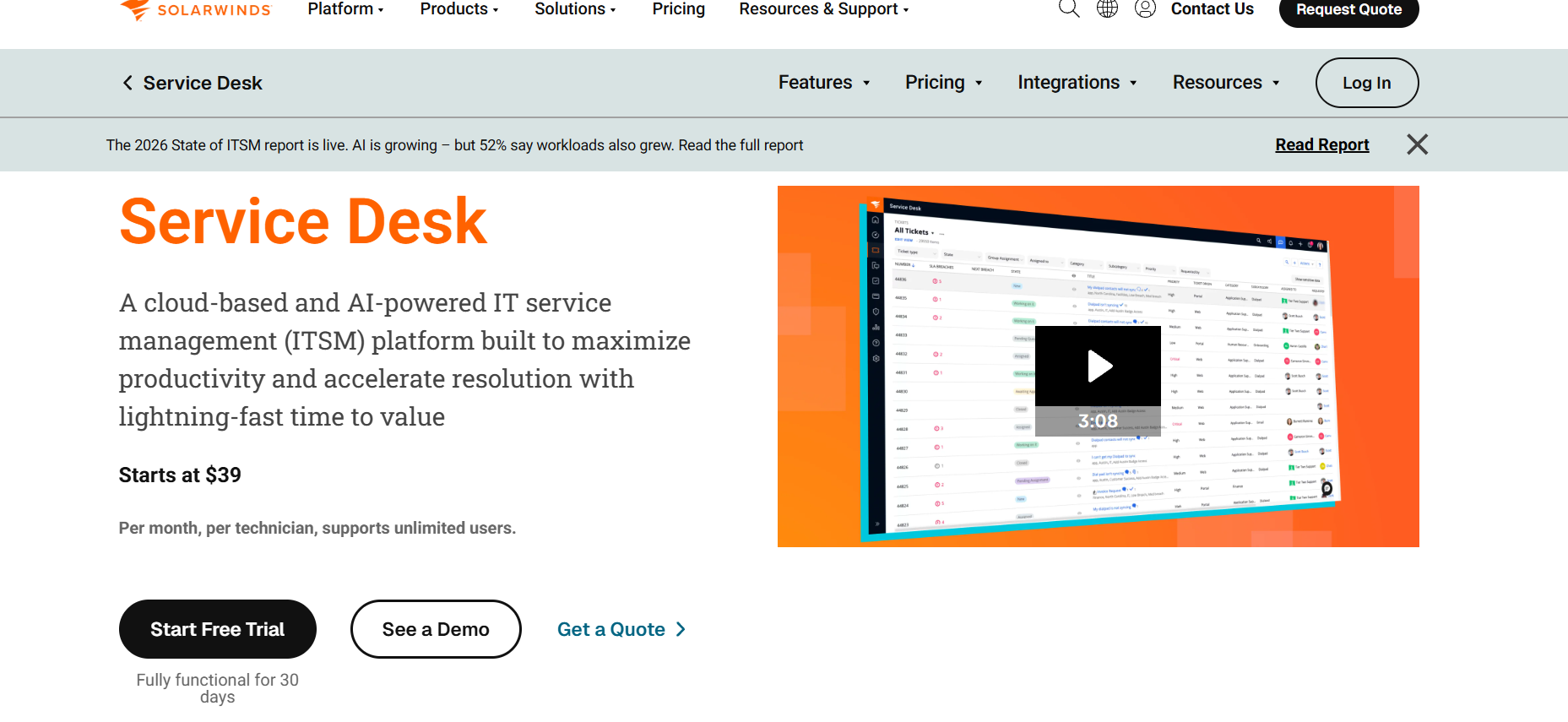
SolarWinds Service Desk is a cloud-based help desk from SolarWinds, covering ticketing, a knowledge base, and asset tracking.
Small and mid-sized IT teams use this top ServiceNow competitor to organize employee requests and see their status.
Features
- SolarWinds Service Desk grew out of the Samanage acquisition and is a practical, streamlined tool that fits well with network monitoring and infrastructure management.
- Incident, problem, and change management sit together in a clean interface.
- Setup takes weeks rather than quarters, and admins need little training.
Pros
- Enterprise complexity is stripped out, keeping the tool simple to run.
- Quick setup and minimal admin training get teams up and running faster than ServiceNow.
Cons
- CMDB depth and cross-department automation are lighter.
- Complex HR onboarding and legal approvals cannot be run with the same low-code depth.
Zendesk - Best for Customer service across many channels
What it is
Zendesk is a customer service software company and ServiceNow competitor whose platform turns support requests into tickets.
Support teams at businesses of all sizes use this ServiceNow alternative to manage customer conversations and track each one until it is resolved.

Features
- Zendesk leads in customer service and can route internal IT tickets, though its real strength is solving outside customer issues at high volume.
- Email, live chat, social, and voice sit together in one clean workspace, setting the standard for omnichannel support.
- A marketplace with over a thousand integrations extends the platform.
Pros
- Setup takes days rather than months.
- Omnichannel support in a single workspace makes handling high volumes of customer issues straightforward.
Cons
- Zendesk is not built for ITIL, so internal IT teams will hit walls fast.
- Native CMDB, IT asset tracking, and structured change management are all missing.
SysAid - Best for Mid-market help desks that want gen AI
What it is
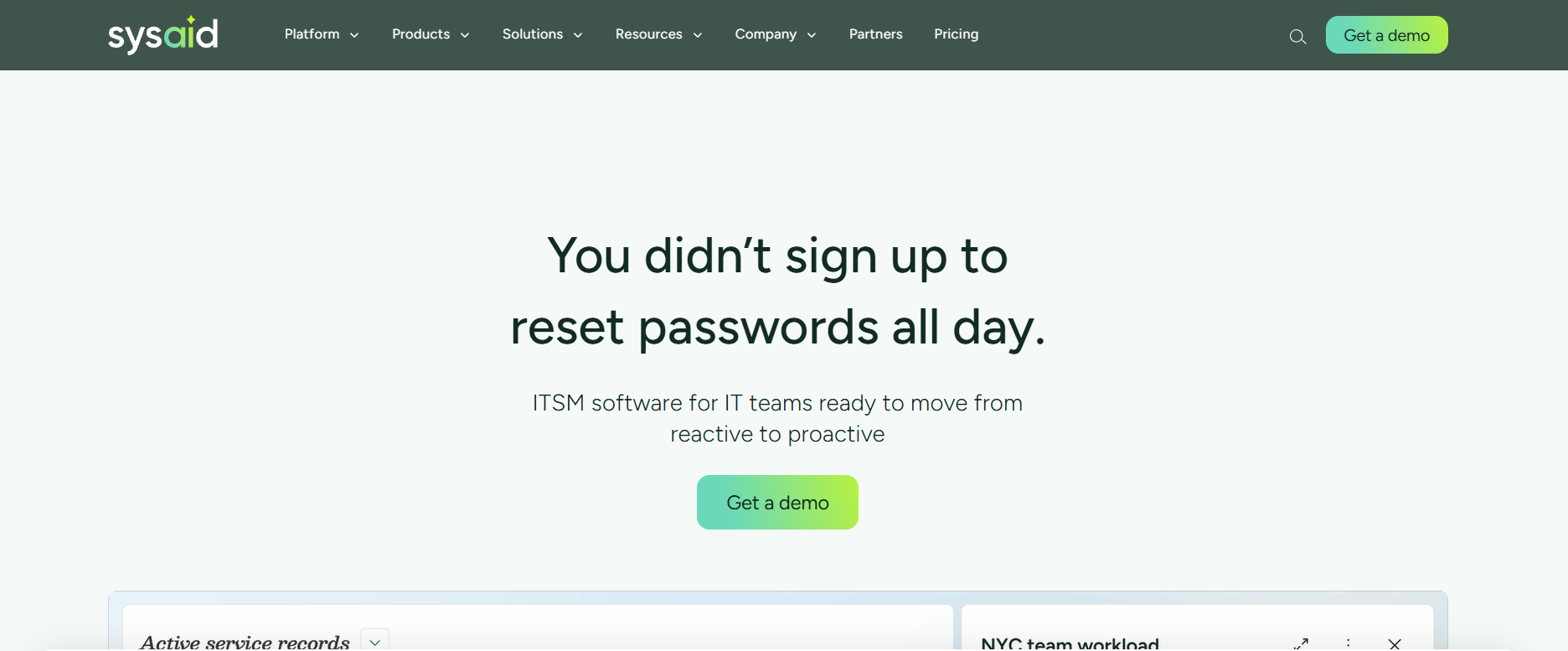
SysAid is an IT service management vendor that offers help desk and ticketing software. IT teams use the ServiceNow alternative to log employee requests and incidents and follow them through to a fix.
Features
- SysAid has moved its whole product toward AI, with generative AI in the core rather than bolted on as a pricey upgrade.
- SysAid Copilot delivers real gen AI value without a premium enterprise price.
- Unlimited requesters and bundled asset management come built in.
Pros
- Gen AI value comes without a premium enterprise price, thanks to SysAid Copilot.
- Costs are predictable, with unlimited requesters and bundled asset management.
Cons
- Reach into non-IT departments is limited.
- ServiceNow's low-code ecosystem for building custom supply chain or finance approval apps is lacking.
Xurrent (formerly 4me) - Best for MSPs and multi-tenant SIAM setups
What it is
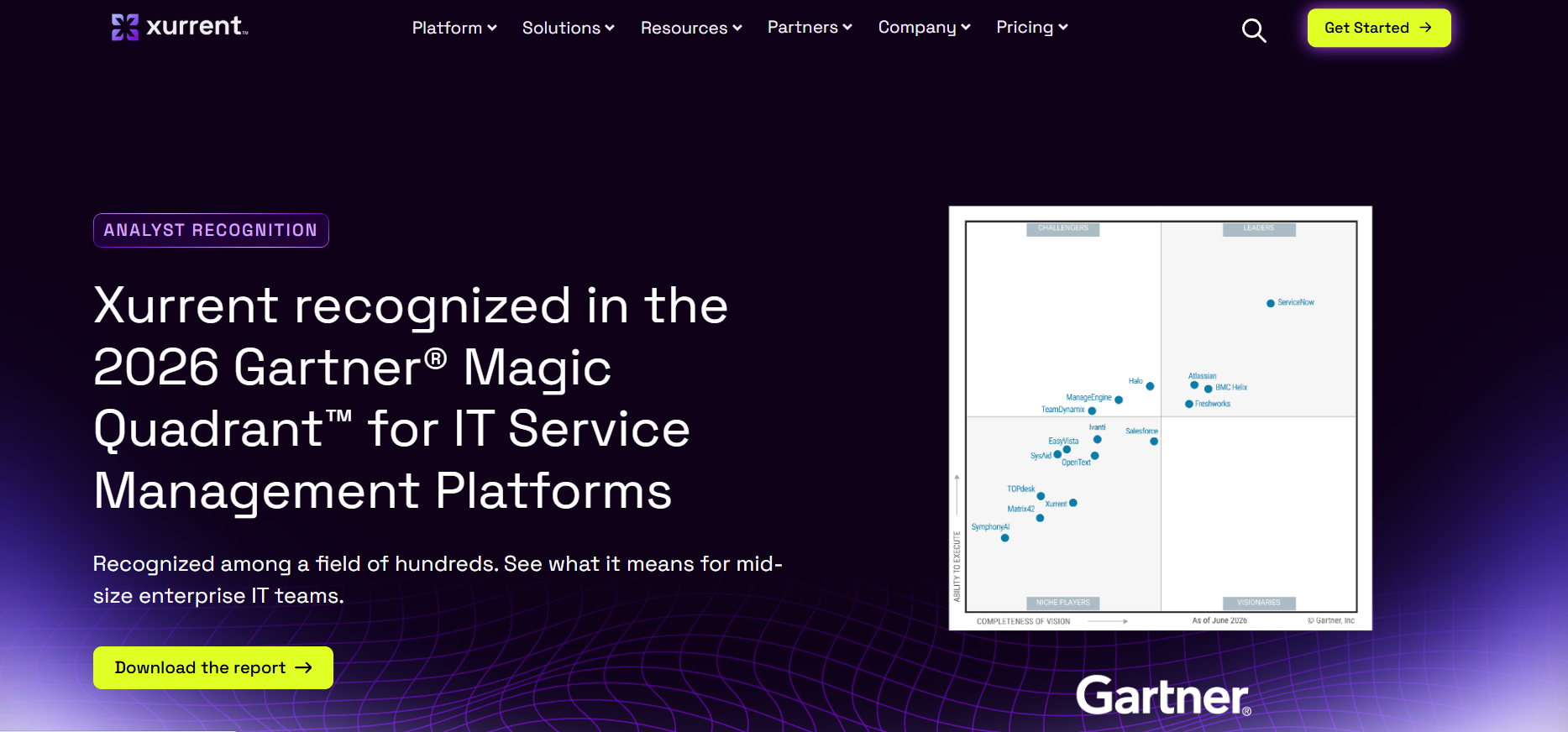
Xurrent is a service management platform that helps organizations coordinate work across several teams and companies.
Businesses that rely on multiple IT suppliers use the ServiceNow competitor to keep requests and responsibilities clear.
Features
- Xurrent uses a rare multi-tenant design built for Service Integration and Management (SIAM).
- Internal teams connect with outside providers through the platform.
- All core modules come in one license, so there is no module sprawl.
Pros
- Cross-company teamwork is a strength, as an MSP can link its instance to a client's instance and share workflows with no fragile API middleware.
- Licensing is simple, with every core module included in a single license.
Cons
- Some customization is traded away for a strict, standard multi-tenant design.
- Heavy custom code against core tables will feel tight for teams that want it.
ManageEngine ServiceDesk Plus - Best for Tight budgets and on-premises needs
What it is
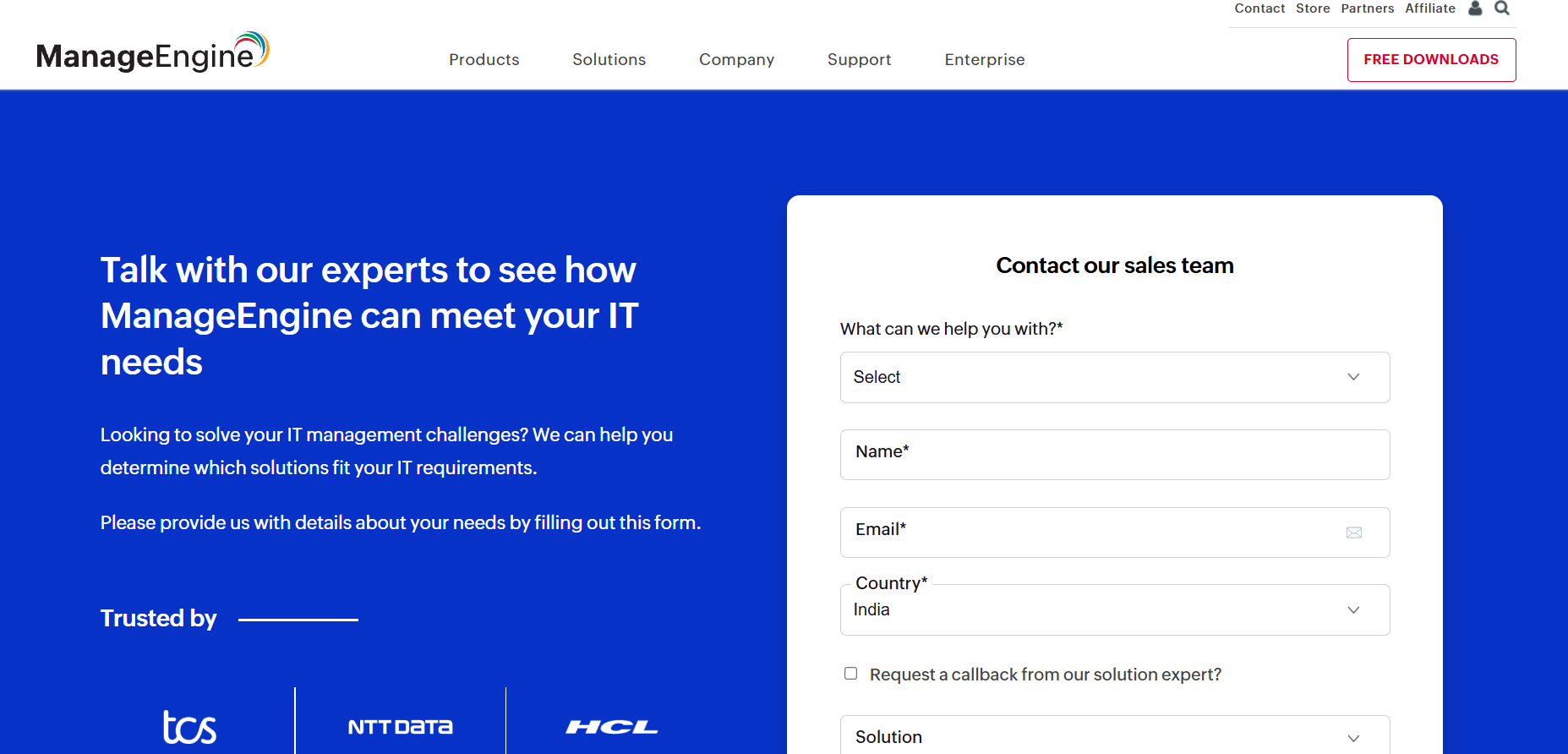
ServiceDesk Plus is ManageEngine's help desk and IT service management product, used to log, track, and resolve IT requests. Smaller IT departments and larger organizations alike deploy it to keep support work organized.
Features
- ManageEngine is the IT management arm of Zoho, offering a full, practical service desk with basic ITIL included.
- Deployment can be SaaS or on-premises, which suits government bodies with data-sovereignty rules.
- Asset management and service integration come built in with this ServiceNow competitor.
Pros
- Cost and flexibility stand out, with no enterprise premium for basic ITIL and built-in capabilities at a fraction of market rates.
- Data-sovereignty needs are met through the choice between SaaS and on-premises deployment.
Cons
- The interface is often called plain and a bit dated.
- A polished employee portal, like those premium rivals invest in, is lacking.
Salesforce Service Cloud - Best for Deep CRM and B2B support
What it is
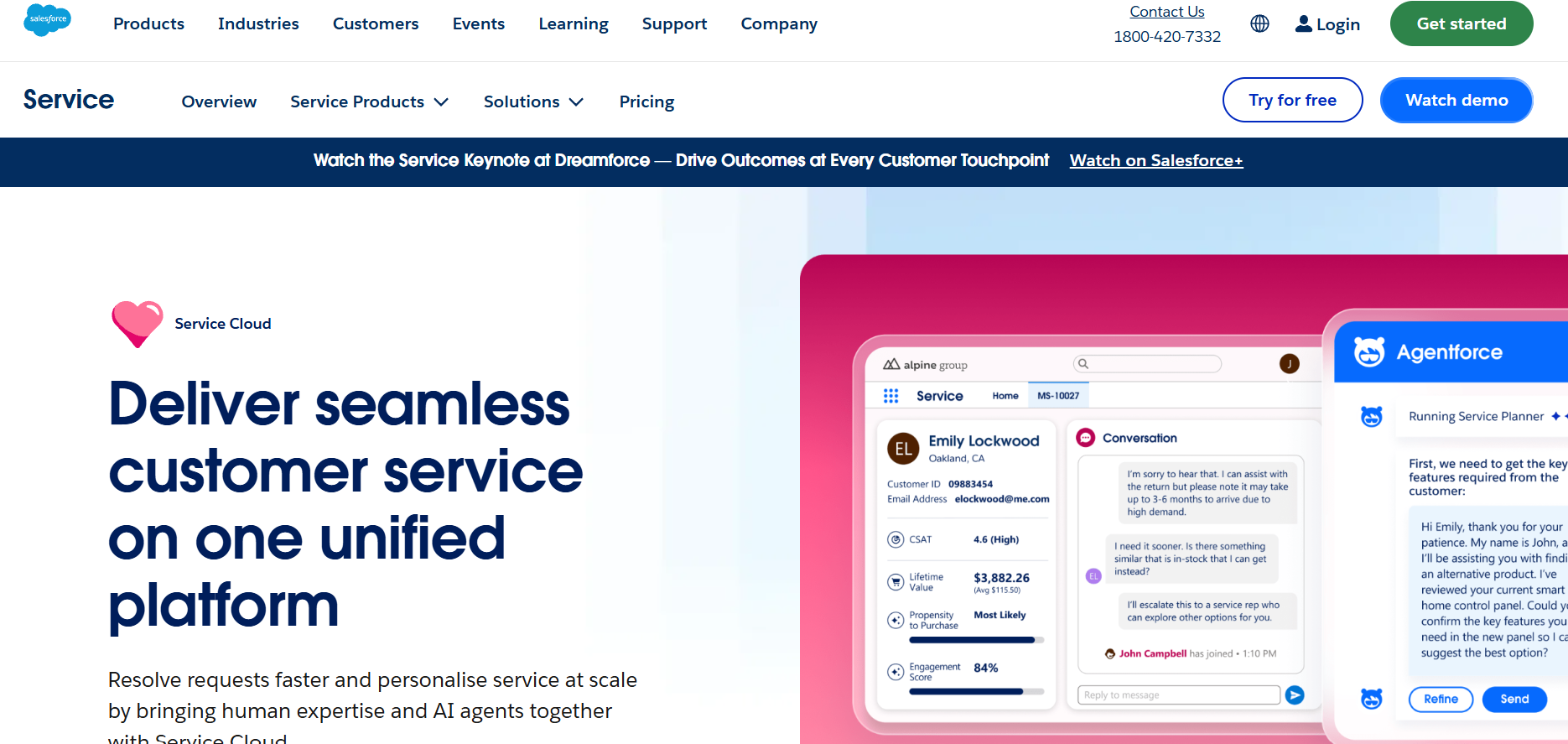
Service Cloud is the customer support product within Salesforce's cloud software lineup. Support agents use the ServiceNow competitor to open, route, and close customer cases.
Features
- Service Cloud is a CRM-based support platform that ties support work to sales pipelines and marketing data.
- Agents get a full view of the B2B customer lifecycle in one place.
- Lifetime value, contract status, and past sales friction are visible at once for teams whose revenue runs on Salesforce.
Pros
- A complete view of the B2B customer lifecycle helps agents support customers with full commercial context.
- Support, sales, and marketing data stay connected, which suits organizations already built around Salesforce.
Cons
- Service Cloud is not ITIL-native for internal infrastructure, much like Zendesk.
- Licensing is complex, and add-ons such as digital engagement tools, voice, and API limits can push cost per agent from a published $165 to over $385.
SmartSuite - Best for No-code, cross-team ticketing
What it is
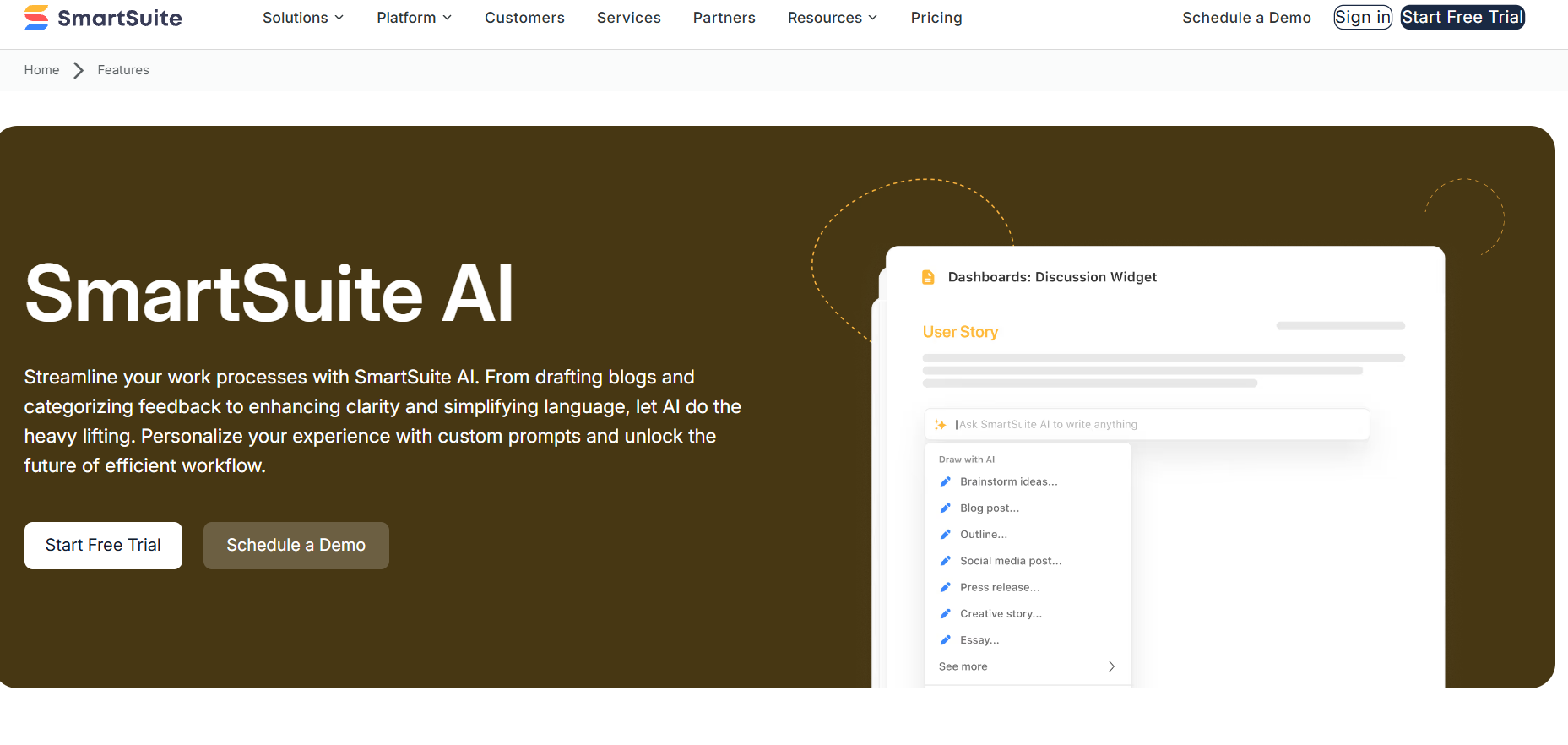
SmartSuite is a work management platform built around customizable tables, forms, and views.
Teams use those building blocks that come with this ServiceNow alternative to shape their own trackers and request systems.
Features
- SmartSuite is a flexible no-code work platform that can run IT ticketing alongside project management, CRM, and HR onboarding.
- Non-technical teams can build databases, ticket queues, and automations in hours.
- Work across departments lives in one platform, which breaks down silos naturally.
Pros
- Flexibility and speed let teams set up what they need without code or consultants.
- Building and adjusting workflows requires no technical expertise, so business teams can act independently.
Cons
- ITIL rules are not built in, which mature and compliant IT operations require.
- Automated network discovery is not available, which those same operations also need.
Thunai - Best for Autonomous support and resolution
What it is
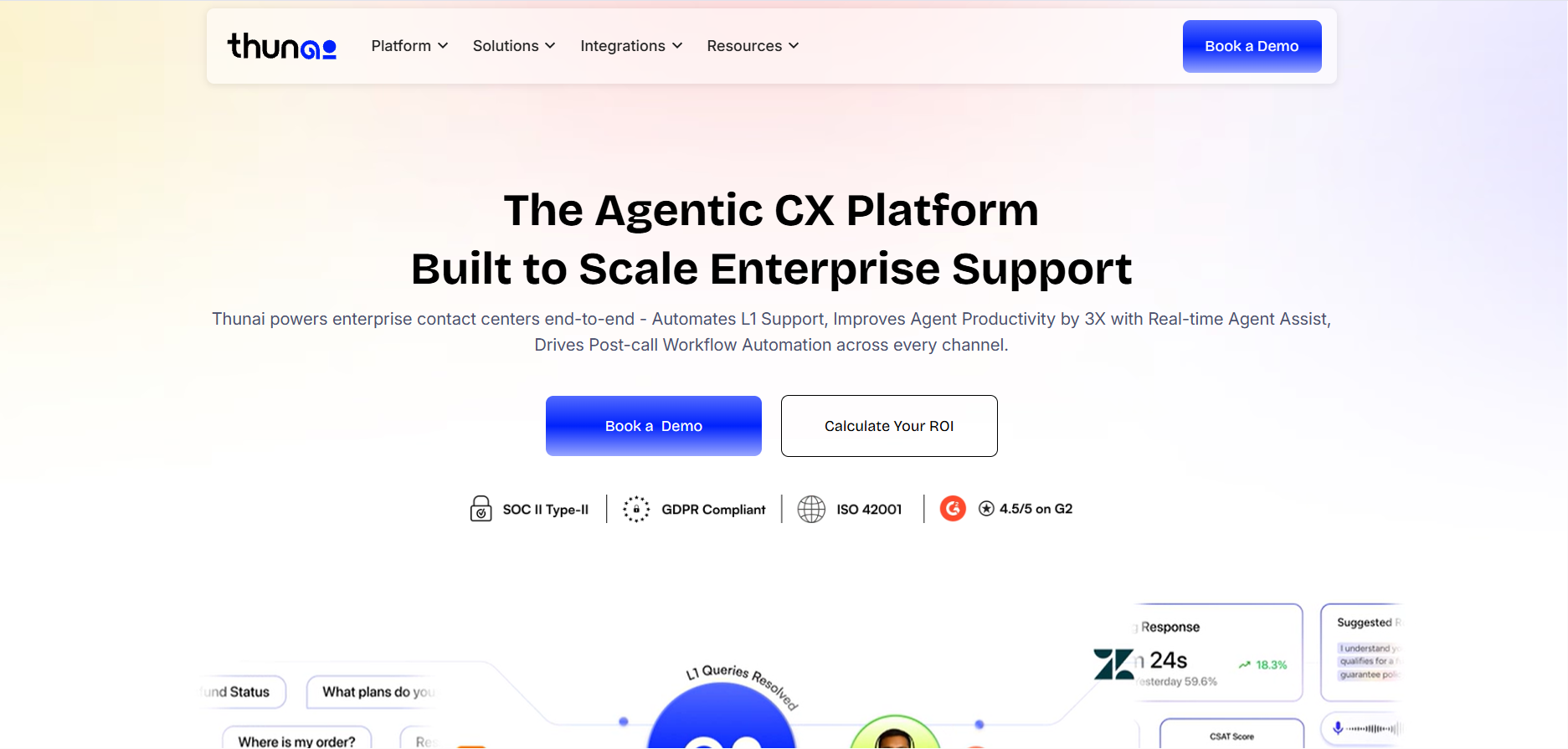
Thunai is an AI platform built for customer experience and support teams. Companies use the ServiceNow alternative to hand routine conversations to software agents, so people can focus on harder cases.
Features
- Thunai is an AI-native CX and support platform that often sits on top of your current ticketing system instead of replacing it.
- A self-learning engine powers its voice, chat, and email agents, which work autonomously.
- Workflows are automated in real time, in the middle of a conversation, with sub-second latency.
Pros
- Time to value is measured in days rather than the multi-quarter rollout that ServiceNow requires.
- Human-sounding voice agents resolve Level 1 queries before a person ever sees them.
Cons
- Thunai is an AI service layer rather than a full ITSM suite, with no built-in asset discovery or hardware relationships.
- Access to context and task completion depends on clean links to your databases and CRMs.
Gartner predicts over 40% of agentic AI projects will be canceled by the end of 2027, so check integration readiness and clean data links before you buy.
ServiceNow Competitors by Category
Best ITSM alternative - Freshservice:
- The ServiceNow competitor mixes ITIL alignment, a clean interface, and fast setup. You don't need special developers.
- Its visual automation engine is easy for regular admins. Teams often go live in two to six weeks, compared with six to twelve months for legacy suites.
- Regular IT staff can build workflows and set SLAs with drag-and-drop, so day-to-day changes never wait on a specialist.
Best ITAM alternative - Ivanti Neurons:
- If endpoint visibility, license compliance, and hardware lifecycle drive the buy, Ivanti's auto-discovery shines.
- On a tight budget, ManageEngine is the pick for deep asset tracking tied to service delivery. Bots probe devices and run fix scripts in the background, which heals machines without an agent.
- Ticket volume drops as a result, though setup is heavy and needs specialists to map discovery correctly.
Best CSM alternative - Salesforce Service Cloud:
- For revenue-linked customer support, it's hard to beat if you already use Salesforce CRM. Support and sales share one source of truth.
- Agents see lifetime value, contract status, and past sales friction at once, giving them full commercial context on every case.
- Licensing is complex, though, and add-ons can push cost per agent from a published $165 to over $385.
Best for mid-market - Jira Service Management:
- Pricing scales well, and it fits software workflows. It treats infrastructure issues and code bugs with the same urgency, which ends the old silos.
- Native integration with Jira Software and Confluence lets an agent link an incident straight to a developer's sprint board, with no middleware needed.
- Very large, tightly linked enterprise setups are where the platform starts to struggle.
Best budget - ManageEngine ServiceDesk Plus:
- At about $13 per technician per month, you get solid incident mapping and change management without the bloat.
- Asset management and service integration come built in at a fraction of market rates.
- Deployment can be SaaS or on-premises, which suits government bodies with data-sovereignty rules. The trade-off is an interface that is often called plain and a bit dated.
Best AI-native - Thunai:
- ServiceNow alternative skips manual ticketing. Autonomous agents resolve multi-step technical or customer queries over voice and text with sub-second latency.
- That changes the cost to serve in high-volume support. The platform often sits on top of your current ticketing system, so there is no need to replace what you already run.
- Time to value is measured in days rather than the multi-quarter rollout that ServiceNow requires.
ServiceNow vs. the Top 3 Alternatives
Final shortlists usually pit ServiceNow against Jira Service Management, Freshservice, and BMC Helix.
The key gap is data design. ServiceNow's strength is its unified CMDB. It lets you trace the impact of a change across huge, mixed global networks.
Jira links assets to flat issues. That's great for agile software teams, but weaker for rigid compliance mapping and hardware tracking.
Freshservice sits in the middle. Its relational database needs little setup, but it lacks the multi-cloud discovery of BMC Helix or ServiceNow.
When ServiceNow Is Still the Right Choice
Even with the cost and the hurdles, ServiceNow is still the right call for some buyers as it fits firms with tens of thousands of staff, where the software must handle real organizational complexity.
It shines when you want one system of record for IT, HR, Facilities, Legal, and Customer Service. Its governance, risk, and compliance modules can replace separate audit tools. For old, complex hybrid-cloud estates, its discovery probes and service mapping are unmatched.
If you need deep ServiceNow integrations to pull scattered ERP systems together, the spend can make sense.
In those cases, it acts less like a service desk and more like an enterprise operating system. The high cost becomes a design choice, not just a software bill.
Buyers who commit to the platform gain a single foundation that grows with them as new departments and workflows come on board.
Firms that need deep ServiceNow integrations to pull scattered ERP systems together may find the spend worthwhile.
FAQs About ServiceNow Alternatives
Is there a free alternative to ServiceNow?
ServiceNow offers a free Personal Developer Instance, but only for learning and testing. There's no free production tier. Jira Service Management has a free plan for up to three agents. ManageEngine ServiceDesk Plus has a free version for up to five technicians.
Why is ServiceNow so expensive?
It charges per fulfiller and sells many add-on modules that lift the base cost. It targets the Fortune 500, so buyers pay for platform-wide AI, strong security controls, and workflow engines, even if they use only part of them. Consulting fees and yearly price uplifts push the total higher.
What's the difference between a fulfiller and a requester license?
A fulfiller works on, routes, or approves tickets. Think IT agents, HR onboarding staff, or procurement managers. Each one needs a paid license. A requester just submits a ticket or reads a knowledge article. Requester access is generally free and unlimited. So a company can serve thousands of employees while paying only for a small team of agents.
What is outcome-based pricing in AI SaaS?
It means paying for results, not logins. In the past, buyers paid for human access to a tool. Now AI agents resolve tickets and run workflows on their own, so headcount drops. Outcome-based pricing charges per resolved ticket or processed invoice. Platforms like Thunai lean on automated interaction metrics. Legacy vendors are adding AI tokens to capture the same shift.
How long does a move from ServiceNow to Jira Service Management take?
Usually three to six months, with real risk. The hard part is turning a task-based inheritance model into flat issues. Common failures include status mapping errors that break SLA math. Another is comment sync that leaks internal DevOps notes to wider audiences. That can create GDPR and compliance problems.
Can no-code platforms replace an enterprise service desk?
For non-IT teams, startups, and agencies, tools like SmartSuite work well. You can build request portals and relational databases in days. But mature organizations still need native asset discovery, license tracking, and a structured CMDB for audits. No-code tools don't offer those.
Which modules does ServiceNow charge for separately?
The base ITSM license is just the entry point. IT Operations Management (discovery and event mapping), Customer Service Management, and HR Service Delivery all carry separate fees. You also pay extra for generative AI tokens, more dev instances, and premium support packages like Impact.
How do I negotiate a SaaS renewal well?
Audit real seat use against allocated licenses months before renewal. Ask for full details on AI usage caps and integration fees. Push back on forced package add-ons and auto-renewal clauses. Your best leverage is a documented, credible plan to move to BMC Helix or Jira Service Management.




.png)