




Client Overview
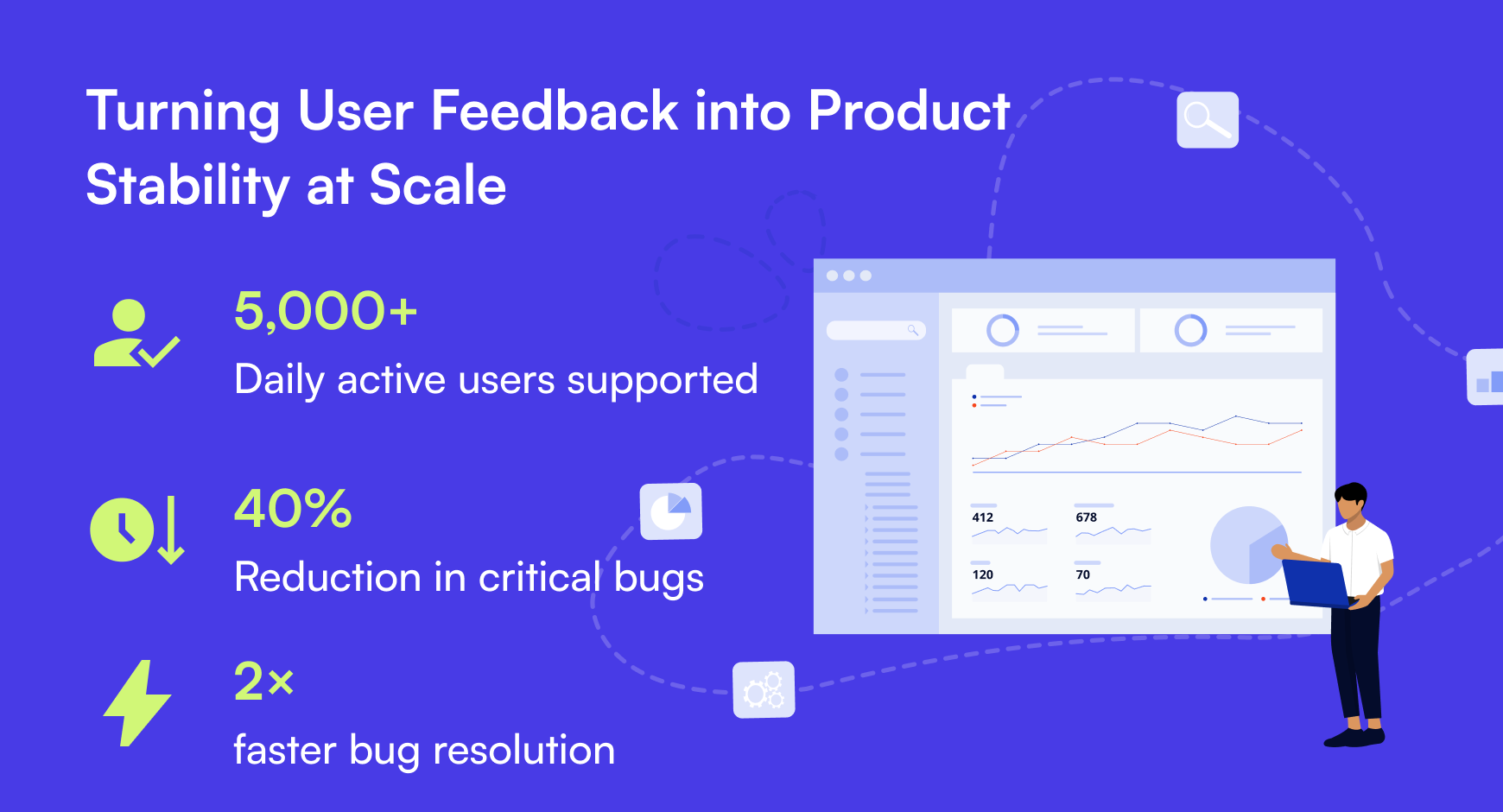
Our client runs a fast-growing AI platform. The AI tool serves over 5,000 daily users. This team ships new code every week to stay ahead.
Their goal is to build the best tools for their market. The business needs to keep users happy while it grows fast.
The Challenges: Loud Noise, Hidden Bugs, Slow Fixes
The product team faced a wall of noise. They had to deal with thousands of user comments and bug reports. These issues were not easy to sort out.
Feedback came in from everywhere. Users chatted with support. They wrote emails. They also left notes on feedback forms. Engineers lived in Jira. Support teams live in chat tools.
This gap caused several big problems:
- Feedback Got Lost: Important clues hid in chat logs. Support agents heard about a broken button. Engineers never saw the message. The product team missed out on key data.
- Bugs Stayed Hidden: Small errors piled up. The team did not spot patterns in time. A small glitch turned into a big crash. This cost the company money and trust
- Slow Reaction Time: Engineers spent days trying to figure out what went wrong. They had to dig through messy logs. The team wasted time asking for more details.
- Guesswork in Planning: Product managers guessed what to build next. They did not have hard proof of what users hated. The roadmap did not match user needs or even have a way to prioritize which issues were most annoying.
Our Intelligent Solution
We cleaned up the development cycle. The team brought in Thunai Reflect. This system watches over product health.
Thunai Reflect acts as the main eye for quality. The tool links up data from Jira, customer chats, and feedback forms. This connection gave the team a single view of what works and what is broken.
This setup allowed us to fix up the product life cycle:
- Real Time Health Watch: We set up Thunai Reflect to watch the product. The dashboard pulls in data from Jira to track bugs and features. The system shows the team how the product is doing right now. Managers can see the status instantly.
- Catching Bad Trends Early: Thunai Reflect looks for trouble patterns. The tool spots hotspots or regressions. A new update might break a login page. The system sends an alert to the team right away. Engineers can jump on the fix before more users complain.
- Closing the Loop: We stopped feedback from getting lost. The system collects praise and complaints from all connected channels. Reflect turns these notes into actions or tickets for the engineering team. This step makes sure every user voice turns into a task.
- Smart Context for Fixes: Engineers stopped chasing ghosts. The tickets created by Reflect come with full context. Developers can see exactly what the user said. This clarity helped the team clear out bugs twice as fast.
Conclusion
Thunai changed how the client builds software. The setup turned a messy backlog into a clear plan.
The system brought Jira and support chats together. Engineers got alerts about bugs right away. The tool also turned user chats into clear tasks. The client cut down critical bugs by 40%. The team also fixed issues twice as fast.
