


How Thunai AI Automates Outbound Appointments and Reminders for a Hospital Network
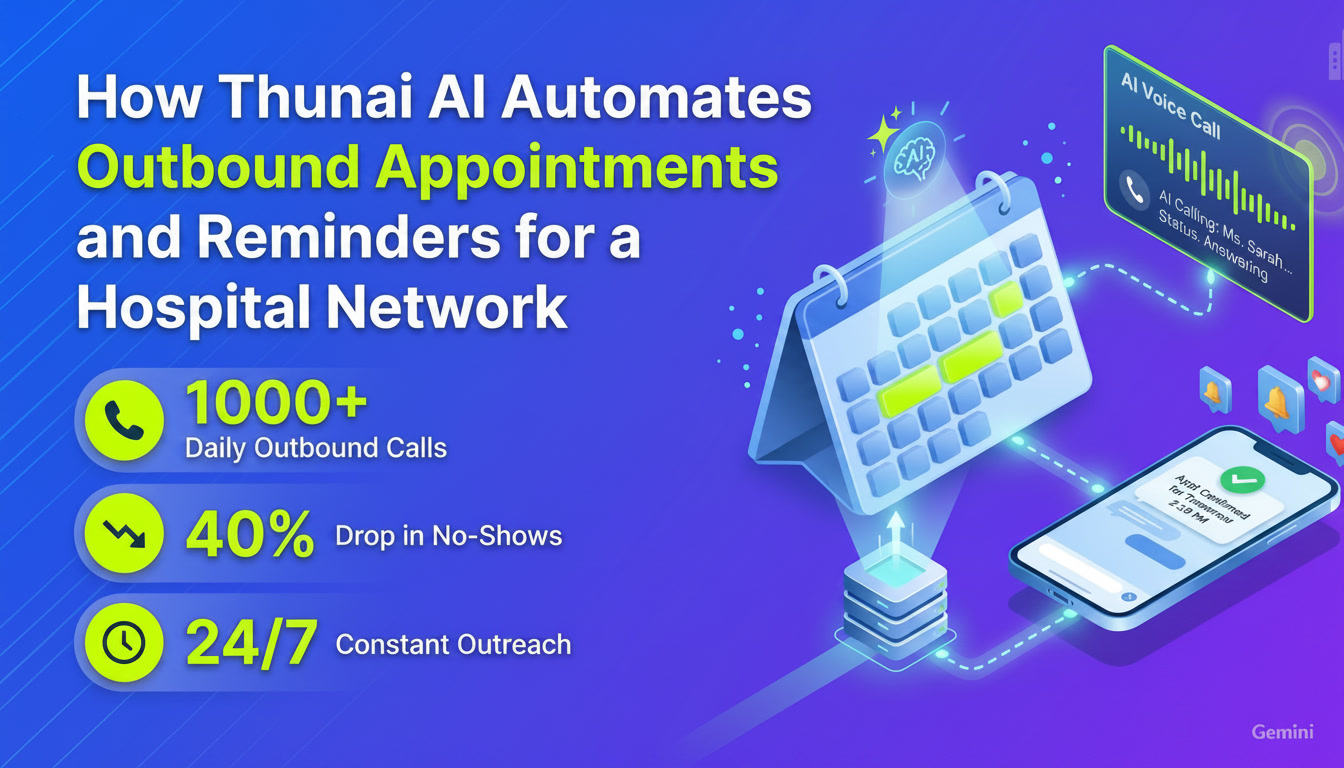
1000+
40%
24/7
Client Overview
Our client is a growing hospital network managing hundreds of outpatient visits across multiple locations in India. They run a dedicated contact center for outbound patient communications.
Every day, hundreds of calls must be made to confirm doctor appointments, remind patients about upcoming annual check-ups, and notify them to collect medical test results. This manual workload took hours away from direct patient care.
Which is why, the hospital administration mentioned that they cannot afford to lose revenue to missed appointments or delay preventive care due to administrative fatigue.
The Challenges: Missed Appointments, Care Delays, Manual Work
The hospital operations team struggled to maintain high attendance rates. They relied on manual dialing to confirm bookings and disjointed systems for health reminders. Staff were overloaded, often calling unresponsive numbers multiple times a day.
This operational delay created three major problems:
- High No-Show Rates: Administrators spent hours calling patients to confirm next-day doctor visits. Many calls went unanswered. Without an automated verification system, patients missed their slots, costing the hospital valuable billing time and leaving consultation rooms empty.
- Preventative Care Lags: Nursing staff struggled to track and contact patients due for routine health check-ups. Manual outreach meant that many patients missed their annual screenings. This caused a delay in preventive care delivery.
- Slow Test Result Notifications: Receptionists wasted time calling patients just to ask them to pick up physical medical reports. Health data stayed in isolated databases, and staff had no unified knowledge system to track who had been notified, causing repetitive work.
Our Intelligent Solution
We automated the hospital outbound communication network. The team connected Thunai to their existing scheduling tech stack, creating a unified handling system across voice channels. This handles outbound interactions autonomously while keeping human care for sensitive cases.
Thunai acts as the central intelligence for the whole operation. By connecting Thunai Omni to the telephony/CCaaS system and Thunai MCP to the scheduling software, we deployed AI agents that call patients dynamically in over 200+ multiple languages.
This setup changed the healthcare workflow:
- Automated Appointment Confirmations: We replaced manual calling with intelligent automation. Workflows were designed using Thunai Common Agent. The AI autonomously calls patients 24 hours before their visit to confirm, cancel, or reschedule. It updates the calendar instantly without human intervention.
- Proactive Check-Up Reminders: We solved the preventive care problem. Thunai MCP operates a deep connection protocol linking the communication logs and the Electronic Health Record (EHR) system. The AI reads patient histories and places automated calls to remind individuals when their annual scans or check-ups are due.
- Autonomous Result Collection Alerts: We removed repetitive administrative tasks. When a laboratory marks a test result as complete, Thunai reads the update and places an outbound call to the patient, instructing them on where and when to collect their medical documents.
- Smoother Human Handoff: We protected patient care. Thunai Omni uses AI to intelligently analyze sentiment during these outbound calls. If a patient asks a hard medical question or expresses frustration, the system issues alerts. Human staff can monitor these live interactions on a unified dashboard and take control when needed.
Conclusion
Thunai changed how the regional hospital network manages patient attendance. The setup turned a high-stress outbound contact center into a fast, revenue-protecting department.
The system unified the hospital scheduling and communication networks. Administrative workload dropped as the AI autonomously handled all routine outbound calls.
Also, consultation attendance rose as automated reminders kept patients informed.
The hospital now delivers continuous, proactive care to hundreds of patients, 24/7. This helps the dedicated administrative department process more patients every day without adding new staff.
