


What causes a consumer to opt for one retail brand instead of another?
Most of the time, it is the customer experience.
By the year 2026, AI-driven customer experience platforms will be assisting retailers in providing better service, tailored shopping, and omnichannel experiences.
Below is a comprehensive overview of the 7 best CX software solutions for retail in comparison to each other.
Why Retail CX Platforms Matter More in 2026
- Customer experience management as an industry is worth over $26.11 billion right now and is expected to hit $84 billion in 2034. Yet numbers on a graph do not tell the entire story.
- The complete balance of power lies in the hands of the consumer. Consumers in 2026 will have absolutely no tolerance for friction.
- The scenario is one in which 70% of customers would leave the brand they used to love after one or two bad experiences, even as agilitypr solutions described in their report.
- Worse yet, 72% will actively move to a rival after three or fewer bad experiences.
- Investing in the best customer experience platforms for retail is your only defense.
- If a customer starts a chat on your mobile app while standing in your store, they expect that agent, whether human or AI, to know their size, their past purchases, and what is currently in stock on the shelf in front of them.
- Failing this expectation isn't just a support failure; it’s a brand failure.

The $75B retail CX gap
- The industry is currently staring into a massive Experience Gap. While 66% of us in the C-suite believe our customer experience has improved over the last year, only 17% of our customers agree.
- This disconnect is creating a global hemorrhage. Research indicates that unhappy customers cost companies approximately $75 billion annually due to the sheer effort and friction required to access products and services.
- Over 54% of shoppers walk away because they are forced to repeat their issues more than once to different representatives.
- In an era where 90% of customers consider an immediate response to be essential, the best customer experience platforms for retail must be able to provide 24/7 availability with human-level accuracy.
- If you aren't using the best customer experience platforms for retail to plug this $75 billion leak, you are effectively subsidizing your competitors' growth.
What a modern CX platform actually does
In 2026, the best customer experience platforms for retail act as a system of engagement that sits atop your traditional system of record.
While your CRM tracks who bought what, your CX platform tracks how they felt and why they might never return. These platforms are no longer reactive; they are predictive.
- First, it enables predictive problem-solving. It identifies a shipping delay before the customer even checks the status and automatically triggers a service recovery workflow like an instant credit or a replacement before the customer has a chance to get frustrated.
- The second factor is the use of a self-learning brain model that allows an understanding of the buyer’s intentions. When the buyer states that he/she is searching for mountain wedding clothes, the system understands the season, the terrain, and the style of the buyer.
- The third factor involves omnichannel orchestration, which ensures that 70 percent of agents have complete conversations on every channel, as Contentful.com also mentioned.
Finding the most suitable customer experience platform for retail requires finding the most empathetic digital workforce for your brand.
What to Look For in a Retail CX Platform
Evaluating the best customer experience platforms for retail requires a total shift in mindset. You are no longer buying software; you are hiring a digital workforce.
As of 2026, the criteria of success will hinge on the ability of the platform to translate data into information that can be immediately acted upon by both your employees and your AI workers.
8 evaluation criteria (with scoring rubric)
To identify the best customer experience platforms for retail for your specific needs, use the following 1to10 scoring rubric. This ensures you are prioritizing the capabilities that actually drive EBITDA.
Total scores above 8.0 represent the best customer experience platforms for retail that will remain competitive through 2028. Any platform scoring below a 5.0 is likely creating technical debt that will hamper your growth.
7 Best Customer Experience Platforms for Retail (2026)
Choosing the best customer experience platforms for retail means finding a balance that meets your need for in-depth analysis and your need for speed. Here is our definitive list for 2026, examined through features, pros, and cons.
1. Thunai - Best AI agent-first CX platform for enterprise retail
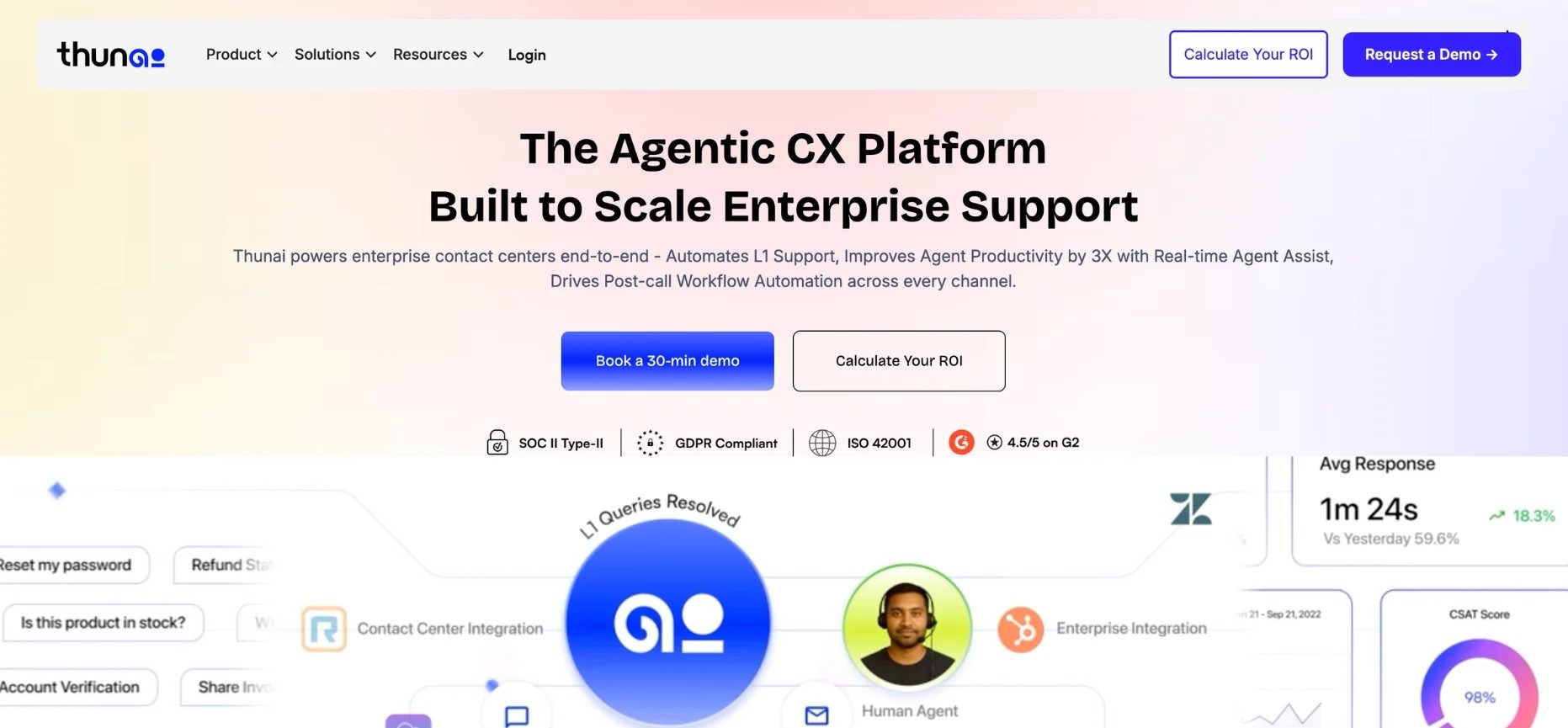
Thunai has established itself as the breakout leader in the agentic era of retail. While legacy platforms are trying to bolt AI onto old architectures, Thunai was built from the ground up as a self-learning brain.
It is widely considered one of the best customer experience platforms for retail because it bridges data silos better than any other platform on the market, turning messy company records into a single source of verified truth.
Features:
- Thunai Brain: A smart hub that takes all your internal data, such as PDFs, videos, catalogs, etc., to ensure that AI agents are 99.9% accurate and hallucination free.
- Agent Studio: Allows you to quickly deploy voice, text, and email agents that can take Level 1 tasks independently without any need to script.
- Revenue AI: Listens carefully to all your interactions to pick up on sales cues, thus enabling cross-sells.
- Thunai Omni: Allows real-time integration with WhatsApp, Slack, email, etc., in over 150 languages.
Pros:
- Predictable Pricing: Provides a predictable pricing structure where you only pay $99/month for an unlimited number of seats at the Basic level.
- Maximize Efficiency: Can deflect up to 70 to 80% of L1 tickets leaving more time for VIP support.
- Instant Time to Value: Empowers agents to be deployed in minutes, not months like traditional solutions.
Cons:
- Setup Period: This requires 2 to 3 days of data ingestion to perfectly replicate a complex, multi layered brand voice.
- Product Maturity: As a market leader in 2025 and 2026, the academic research tools are still in the development stages compared to the 20-year-old analytics giants.
Pricing:
$7/mo for Starter, $99/mo for Basic, $199/mo for Standard, $499/mo for Premium.
2. Qualtrics - Best for CX analytics and VoC programs
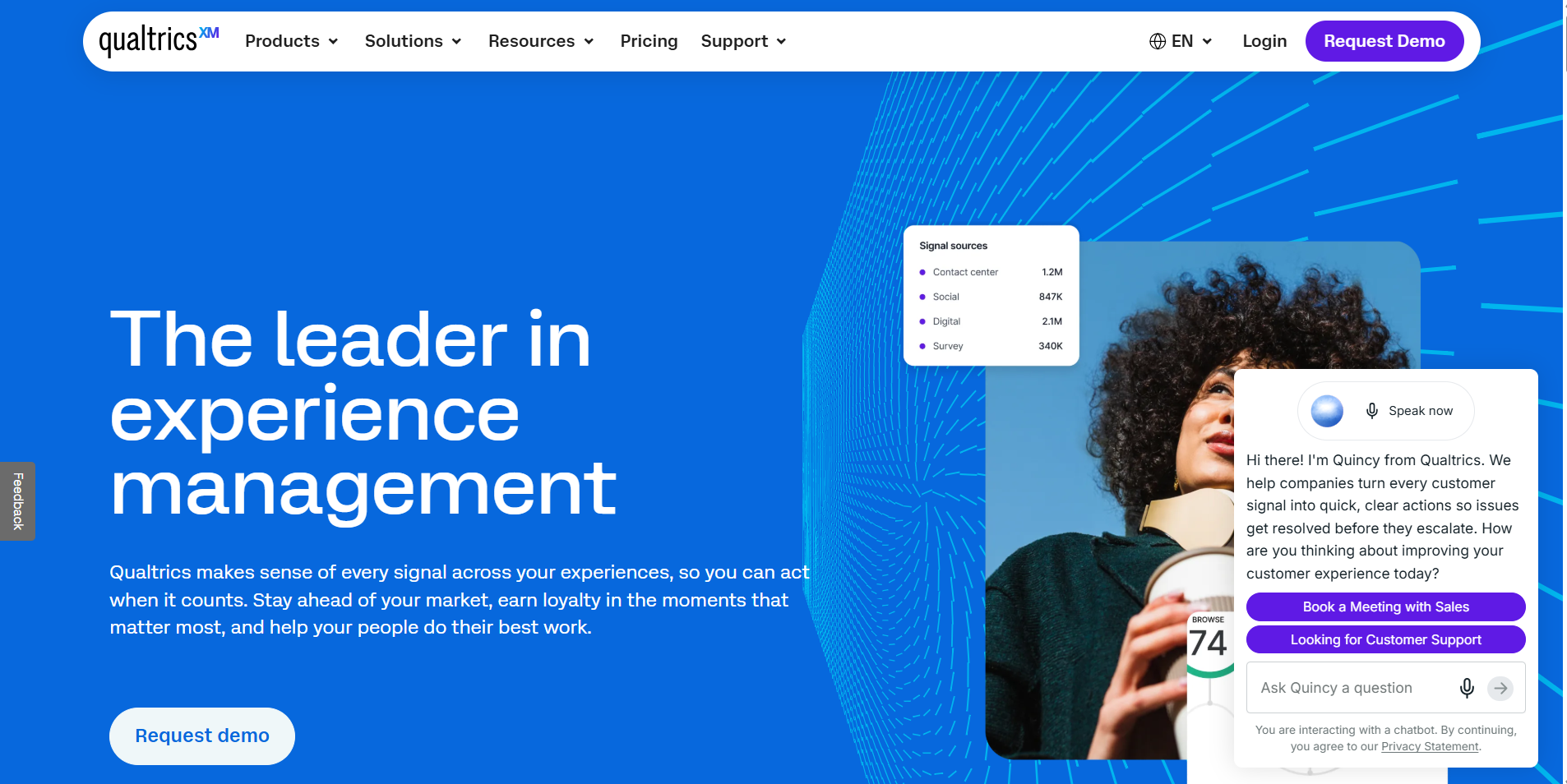
Qualtrics is the research first powerhouse. It remains a fixture on every list of the best customer experience platforms for retail because of its unmatched analytical depth.
It is the tool you buy when you have a dedicated team of data scientists who need to slice and dice every bit of customer sentiment.
Features:
- Experience ID: Stitches together multi-channel feedback into one profile based on behavioral cues and emotional intensity.
- XM Discover: Automatically calculates Effort Scores based on the contents of call transcripts and chat logs using NLP.
- Predict iQ: Uses statistical modeling to pinpoint the exact customers at risk of churning before they actually churn.
Pros:
- Analytical Power: Industry’s best at discovering intricate patterns in millions of data points.
- Global Ecosystem: Integration with Salesforce, SAP, and ServiceNow means seamless data flow throughout an entire enterprise.
Cons:
- Pricing Complexity: People often talk about hidden costs due to usage-based response limits that are difficult to predict.
- Implementation Heavy: It can take months to implement, which requires a dedicated administrator.
Pricing:
Custom enterprise quotes typically start in the mid-five figures annually.
3. Medallia - Best for large-scale experience management
While Qualtrics is for the analyst types, Medallia is for the operators.
Medallia is listed among the best CX platforms for retailers as it concentrates on closing the loop at the front line. It is meant to be helpful to store managers in their immediate action.
Features:
- Athena AI: Focuses on real-time risk scoring and alerting specific employees who can fix a problem immediately.
- Unstructured Data Hub: Exceptional at analyzing video feedback and call center audio for sentiment at scale.
- Role-Based Dashboards: Provides idiot proof data views that only show employees what they can fix in their specific department.
Pros:
- Frontline Empowerment: Excellent at turning raw insights into frontline actions across thousands of physical locations.
- High Accountability: Its workflow tools ensure that no customer feedback goes unaddressed.
Cons:
- Rigid Setup: The platform is heavy and can be difficult to reconfigure if your business structure changes frequently.
- Setup Cost: High starting price is out of reach for many small to mid-size retailers.
Pricing:
Custom contract pricing. Typically $50,000 to over $250,000 a year.
4. Voyado - Best for European retail personalization
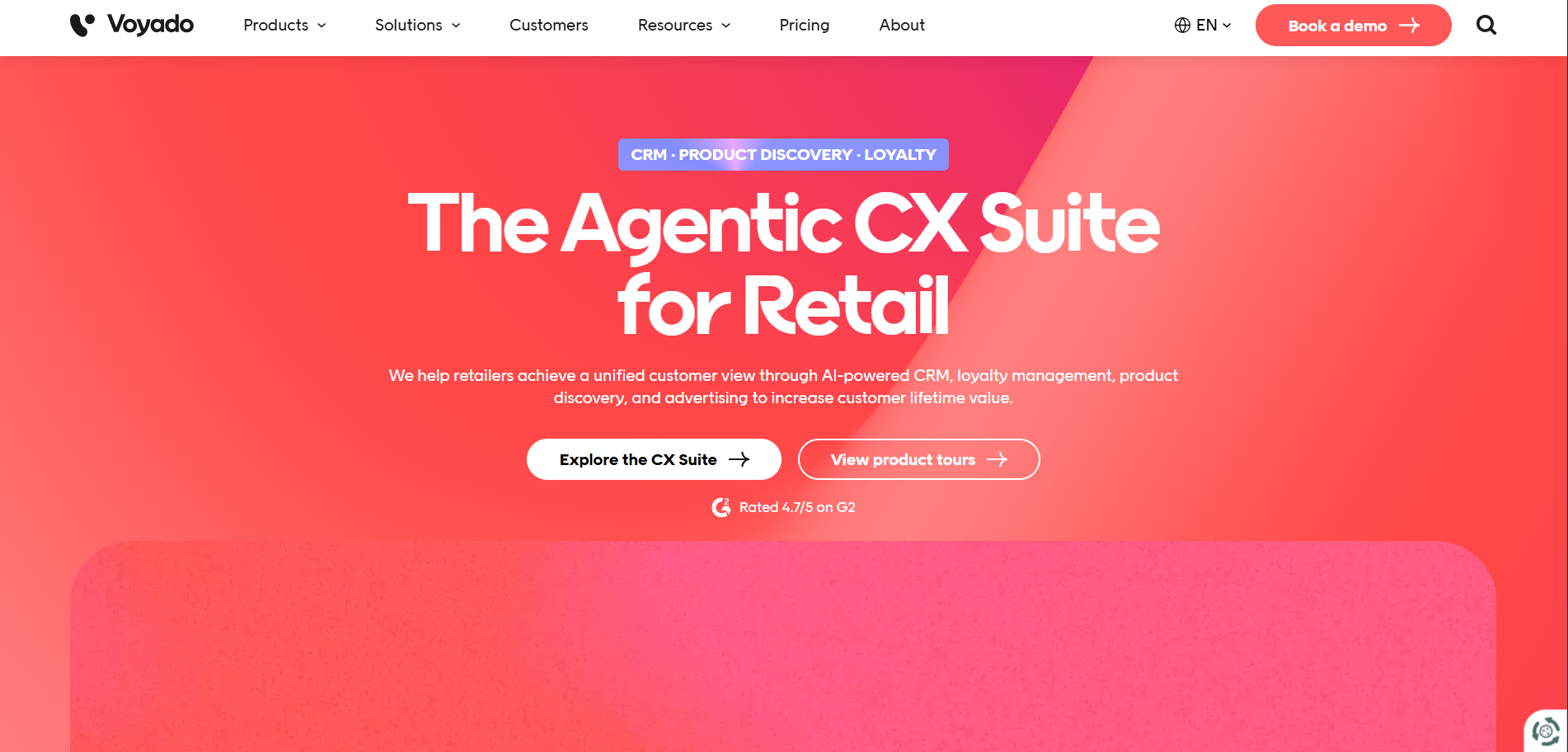
Voyado is a specific tool for retail that links CRM and loyalty. It is one of the best customer experience Platforms for Retail for firms in Europe who need to follow strict privacy rules.
Voyado is one of the best customer experience platforms for retail that centers on repeat buys. If you care about retention, this is one of the best customer experience platforms for retail to check.
Features:
- Native Loyalty: Built-in points, tiers, and rewards systems with direct links to customer behavior.
- Unified Phygital View: Combining online browsing data with in-store POS data in one customer view.
- Search and Discovery: AI-powered merchandising based on customer intent, as opposed to keyword search.
Pros:
- It is built only for retail, so it fits our needs perfectly.
- This focus is rare in the best customer experience platforms for retail.
- It is a great engine for keeping buyers for the long term. Keeping buyers is the goal of the best customer experience platforms for retail.
Cons:
- Niche Support: Not a full-service support ticketing platform. Usually requires an integration with Zendesk or Thunai.
- Maturity Barrier: If you are only doing basic email marketing, you won't use 80% of what this platform offers.
Pricing:
Custom based on your buyer count and shops.
5. Zendesk - Best for support-centric CX
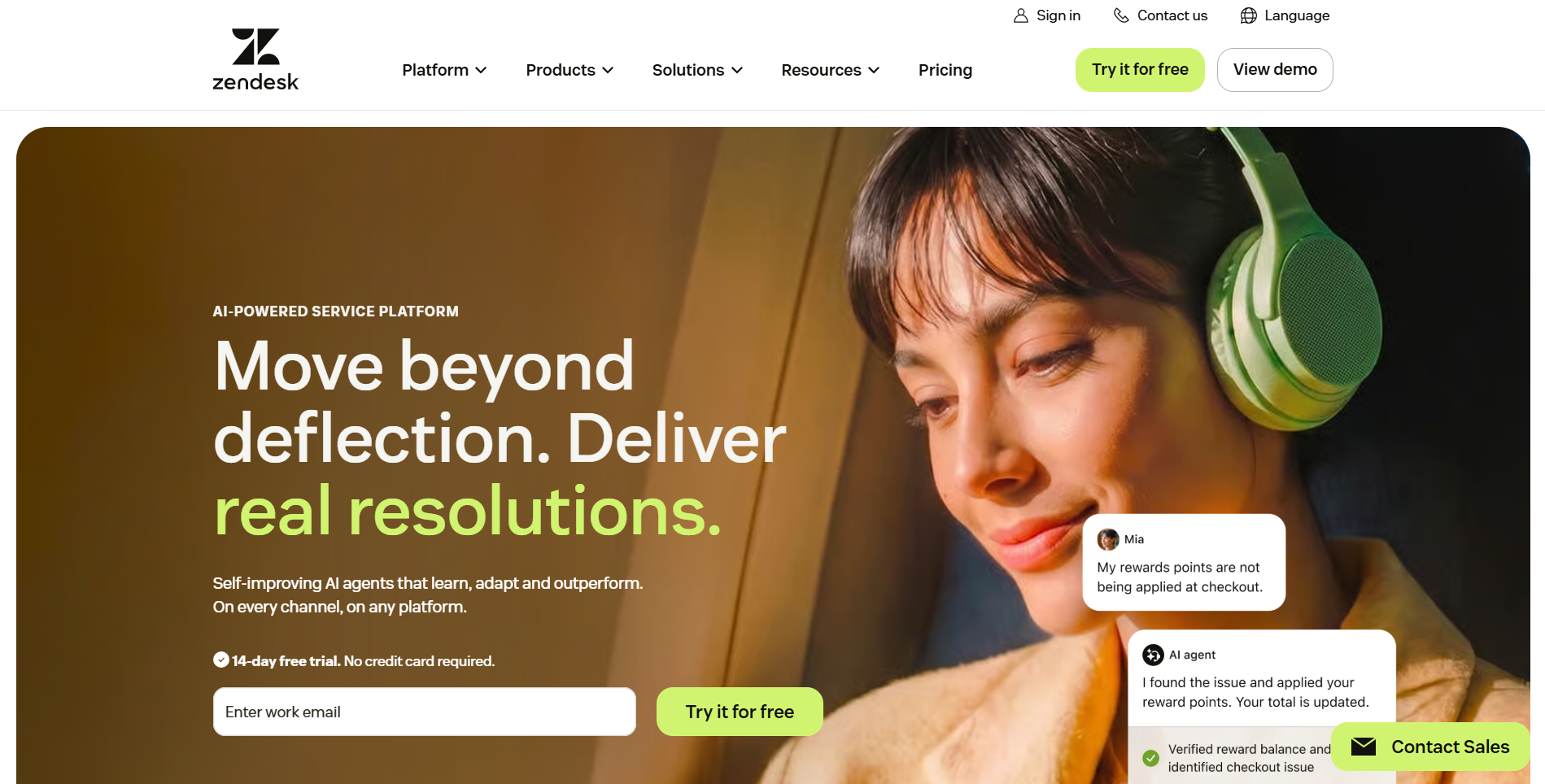
Zendesk remains the industry standard for support-centric needs. In the search for the best customer experience platforms for retail, Zendesk is the safest bet for brands with massive ticket volumes that need high-speed resolution.
Features:
- Zendesk’s AI agents: Self-reliant bots that answer up to 42% of your questions through your current knowledge base.
- Agent Copilot: Your real-time copilot which recommends responses and ticket summaries to keep your agents speedy and consistent.
- Flow Builder: A no-code visual tool to design automated talk paths and shipping updates.
Pros:
- You can launch it in a single day.
- Speed is the best part of this choice for the best customer experience platforms for Retail.
- It lifts staff output by 66 percent. Output is what matters in the best customer experience platforms for Retail.
Cons:
- Seat-Based Costs: This can become prohibitively expensive as the team grows; it also lacks the flat rate predictability of newer tools.
- Limited Personalization: This is a service-centric tool, with virtually no marketing orchestration capability, unlike Voyado or Sprinklr.
Pricing:
Plans go from 55 to over 115 dollars per user.
6. Sprinklr — Best for social + CX integration
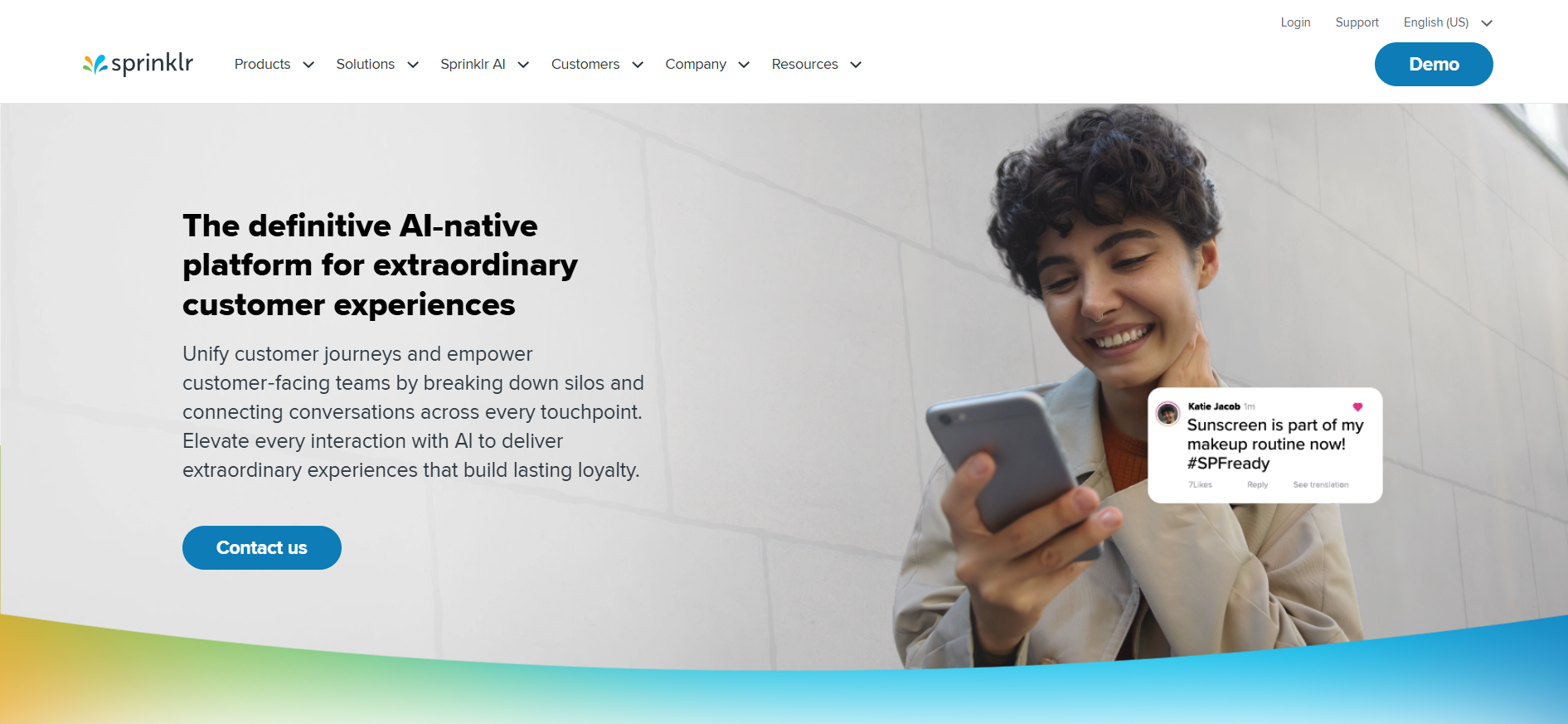
Sprinklr is a massive, AI-native platform designed for Unified CXM. It is one of the best customer experience platforms for retail for global giants that live and breathe on social media and need to manage millions of digital signals.
Features:
- VoC Unified: Aggregates data from over 30 social/digital touchpoints into a single workflow.
- Smart Agent Pairing: Applies AI to pair a customer with the right agent according to sentiments.
- Root Cause AI: Identifies the cause of negativity towards a particular product on Tiktok/Reddit before the viral phenomenon occurs.
Pros:
- Unmatched Scale: Trusted by 59% of the Fortune 100, including Samsung, P&G, and Microsoft.
- Global Agility: Exceptional at maintaining a unified brand voice across hundreds of international markets.
Cons:
- Prohibitive Cost: The median enterprise contract value is roughly $129,380 per year.
- Long Onboarding: Expect a significant implementation cycle to get all 30+ channels integrated and trained.
Pricing:
Self-service starts at $299/user/mo; Enterprise contracts average mid six figures.
7. Kapture CX — Best for APAC retail
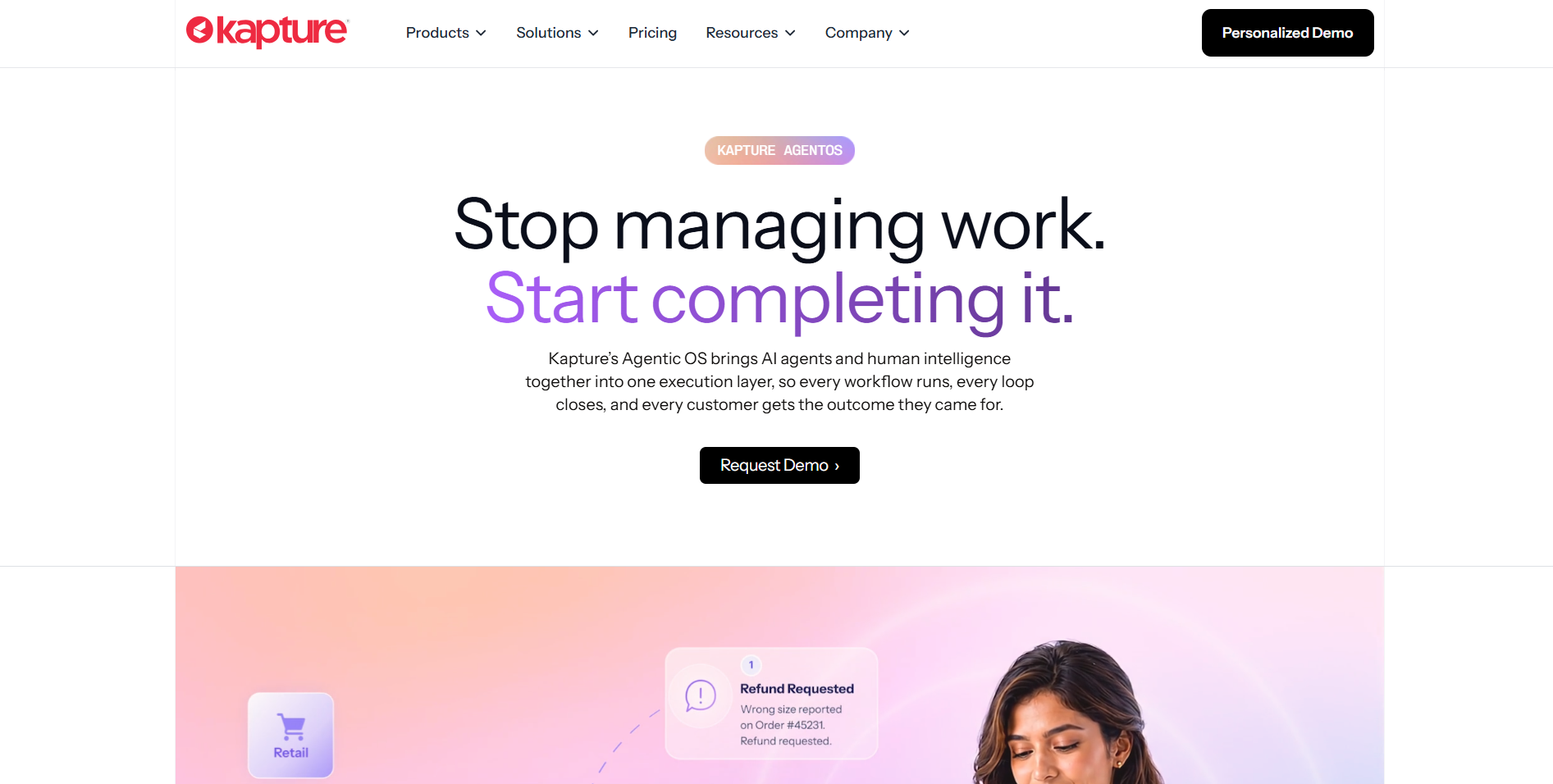
Kapture CX has carved out a dominant position in the APAC region by building one of the best customer experience platforms for retail, optimized for WhatsApp-first consumers and mobile-first retail habits.
Features:
- WhatsApp First Service: Native, deep integration with regional messaging tools preferred in India and Southeast Asia.
- Omnichannel Dashboard: Real-time visualization of NPS and CSAT tied directly to specific store locations.
- Multi-channel distribution: Distributes surveys via WhatsApp, QR, and In-App to boost engagement.
Pros:
- Engagement Winner: Achieves survey response rates of up to 30%, triple the industry average.
- No Code Setup: Highly intuitive UI that allows teams to deploy in days without heavy technical assistance.
Cons:
- AI Depth: Slightly behind leaders like Thunai or Qualtrics in terms of predictive self-learning modeling.
- Regional Focus: Primarily focused on the Asian market, which may limit utility for purely Western retailers.
Pricing:
Custom enterprise quotes, known for high value to cost ratios compared to US rivals.
Feature Comparison Table
As a CEO, you need a quick way to compare the best customer experience Platforms for retail across key functional areas. This table provides a high-level view of where each platform shines.
Key: ✓✓ = Best in class; ✓ = Strong; - = Requires integration. Choosing the best customer experience platforms for retail requires balancing these trade-offs against your specific growth levers.
How to Choose the Right Customer Experience Platform
Choose a platform based on your biggest business challenge.
- Need to automate customer support? Thunai uses AI agents to resolve routine queries and reduce support costs.
- Managing large retail teams? Medallia helps improve in-store experiences with actionable insights.
- Focused on social engagement? Sprinklr unifies customer conversations across channels.
- Expanding in Europe or Asia? Voyado and Kapture CX offer region-specific strengths.
Transform Your Customer Experience with AI-Powered Efficiency with Thunai
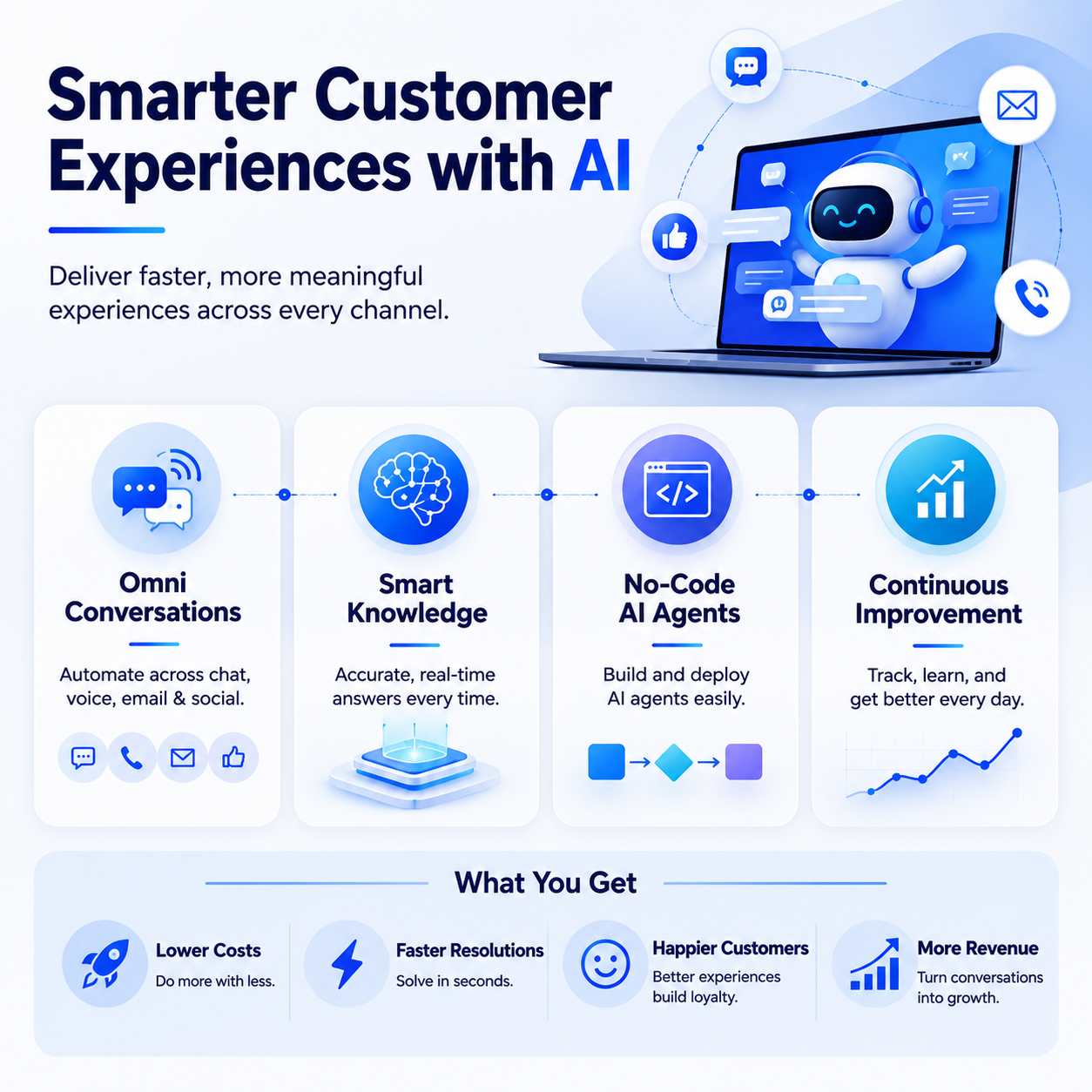
Thunai helps retailers deliver faster, smarter customer experiences with AI.
- Thunai Omni automates customer conversations across chat, voice, email, and social channels.
- Thunai Brain provides AI with accurate, real-time knowledge for consistent responses.
- Agent Studio lets you build and deploy AI agents without coding.
- Thunai Reflect tracks AI performance and continuously improves customer interactions.
Reduce support costs, resolve queries instantly, and create personalized experiences that drive loyalty and revenue.
Start your AI transformation today — launch Thunai in just 48 hours.
FAQs About Retail CX Platforms
What is a customer experience platform for retail?
It is a technology environment that aggregates customer data across every customer interaction, online and offline, as well as social media. It utilizes artificial intelligence to decipher sentiment and respond to customers in a personal manner. The best customer experience platforms for retail focus on the entire customer experience, not just tracking tickets.
How much do retail CX platforms cost?
Prices vary widely. New technologies like Thunai begin at a flat rate of $99/month for unlimited seats. Middle-tier options such as Zendesk have a cost range of $55 to $115 per agent per month. Enterprise-level VoC solutions such as Qualtrics or Sprinklr have custom annual contracts starting at $35,000, with a median value of $129,000.
What's the difference between a CX platform and CRM?
CRM is a system of record, meaning that it records what happened (what the sales were, etc.). A CX platform is a system of engagement, meaning that it records how the customer felt and reasons why they're behaving a certain way. Best Customer Experience Platforms for Retail is a supplement to your CRM, providing emotional context to your data.
Which CX platform is best for ecommerce?
For quick, AI-powered resolutions of order problems, Zendesk and Thunai stand out as the best. For marketing personalization and loyalty programs that drive repeat business, Voyado is often considered the best option among best customer experience Platforms for Retail.
What sets AI-powered CX platforms apart from traditional ones?
While traditional platforms are reactive in nature, i.e., they wait for a human to read a ticket, AI-powered platforms in 2026, such as Thunai, are proactive in nature and have a self-learning brain that can resolve issues, predict churn risk, and even refund customers before they have to ask for it. This is also a requirement for anyone who makes it onto our list of the best customer experience platforms for retail.


