
Are you struggling to create AI voice agents or IVR that actually sounds human?
Bland AI puts forward a strong, code-first base system for managing generative voice tasks.
In fact, the conversational AI platform pushes hard to be the main layer for the new era of programmable intelligence.
This guide will dig into its necessary features and main advantages. We will also break down its practical use cases.
Finally, we will weigh it against other conversational AI voice agents to show you how the AI voice tool works in 2026.
What is Bland AI?
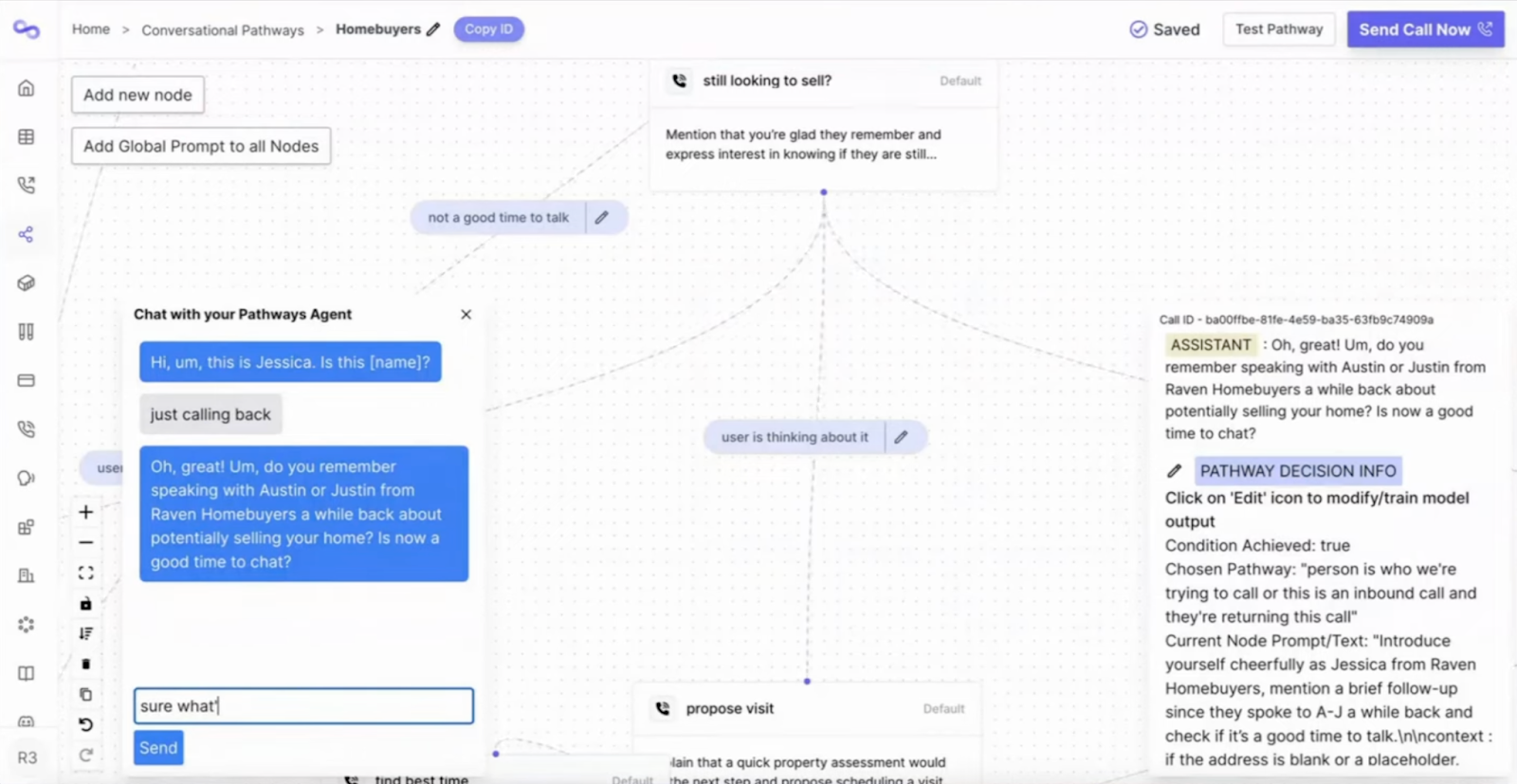
Image source: Youtube | Mark Kashef
Bland AI is a firm based in San Francisco. The company supplies the backend for AI phone calling. Many rivals act as middleware linking up different providers like OpenAI and Twilio. Unlike them, Bland AI has put together a private, self-hosted model stack.
Their approach means this is one of the better AI voice assistants or tools that place automatic speech recognition within a single combined system.
The system also holds inference and text-to-speech synthesis. As a result, businesses can move away from fragile chains of reliance. In those old setups, one vendor outage breaks down the entire phone system.
The conversational AI platform has brought in significant backing from industry leaders due to this unique method. This list includes Y Combinator. The founder of Twilio, Jeff Lawson, also backs the company. Jeff Lawson looks at AI software as a logical next step after older communication APIs.
The system value relies on three main ideas:
- Base System Strategy: Bland AI does not just rent intelligence. The AI voice tool holds on to the data centers and fine-tuned models. These are built specifically for telephony. This setup allows for a level of security and deep control. This control is difficult to come by with standard API wrappers.
- Programmable Intelligence: The platform was designed from the start for developers. The AI software puts code-based settings over visual interfaces. This API-first design lets engineers switch up call states via JSON. Developers can also carry out server-side logic directly within the conversation flow.
- Vertical Connection: Bland AI hands over a complete system from start to finish. The conversational AI platform takes in the phone line and the logic. The system also includes the voice generation. The AI voice tool aims to sort out the two biggest problems in voice AI by owning the compute pipeline end-to-end. These problems are latency and errors.

Key Features of Bland AI
Bland AI comes with many functions that work together as a programmable system. This lets engineering teams set up a contact center system. They can customize this system for specific business rules and security needs.
Conversational Pathways
A main strength of the AI voice tool is its logic engine. This engine is known as Conversational Pathways. Therefore, consistency and context hold up even during complex talks.
- Graph-Based Logic: The conversational AI platform turns away from the random nature of raw LLMs. The system uses a Directed Acyclic Graph structure instead. Each node in the conversation stands for a distinct state. Examples include Scheduling or Transfer. This structure makes sure the AI software stays strictly on track. The agent cannot make up policies or offers that do not exist.
- Context Resetting: Bland AI deals with context by resetting prompts at each node. An agent might move on to a Billing node. In this case, the AI voice tool technically cannot talk about unrelated topics. This happens because those instructions are not loaded in. This acts as a strong guardrail for compliance.
Advanced Developer Tools
The main plan of Bland AI centers on handing engineers serverless functions. These functions run directly inside the call flow. The conversational AI platform is used to speed up operations. The system also automates complex backend tasks without external webhooks.
- Custom Code Nodes: This feature lets developers carry out server-side JavaScript during a live conversation. For example, an agent can pull in real-time data from a Salesforce CRM. The agent can also figure out a loan quote based on user input. The system can even check on inventory. This happens without the user realizing a calculation is taking place.
- Omnichannel Web Agents: Bland AI can do more than just phone calls. The AI software gives out embeddable widgets. These widgets use WebRTC technology. This setup lets customers talk to an AI agent directly through a web browser. This allows users to get around phone tolls and carrier latency. The system effectively links up web support and voice support.
- Dynamic Data Injection: The platform has tools to put in specific details into calls dynamically. Real estate agents, for instance, can use this feature. They can make sure the conversational AI platform knows the exact square footage and price of a property before it dials out. This makes sure every conversation is personalized and accurate.
How Bland AI Works
To really figure out how Bland AI operates, it is important to see the AI voice tool as a programmable place for voice.
Do not view the conversational AI platform as a simple SaaS tool. You should not look at the conversational AI platform as a plug-and-play chatbot. You should see it as a set of building blocks.
This modern design is the key to its ability to deal with complex logic. However, this also means picking up the AI software can take time for non-technical teams.
I. A Combined Stack Design
- The platform deals with the physics problem of latency through colocation. In a typical setup, audio travels from a carrier to a transcriber. Then it moves to an LLM. Finally, it goes to a voice synthesizer. Each step adds on delay. Bland AI hosts the ASR, LLM, and TTS models on the same internal network.
- This design aims to wipe out the network transit time between parts. Rivals like Vapi count on public APIs. This can result in 1.5 to 3 seconds of lag. Bland AI aims for fast responses. However, independent tests point out that in practice, latency often fluctuates between 800ms and 1.5 seconds.
II. The Role of the API
The API sits at the center of this customization. This interface serves as the command center. You use this place to lay out the logic for your agents using code.
- Developers use the API to map out everything using JSON syntax. This includes defining the agent persona and tools. You also define the knowledge base here. Platforms with visual builders work differently. Unlike them, Bland AI requires you to write out the interactions.
- The API allows for deep connection for advanced situations. You can set up Personas that act as version-controlled employees. An example would be Sarah - Billing Specialist. This allows for a steady experience. Each agent holds to a specific job description and performance metric.
What are the Limitations of Bland AI
User reviews and market data consistently highlight specific pain points or limitations when it comes to Bland AI. These issues around Bland AI often move business stakeholders to look for other options instead of the AI voice tool.
- High Technical Barrier: The system blocks out non-technical teams. The platform relies on complex JSON scripts instead of visual tools. Product managers cannot set up agents without engineering help. This dependence forces companies to hire costly developers to run the system.
- Confusing Billing Practices: Users frequently report surprise charges. The model adds on fees for calls that last under ten seconds or fail to connect. Internal call transfers also incur extra costs. These hidden fees lead to invoices that end up much higher than expected.
- Limited Support Options: Smaller accounts struggle to get help. The company handles inquiries for standard plans through Discord rather than direct lines. Users describe this process as slow and disorganized. This lack of direct aid creates problems when the system faces downtime.
- Latency Gaps: Real-world speeds often miss the mark. The company claims sub-second responses. However, independent tests show delays ranging up to 1.5 seconds. Rivals like Retell AI often perform faster in sales talks.
Improving Performance using Thunai AI Instead of Bland AI
Bland AI hands over a high-quality base for engineers who want to build from scratch. However, some businesses need speed and visual tools. Others need lower costs without bringing on a dev team. For these cases, Thunai AI presents a better choice.
Swapping out the AI voice tool with Thunai changes your operation. You move from a code-heavy engineering project into a simplified business solution.
This move gets rid of the need for complex JSON scripting. Thunai does this by supplying easy visual builders. In the end, this makes sure you can roll out AI agents in minutes, not months.
Why Companies are Switching to Thunai AI:
- No-Code Visual Building: You can move past writing complex code. You can use a simple drag-and-drop interface instead. The conversational AI platform calls for JSON knowledge to build Pathways. In contrast, Thunai AI lets product managers layout customer journeys visually. This opens up AI usage across your entire company.
- Better Economics for Growth: You can keep away from the bill shock often associated with base platforms. Bland AI adds on fees for failed outbound calls. The platform also charges for minimum call durations. Internal transfers also incur costs. These fees can drive up costs significantly. Thunai supplies a clear pricing model.
- Superior Sales Vibe: You can make sure your agents sound truly human during high-stakes sales calls. The AI software is strong. However, users have pointed out it can struggle with awkward pauses. Users also note issues with barge-in interruptions. Thunai AI puts conversational flow and ultra-low latency first. This makes sure your AI holds back talking the instant a customer interrupts. This creates a natural flow and a better enterprise sales software.
- Instant Setup and Usability: You can cross the divide between idea and execution instantly. Bland AI setup often calls for hiring a dedicated developer. Thunai supplies a ready-to-use solution with tools to walk customers through solutions with AI voice agents with screen sharing.
Creating AI-Powered Experiences Using Thunai
What is Bland AI? The answer is simple. The AI voice tool is a strong base tool for developers.
However, when you choose an option Thunai, you get the strength of AI without the difficulty of code.
You get a combined, visual platform. This lets your entire team build up customer experiences instantly. They can also manage and fix these experiences easily.
Do you want to see how this works out for your business? You can try out Thunai for free!
FAQs on Bland AI
Is Bland AI free?
No, the AI voice tool is not free for commercial use. The company gives out a Start plan for prototyping. But this comes with a higher per-minute rate of roughly $0.14. Users must sign up for paid monthly subscriptions. This allows them to get into volume discounts. It also unlocks advanced functions.
How much does Bland AI cost?
Bland AI uses a mixed pricing model. The company charges a monthly subscription fee. This fee ranges from $299 for the Build plan. It goes up to $499 for the Scale plan. There is also a per-minute usage rate around $0.11 to $0.12. Enterprise plans present custom rates below $0.09 per minute. However, these plans call for significant volume commitments.
Which companies use Bland AI?
The conversational AI platform serves a mixed clientele. This ranges from high-growth startups to established firms. Notable customers include Slash. Slash is a fintech platform for the creator economy. Customers also include companies in the healthcare sector. Logistics and real estate sectors also use the platform.
Where is Bland AI located?
Bland AI is headquartered in San Francisco, California. The AI voice tool operates as a US-based company. This location is a key factor for clients concerned with data control. It also matters for legal jurisdiction.
How much has Bland AI raised?
As of late 2025, the AI software has brought in approximately $22 million in total funding. This includes a $16 million Series A round led by Scale Venture Partners. The round saw participation from Y Combinator. Notable angel investors like Jeff Lawson also joined in.
How does Bland AI affect user experience?
Bland AI aims to bring about smooth user experiences through fast responses. The conversational AI platform markets sub-second latency. However, real-world tests show responses typically range between 800ms and 1.5 seconds. Despite this, its use of Conversational Pathways helps the user experience overall.


.png)