


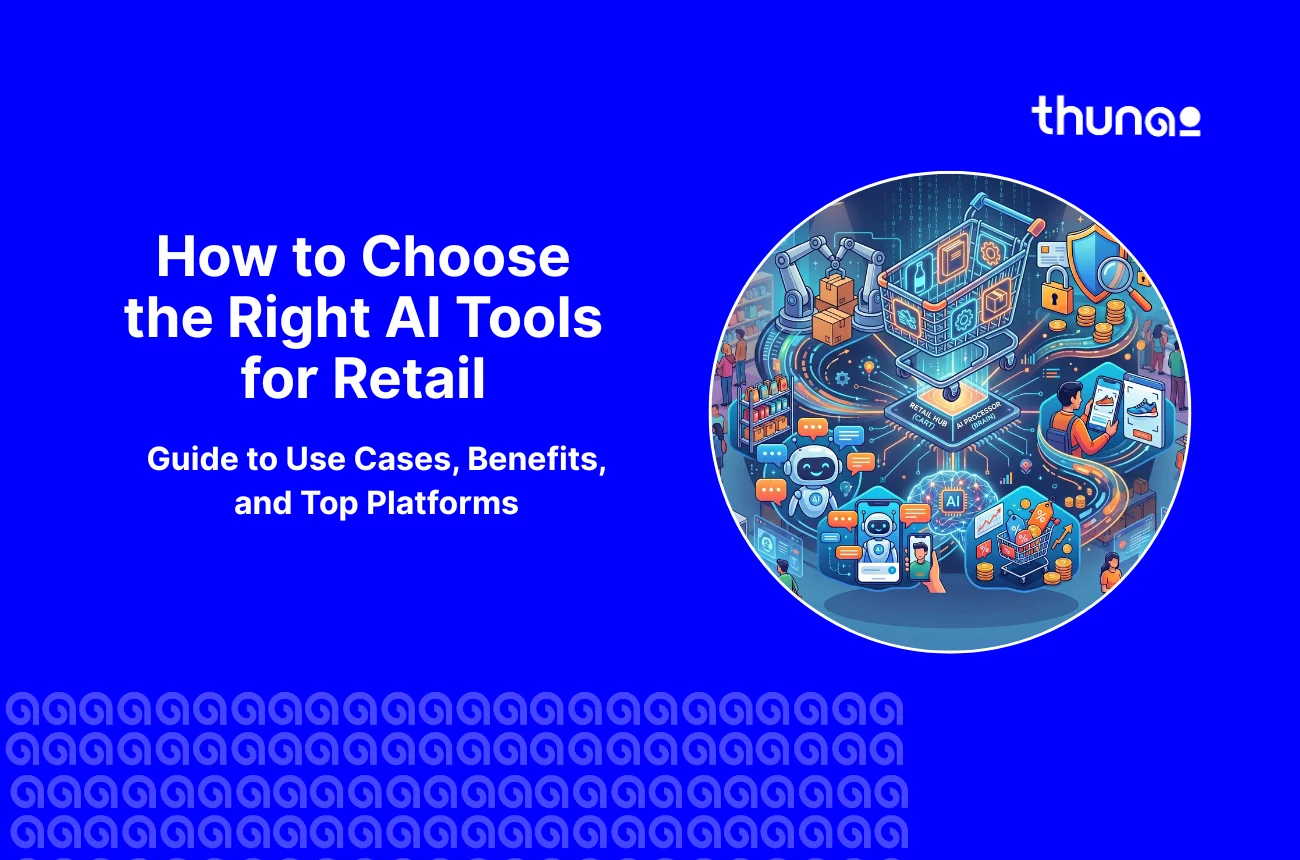

Does your store collect customer data yet still not automate customer support?
Well, many retailers face this challenge.
AI tools often fail to connect with existing tools or spot key signals, leaving teams to rely on instincts rather than solid or better customer support.
Even when ACCURATE data is available.
Which is why, this guide breaks down essential features to seek in an AI platform in retail for better CX experiences and revenue.
Key Insights Before Picking AI Tools for Retail
The first step in choosing the right AI tools for your retail business would be to get a clear idea of your business goals.
Meaning, before looking into AI retail tools or vendors (since most retailers grab tools that fix old issues instead of seizing future gains).
A good idea would be to map your operations and ideal outcomes on three levels:
- Revenue Growth (conversion, AOV, retention): Top AI tools for retail push sales actively and go beyond fielding queries, so seek platforms boosting conversion rates along with average order value while driving repeat buys. Smart recommendation engines lift revenue growth by 6% to 10% over rivals skipping them.
- Cost control (tool fees, inventory, ops, support): With AI tools for retail look past subscription costs and factor in data setup demands because strong platforms handle 80% of routine tickets sans humans, slash logistics by 15%, and cut admin loads by 40%.
- Decision speed (forecasting, merchandising): Trends surge overnight while weather alters demand and viral posts wipe shelves fast, so outdated spreadsheets can be inaccurate.
However, adding AI tools for retail to your techstack can help teams re-forecast on the go, test scenarios instantly, and spot inventory issues pre-markdown.

Criteria for Customer Success and Revenue Growth With AI Tools for Retail
With goals set, judge platforms on capability and aside from this, these seven traits distinguish real performers in terms of AI tools for retail that can add value to your business.
1. Unified Customer Data Layer Across Channels (POS, ecommerce, Support, Marketing)
Siloed data cripples AI tools in retail regardless of model sophistication because point-of-sale systems scatter metrics while ecommerce platforms add to the mess and CRM along with marketing tools yield clashing outputs that erode team trust swiftly.
- Seek platforms offering a unified data layer or linking to it since this creates a shared hub where revenue gets standardized along with inventory turnover and lifetime value across teams.
- Often termed a semantic layer, this setup delivers consistent answers like quarterly omnichannel revenue matching finance reports.
2. Depth of Integration with OMS, CMS, CDP, and Support Systems
Tech stack integration can make or break AI in retail value. Why? Well, read-only access yields dashboards that fail to drive or resolve issues.
AI retail platforms like Thunai actually
While true impact demands two-way flows where AI acts beyond mere reporting.
- Advanced CDPs now orchestrate personalization across email, SMS channels, web, and apps from one hub.
- Deep CDP-OMS links equip store staff and digital agents with full customer histories including purchases, loyalty details, and browsing patterns for instant use, hiking assisted sales conversions 20-40%.
- Demand proof of bidirectional APIs and skip vendors lacking it.
3. Decision Intelligence and Churn Prediction for Demand Forecasting
Overstock erodes margins while stockouts erode loyalty and manual guesses falter at prevention, but AI tools for retail allow forecasting weaves in seasons, competitor prices, weather data, and social buzz to update predictions nonstop.
- Elite tools forecast and trigger action because viral spikes prompt auto-replenish while cooling demand flags redistribution before markdowns become necessary.
- Expect 10-20% accuracy gains and 30% error drops, then extend to churn alerts for retention saves.
4. Behavior-Driven Personalization Powered by Real-Time Signals
Static segments by age or location fall short against AI tracking live behaviors like dwell times, browse paths, sizing habits, and search histories.
- Millisecond processing reshapes grids, adjusts banners, and tailors results per shopper to foster tailored feels over generics.
- Recommendations now fuel 25-35% of ecommerce revenue and personalization tops intent drivers.
- Transparency builds loyalty under GDPR/CCPA, proving key for sustained buys.
5. Workflow Automation Across Support, Fulfillment, and Sales
Ops issues leak revenue via untriaged returns, delayed alerts, and repetitive queries, so deep AI automation in retail tackles high-volume drains head-on.
- Agents watch shipping APIs and preempt delays with updates plus credits to flip negatives to wins.
- Sales AI enriches leads, scores fits, and drafts sequences autonomously.
- Support bots absorb routines like order status and free up experts while reclaiming 332 agent hours yearly sans hires.
6. Customer Feedback Intelligence (Reviews, Support, and Sentiment)
Feedback floods via reviews, tickets, chats, and returns, proving too vast for manual shifts, but NLP scales analysis in real time.
- AI summaries distill reviews on fit, durability, and uses to ease buyer paralysis.
- Sentiment spikes alert on defects and pause production along with ads pre-crisis.
- Loop feedback to ops for closed intelligence.
7. Abandoned Cart Recovery and Proactive Customer Support
Generic emails reclaim under 10% of carts while ignoring root causes like shipping fees or sizing doubts, but AI pinpoints issues for precise fixes.
- Shipping drop-offs get free codes instead of discounts to guard margins.
- Chat agents tackle objections live and close in-thread.
- Voice bots ring high-value abandoners fast, often doubling rates while proactivity blocks competitor drifts.
How Thunai Boosts Customer Success and Revenue Growth for Retail Brands and Ecommerce
Most fragmented AI tools in retail fix one gap but Thunai unifies the journey from browse to loyalty.
It matches spot-on.
- Thunai Brain ingests docs, sheets, CRM, videos, and chats into one truth source so agents draw from it for 99.9% accuracy while ditching hallucinations.
- Thunai Omni unifies voice, chat, and email with sentiment flags while handoffs keep context intact.
- Thunai MCP links 35+ natives plus custom builders bidirectionally to CRM/OMS and powers real automation.
- Thunai Common Agent: converts multichannel feedback to intel and automatic tickets and ticket resolution when integrated with your helpdesk or CRM software like ServiceNow or Salesforce.
A pet brand handled 90k chats monthly via Thunai with auto-ups delivering 2.5x revenue and ops cuts hitting 92%.
Better yet, Thunai is ISO42001 certified, SOC 2 compliant and grows with you - Book a Demo to Try Thunai free.
FAQs on Choosing AI Tools for Your Retail and Ecommerce Stores
What is the most important feature to look for in a retail AI tool?
In AI tools for retail, data unification tops all because disconnected POS yields junk outputs while ecom adds chaos and CRM with support worsens it, so probe connections first then extras.
How do AI tools help reduce cart abandonment in ecommerce?
AI tools in ecommerce and retail dissect behaviors for precise responses where SMS handles payments and chats tackle queries while beating batch emails hands down.
How is AI used for demand forecasting in retail?
Continuous predictions blend sales history with weather data and trends while auto-triggers cut stockouts and overstock to bolster margins.
What should retailers watch out for when assessing AI vendors?
Isolated AI tools in retail add costs and data-prep hogs drain value, so verify bidirectional actions over reports.


