
Banking call centers work under constant pressure. Clients want instant solutions, but they are never satisfied even after being put on hold for long, receiving callbacks, and going through unnecessary call transfers.
Agents have issues with ticket searching manually and writing down documentation after calls, while compliance requires no errors at all. There are increased costs, and any error with disclosure would be severely punished.
Fortunately, there is a solution in the shape of AI that can take care of routine tickets, help agents, and ensure compliance. Here are the top 7 AI tools for optimizing banking call centers.
What Are AI Tools for Optimizing Banking Call Centers?
Applications of artificial intelligence in call centers of banks are computing tools that help answer customer queries, assist live agents, and help comply with banking regulations.
Machine learning and natural language processing along with integration with core systems help achieve shorter calls, security of data, and solution to real problems as opposed to deflection of problems. There are three main things involved.
Real-Time Agent Assist
This system serves as an invisible co-pilot for each conversation happening in real time. The system converts audio into text and separates the voices of both the agent and the customer.
The agent does not need to put the customer on hold for researching details from a knowledgebase. Details related to policy condition, credit requirements, and warnings related to compliance are instantly displayed on the screen. The handle time reduces, and stress levels of agents come down. To know more about how live call guidance works, explore real-time AI agent assist.
AI Virtual Agent
An AI-based virtual agent can resolve Tier-1 tickets without any assistance from humans. Previous chatbots just performed keyword matching tasks. But today’s virtual assistants leverage big language models; hence they are also able to comprehend natural language along with its intentions.
A virtual agent is able to block the stolen card, calculate loan interest, or identify a person through voice biometric authentication. In case the interaction crosses the limit of the abilities of the virtual agent, it is then seamlessly passed on to the human agent along with all information regarding the interaction.
Workflow Automation
All calls generate documents, and manual typing of those is not very fast. Workflow automation removes this task from your agents.
Workflow automation generates an accurate record of the call and any commitments made by your agents during the conversation. Then it saves those notes in the right CRM record. It can also send required disclosures by email. Interested to know how your call notes, call summaries, and CRM entries can work automatically? Then try workflow automation.
How AI Tools Improve Compliance, Speed, and Service
The ultimate objective is very clear. No longer should there be any need for tracking the number of calls you manage; rather, track the quality and cost of the issues that have been sorted out.
Cost Per Resolution Beats Cost Per Contact
Cost per contact only shows what one call costs. This happens when one unsolved issue leads to many callbacks, transfers, and escalations. Real optimization looks at the cost per resolution.
A human agent often costs more than $13.50 per call. When AI takes the simple volume, handle times shrink. Human agents then have time for hard, high-value cases.
Compliance Comes First
Quick service does you no good if it’s illegal. Compliance is compulsory in the field of banking. AI-powered solutions serve as virtual roadblocks. All the telephone calls are checked for adherence to the Truth in Lending Act, Fair Debt Collection Practices Act, and your own standard operating procedures.
Even if the employee is not able to disclose all necessary information, the alert is sent out before the call is completed. Such systems also help filter out Personally Identifiable Information (PII) and Payment Card Industry (PCI) information from the recorded data.
How We Evaluated the Best AI Tools for Optimizing Banking Call Centers
Market claims are easily made. Therefore, we considered the architecture of each system and its safety in performing actual bank transactions.
1. System connectivity
We tested for Model Context Protocol (MCP). The older integrations make use of brittle point-to-point APIs that fail on any alteration of a field by the vendor. MCP provides a standard framework through which AI agents are able to communicate with the core banking systems.
They get real-time access to account data and do something about it without having to write specific code and without exposing themselves to data security risks.
2. Latency and reasoning
In a voice conversation, delay is a negative aspect. Tools that can listen to voice, search for data in the database, and respond within a second were rated high.
We also differentiated between conversational AI and agentic AI. The former only communicates. The latter, on the other hand, has a plan, executes it, and keeps records of the outcomes.
3. Compliance standards
The standard was tough: AI management system needs to be ISO 42001 certified, and SOC 2 Type II audits were required.
What to Check Before Choosing an AI Tool for a Banking Call Center
The AI used by a regulated bank is associated with certain risks that aren't present in conventional software. Prior to signing up, analyze the vendor’s approach to error management, data security, and control of the AI.
Know the Failure Modes
The scariest one is the hallucination cascade. The AI makes up a fee or misreads a policy. Then it uses that false fact to trigger more actions across your banking system. Prevent this from happening by asking about how the vendor is restricting the knowledge of the AI.
Demand Security and Governance
In financial crimes and compliance, just being right is not good enough. Nothing should remain unexplained by the auditor. The software must keep track of all information relating to context, as well as all tools and their purpose.
AI Use Cases in Banking Call Centers
AI works best where manual steps slow things down and frustrate customers.
- Tier-1 Ticket Automation
- This is the biggest use case. Retail banks get thousands of calls each day about balances, locked accounts, and card activations.
- Virtual agents can handle these alone. The AI verifies the caller, checks the core banking system, and fixes the issue in seconds. This is the main driver of cost savings in a modern contact center. For a broader look at support automation beyond the call center, read our guide to the best AI tools for customer support in banks.
- Fraud Operations and Dispute Intake
- If a customer notices something suspicious, the agent will get his/her transaction history immediately. It is then analyzed for suspicious patterns and compared to peer benchmarks.
- The human agent is then provided with a concise summary report. The agent does not have to analyze the complex fraud table while the customer is worried.
- Loan Origination and Mortgage Servicing
- Refinancing queries by the customer result in real-time agent assist with the actual eligibility criteria for that particular individual.
- At the same time, it displays the disclosures on the screen and confirms that the disclosures were verbally communicated to the customer. This is a huge audit risk elimination measure.
AI Tools for Optimizing Banking Call Centers: Side-by-Side Comparison
The 7 Best AI Tools for Optimizing Banking Call Centers
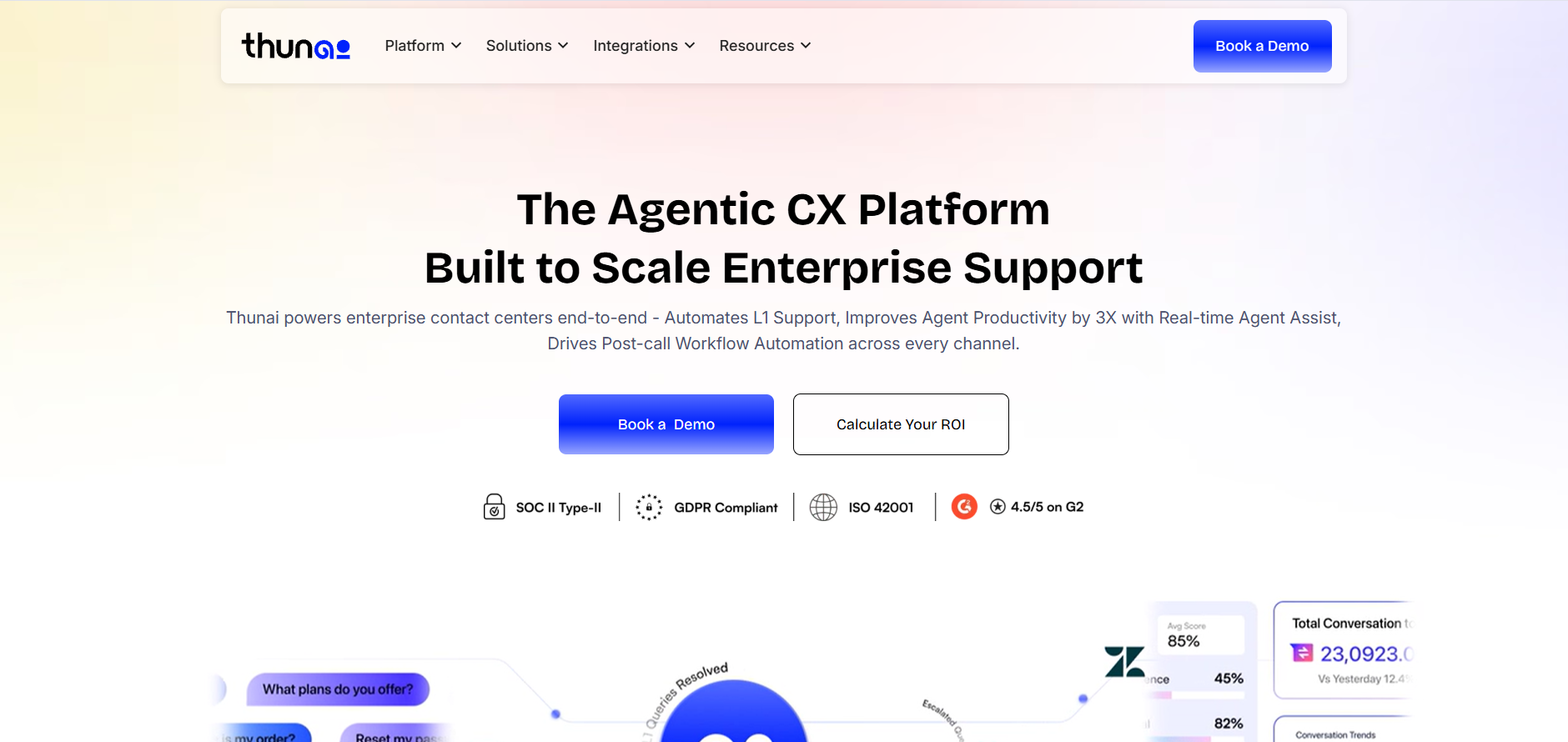
Thunai: Perfect for banks and financial services teams who want AI automation that does not replace your contact center architecture
What it is: An agent-focused AI middleware layer designed exclusively for the financial services sector, created to enable automation of customer service workflows.
Features:
- Resolves up to 80% of Level 1 tickets across voice, chat, and email in 0.8 seconds
- Pulls live banking data through Model Context Protocol, without fragile custom APIs
- Offers real-time agent assist with live SOP prompts and post-call summaries
Pros:
- Works alongside Genesys, Five9, and Salesforce with no rip-and-replace
- ISO 42001, SOC 2 Type II, and GDPR certified
Cons:
- Ops teams need time to trust autonomous ticket closure
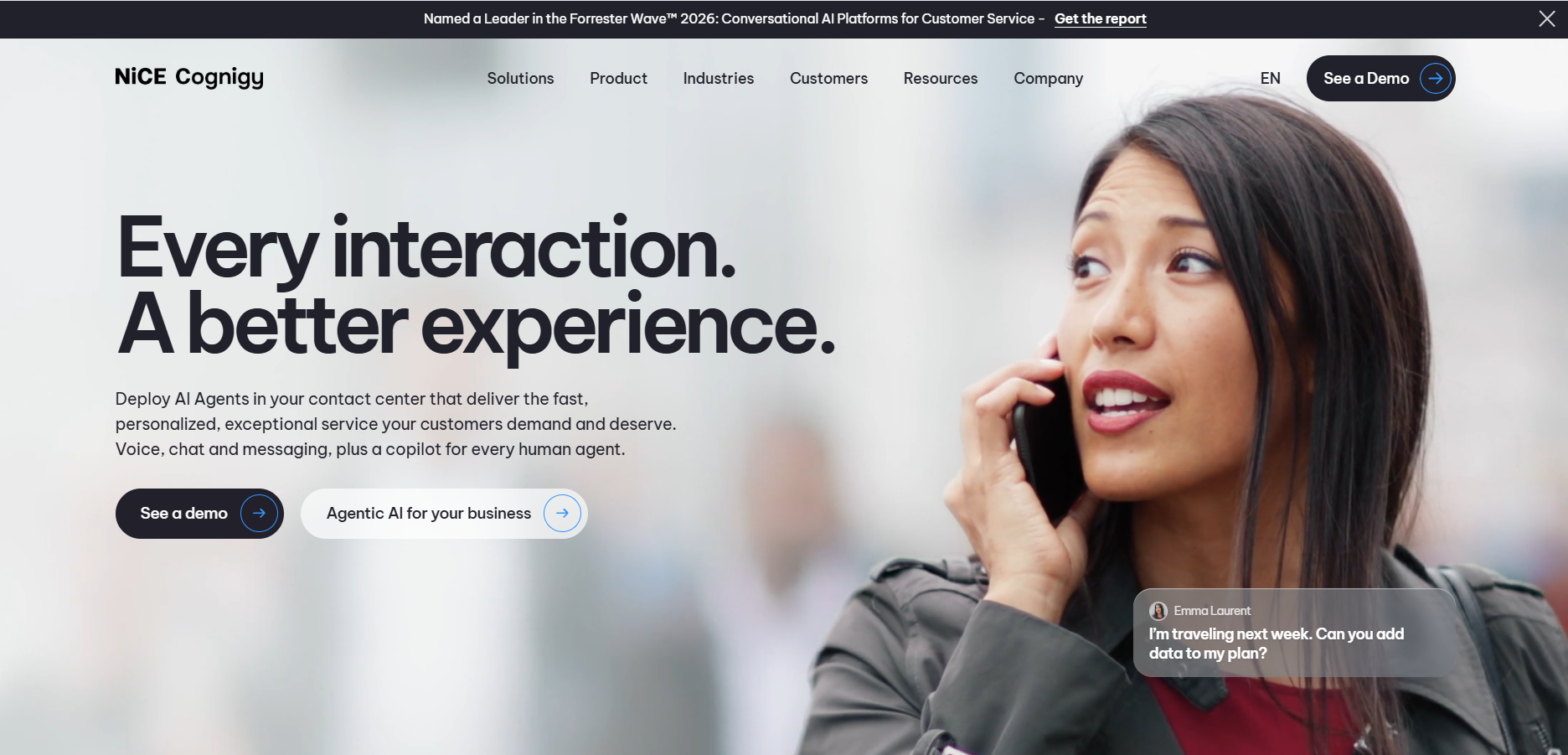
Cognigy: Perfectly suited for high-throughput retail banking use cases where instant voice and digital self-service solutions are required to replace legacy IVRs
What it is: An enterprise-scale conversational AI solution to replace IVR solutions by using voicebots.
Features:
- Voicebots perform operations related to balance checks, directing branches, etc.
- There is an SSML editor available which helps in creating natural voices and controlling pitch and pause.
- There is a real-time language translator available supporting more than 150 languages
Pros:
- Handles huge call volumes well
- Removes the need for separate regional call centers
Cons:
- Setup takes two to four months to integrate
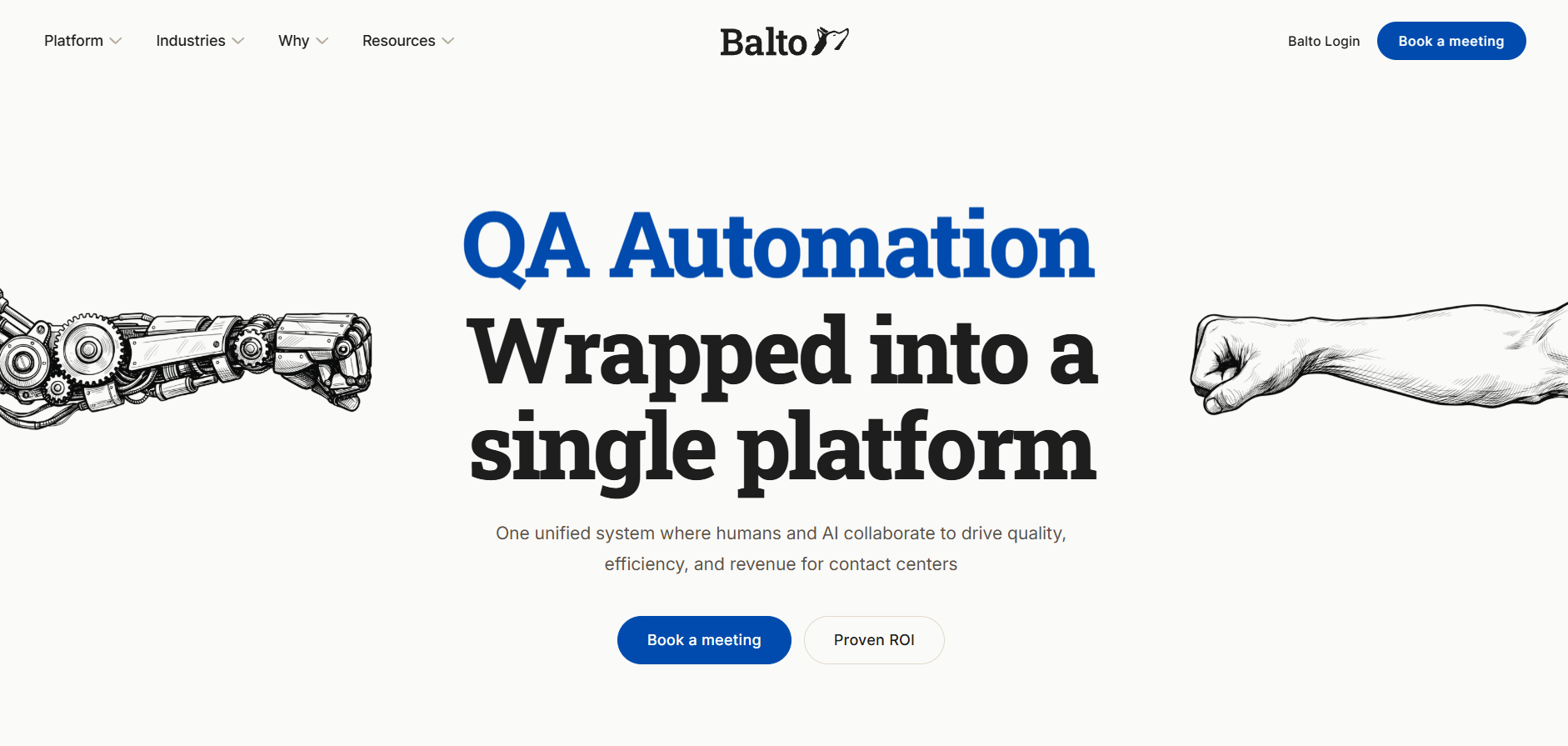
Balto: Perfect for teams in finance and collections needing live compliance assistance for human agents.
What it is: Balto is an agent-focused solution that delivers real-time compliance assistance and automated QA services.
Features:
- Dynamic on-screen checklists that trigger legal disclosures when a customer mentions a specific loan product
- Scores 100% of calls against custom rubrics instead of sampling a few
- Automatically redacts PCI and PII data
Pros:
- Acts like a compliance officer on every call
- Full call coverage for quality assurance
Cons:
- Not ideal for deflecting volume with virtual agents
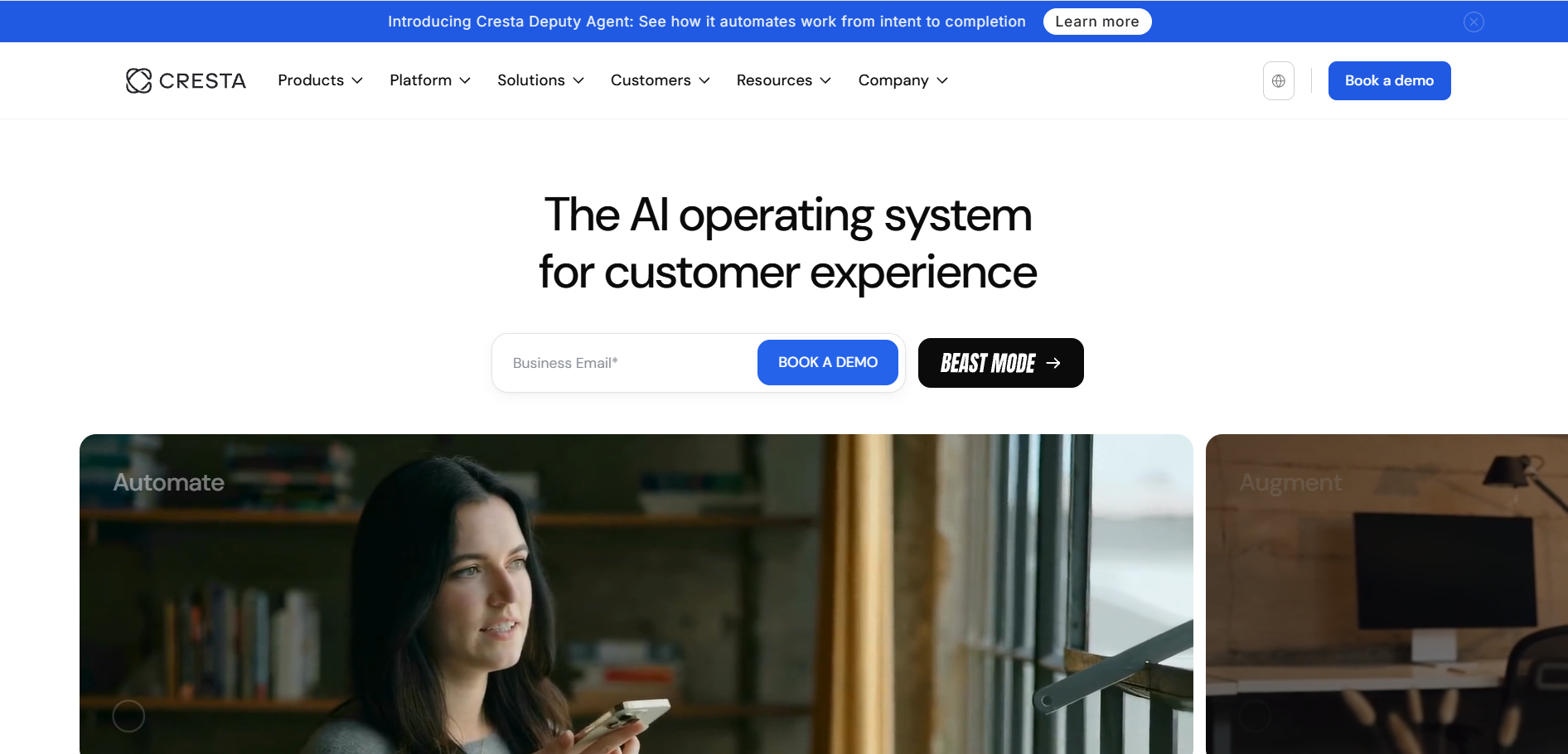
Cresta: Best pick for large-scale call centers focused on growth, cross-selling, and customer retention.
What it is: A generative AI platform that evaluates the performance of best-performing agents and gives real-time coaching to the rest of the agents.
Features:
- Turns the tactics of your best agents into live on-screen prompts for everyone else
- Shows proven rebuttals when a customer wants to close an account
- Gives deep conversation insights across digital channels, including sentiment trends
Pros:
- Helps reduce churn at the moment of cancellation requests
- Spreads top-agent performance across the whole team
Cons:
- Needs a large volume of past call data to deliver the best return
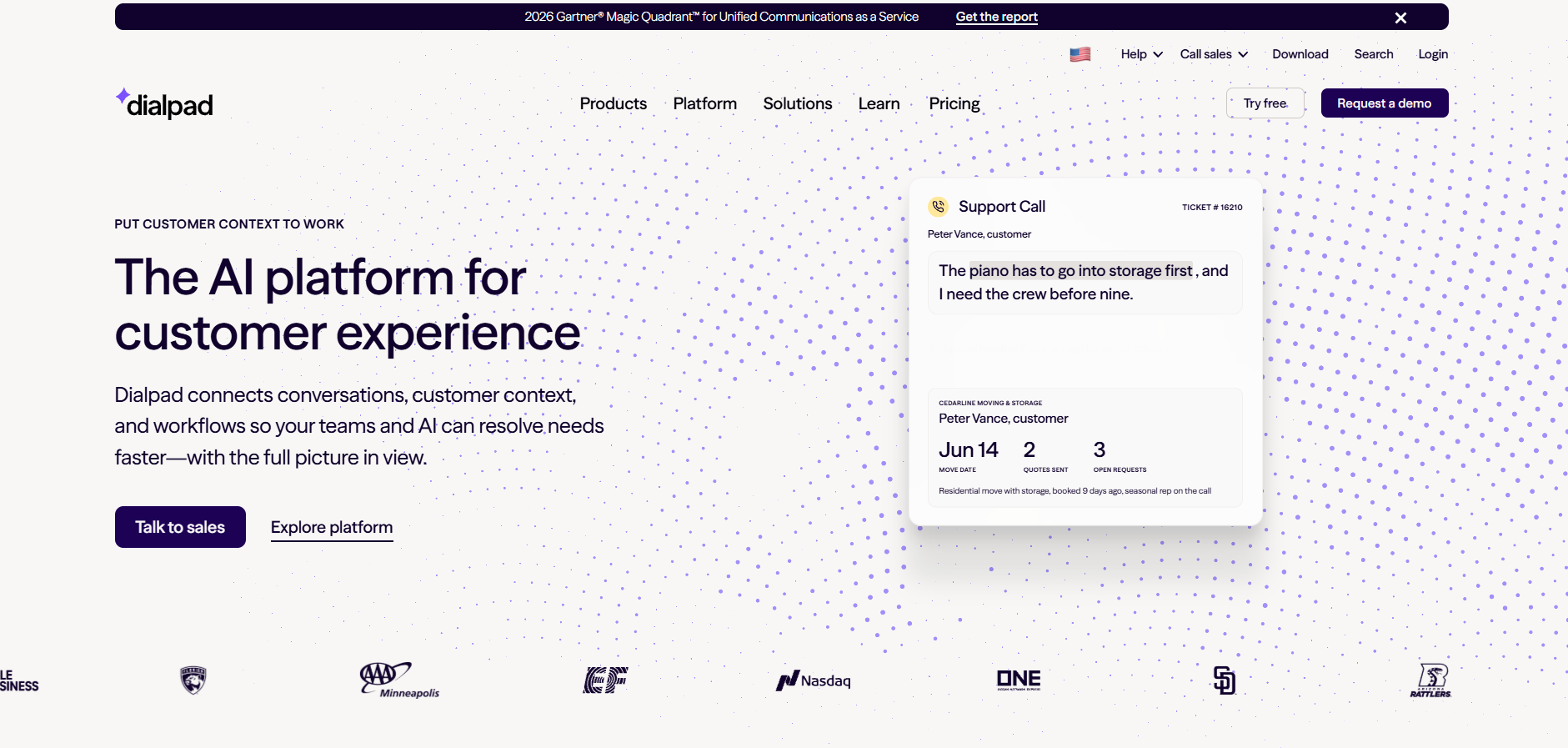
Dialpad AI: Best for banks looking to replace legacy phone systems with an AI-native unified communications platform
What it is: Dialpad is an AI-driven telephone as well as a unified communications system.
Features:
- Real-time transcriptions, accurate and with a skill-based routing based on customer issue and their history.
- AI Live Coach Cards that show tips and key facts mid-call based on live sentiment
- Supervisor dashboards covering queue times, transfer rates, and overall health
Pros:
- Avoids the need for a separate AI layer, as the same is incorporated into the phone system.
- Allows customers to connect with the most appropriate agent.
Cons:
- Not very relevant if the only purpose of using the solution was an additional AI layer.
Observe.AI: Best fit for banks & compliance teams that need to conduct audit-ready, post-call quality assurance on all calls
What it is: A post-call intelligence & QA solution built specifically for strict financial audits and risk management purposes.
Features:
- Collects every recording, removes PCI and PII from them, and rates every call based on scorecards
- Surfaces trends in missed disclosures and fair lending issues across thousands of agents
- Links QA scores directly to agent coaching
Pros:
- Covers 100% of calls instead of the roughly 2% traditional QA checks
- Creates a steady loop of improvement through coaching
Cons:
- Focuses on after-the-call review, not live guidance
Kore.ai: Designed for banks who need an enterprise-class conversational AI platform to handle complex multi-agent banking conversations
What it is: An enterprise conversational AI platform with agentic reasoning, built to handle banking processes and outbound customer communications.

Features:
- Pre-built models that are trained on banking language, ready to make credit decisions and fraud detections right away
- Outbound campaigns to reach out to customers about fraud, collections, or loan upgrades
- Escalation to a human agent when necessary
Pros:
- Powerful agentic reasoning for complex tasks
- Banking-specific training reduces setup of core use cases
Cons:
- Mapping workflows to backend databases takes dedicated technical work
How Thunai Optimizes Banking Call Centers with AI Agents
Thunai is built on governed autonomy. The idea is simple, you shouldn't have to drop your current systems to use AI. Thunai works as a flexible middleware layer on top of your CCaaS apps and core banking systems. It works in two steps.
Step 1: Cut failure demand
Thunai AI virtual agents work across voice, chat, and email. Through the Model Context Protocol, they safely reach live customer data. They solve routine Level 1 tickets, like balance checks and policy questions, in 0.8 seconds. These low-risk requests never reach a human queue. Your cost per resolution drops fast. Explore how Thunai’s AI agents for banking and finance handle routine tickets without replacing your current stack.
Step 2: Boost your human agents
On complex calls, Thunai's real-time agent assist acts as a smart layer in the background. It transcribes the call, reads the customer's intent, and shows the right standard operating procedures on the agent's screen. It watches for missed compliance steps and flags them. When the call ends, it writes the summary and updates the CRM.
Transform contact center performance with compliant agentic AI that reduces costs and eliminates after-call work. Book a demo
FAQs about AI Tools for Optimizing Banking Call Centers
What are the best AI tools for banking call centers?
Top picks include Thunai for agentic L1 automation and real-time assist, Cognigy for omnichannel voice, Balto for real-time compliance, and Cresta for generative AI coaching and sales support.
How do AI tools optimize banking call centers?
They send routine questions to virtual agents. They show exact answers to human agents during calls. They update the CRM after each call. And they review 100% of calls to enforce compliance.
How much do AI tools for banking call centers cost?
Pricing varies. Some vendors charge a flat platform fee. Others use outcome-based pricing, where you pay only for successful AI resolutions, often $0.60 to $1.50 per ticket. Voice AI is often billed per minute.
Can AI tools replace agents in a banking call center?
No. AI removes the repetitive work that slows agents down. It can handle password resets and simple transactions. But humans are still key for complex disputes, caring conversations, and high-value financial talks.
How long does it take to implement AI tools in a bank call center?
It depends on the setup. Middleware tools that use the Model Context Protocol can go live in under 48 hours. Custom CCaaS replacements can take two to four months of integration and testing.
How do you measure ROI from AI tools for banking call centers?
Track the drop in cost per resolution. Also watch average handle time (AHT), the share of Tier-1 tickets the AI closes alone, first-contact resolution (FCR), and fewer compliance penalties.