
What happens when shoppers expect instant answers, but your retail team can’t keep up?
Increasing advertising costs, narrow profit margins, and constant customer questions mean that AI-powered ecommerce platforms are a necessity.
Our study compared 12 platforms on the basis of integration, real-time data capabilities, protection against hallucinations, omnichannel reasoning, and verified results from customers.
Master Comparison Table:
Here's the master comparison table how the leading solutions stack up on category, best use case, AI capability, pricing, and G2 rating.

What Is an AI Ecommerce Platform?
An AI ecommerce platform is a unified intelligence engine. It connects customer intent, product catalog data, and fulfillment systems into one automated loop. Old shopping carts ran on relational databases and rigid if-then scripts.
When a customer asked a question or placed an order, those systems waited on a human or fired off a generic template.
An AI e-commerce platform works in a completely different way. An AI platform analyzes real-time information about the data, inventories, payment processes, and shipment logistics.
The AI makes use of language models and machine learning capabilities to understand the needs of the consumers. While showing the relevant information on the dashboards, it also takes some action. It includes changing the address for the deliveries, initiating return authorizations, rebalancing inventories across several locations, and creating a unique bundle in real time.
Using an AI e-commerce platform turns your store into a digital workforce. It operates all at once through different platforms like browsers, messaging, and even telephones. It remembers previous interactions, keeps track of real-time inventory, and also implements strong policies to safeguard your margins.
AI Feature Bolt-On vs. AI-Native Platform vs. Agentic Commerce
Before you buy, it helps to understand the three architectures on the market today.
1. AI Feature Bolt-Ons
- A number of existing retail platforms layer on generative text capabilities onto the old architecture.
- Such applications help in composing marketing emails, creating product descriptions, and summarizing closed tickets.
- The process is streamlined through the generation of content. However, the underlying database remains passive.
- Such a layer cannot help solve the problems associated with order fulfillment and management in different systems.
- It cannot verify whether the products are present in the warehouse or change the shipping address.
2. AI-Native Platforms
- AI-built platforms are platforms that learn through machine learning right from the start.
- They learn from browsing sessions, buying records, and search terms to understand what the visitor needs.
- They rearrange category pages, reorder search results, and give discounts whenever the customer shows exit intent.
- Such platforms provide excellent analytics and boost conversion rates.
- However, most of them remain purely analytical rather than operational.
- They advise you on what strategies to use but do not run your business processes themselves.
3. Agentic Commerce
- Agentic commerce is the newest step forward.
- An agentic AI ecommerce platform pairs predictive models with direct system execution.
- It runs on the Model Context Protocol (MCP) an architecture that lets AI read and write data safely across enterprise systems.
- Rather than writing a response, an agentic AI ecommerce platform verifies the stock available in the warehouse, checks with Stripe about whether the money is received, prints out a shipping label, and updates the ERP systems – all within seconds.
AI Customer Support & Service Platforms for Ecommerce
Customer support is the biggest cost center for a scaling consumer brand. A dedicated AI ecommerce platform for support protects your margins while it resolves tickets in seconds. Old-school support desks need large human teams just to look up orders, handle returns, and change addresses.
With a conversational AI ecommerce chatbot, brands cut repetitive inquiries and clear ticket backlogs. Response times stay fast even during a volume spike. A solid AI ecommerce platform keeps support running around the clock without sacrificing accuracy.
Thunai: Best for Autonomous Omnichannel CX and Operations
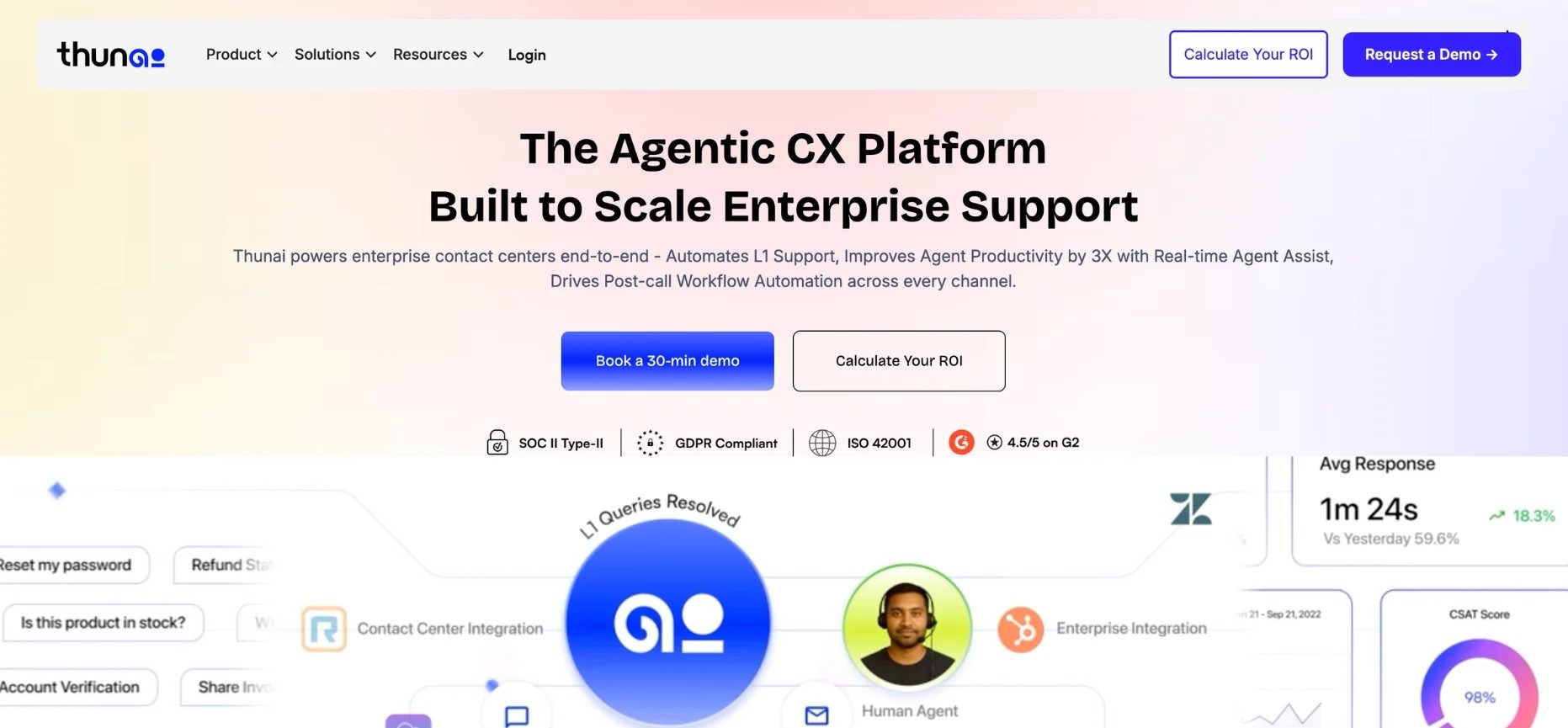
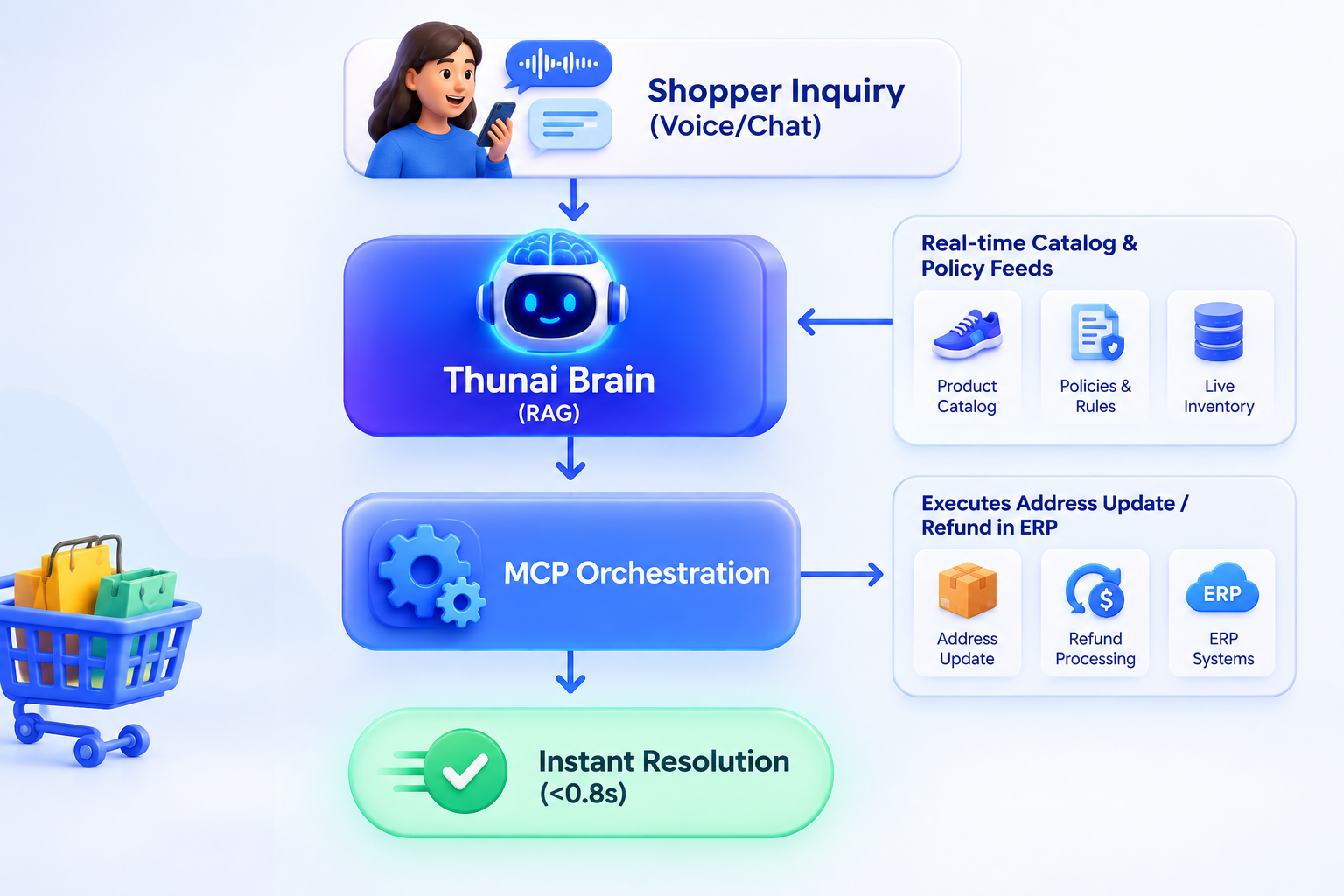
Thunai is an AI e-commerce platform which is designed to combine live chats, data streaming, and back office automation in a single system. Thunai is designed to use the central hub of knowledge called 'Thunai Brain', which helps you resolve support tickets through voice, web chat, WhatsApp, and emails in less than 0.8 seconds.
Ram Prasad Rengan on Product Hunt called Thunai Brain a practical game-changer. Sundar Arvind on RankTopAI praised its clean workflow automation. Enterprise user Arun S. described it as an intuitive tool that transforms daily helpdesk operations.
An enterprise user on Hunter added that this AI ecommerce platform is a strong fit for merchants chasing efficiency and lower costs.
Features
- Thunai Brain combines catalogues, PDFs, policies, and tickets in order to reduce the number of hallucinations by 95%.
- Multi-modal approach offers the use of voice, chat, and email support in 200+ languages and 99.9% voice similarity to humans.
- MCP executes autonomous actions: refunds, address updates, ERP syncs.
- A real-time streaming pipeline on Confluent Cloud and Apache Kafka ingests shopper interactions without data loss.
- Sentiment detection with smart human barge-in alerts a supervisor when a shopper needs white-glove help.
Pros
- Up to 80 percent of level 1 routine support is automated end-to-end.
- Consumption-based pricing with unlimited seats/No seat license fee, custom pricing based on their needs.
- Operational within 48 hours.
Cons
- Complex on-premises legacy databases need structured API mapping during onboarding.
- Deep workflow customization needs clear business logic upfront.
Gorgias - Ideal for Automated Ticket Resolution and Helpdesk Workflows
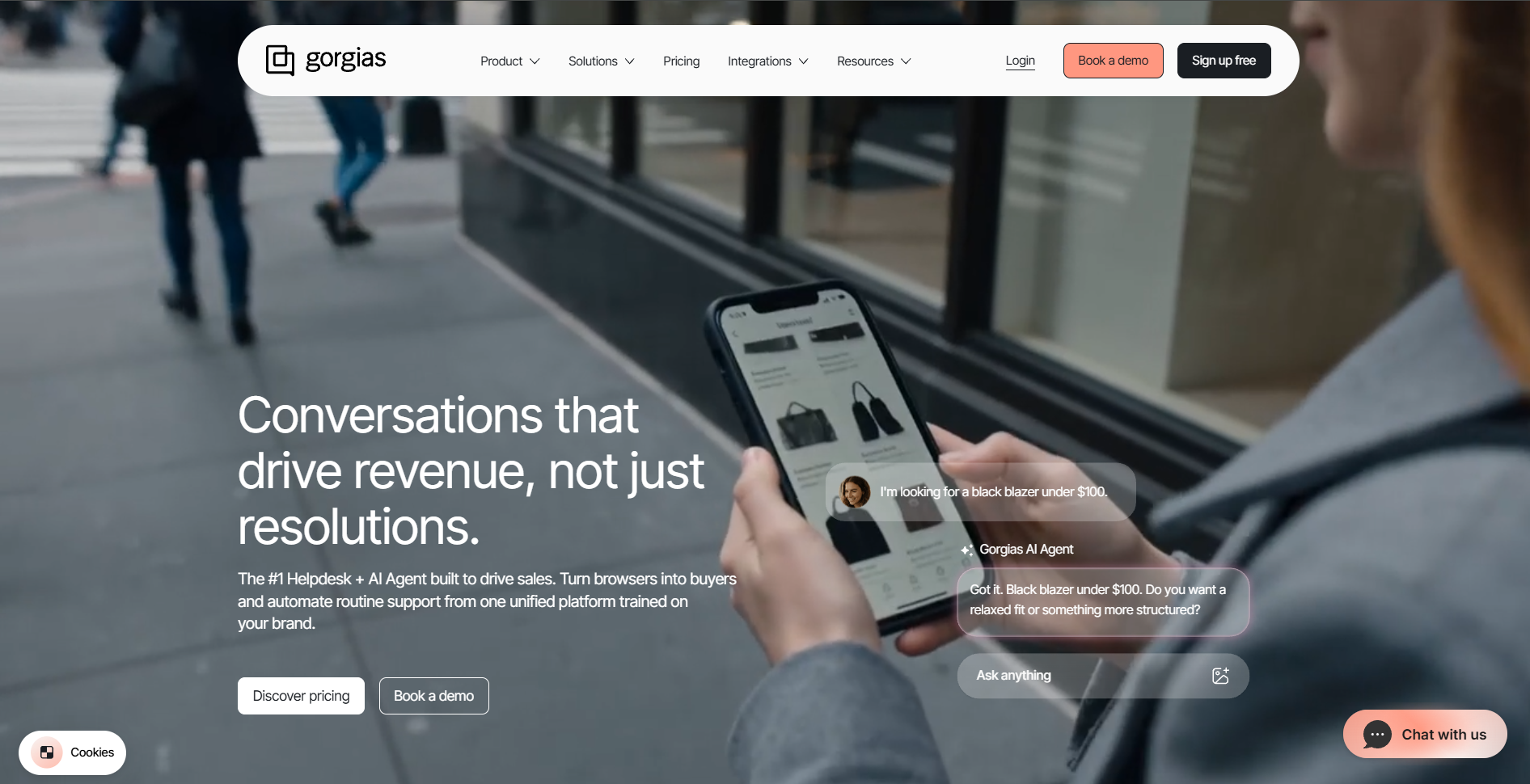
Gorgias integrates all customer communication through emails, chats, texts, and social media into one inbox. It links straight to your storefront database, so agents and automations see purchase history instantly.
Features
- Automated flows handle routine "Where Is My Order" and return questions with templated macros.
- The Shopify widgets could prove useful in tracking information regarding orders and shipments through tickets.
- All the messages received via email, web chat, SMS, Instagram, and Facebook Messenger will be managed in one inbox.
- Revenue tracking helps connect purchases made on the store to support discussions.
- Rule-based routing assigns tickets to the right rep by message tag.
Pros
- Fast setup for DTC merchants on Shopify, with macros that speed up agent replies.
- Clean interface makes daily ticket triage simple.
- Clear reporting links agent productivity to satisfaction scores.
Cons
- Resolution fees of $0.90 - $1.50 each can inflate your bill during holiday peaks.
- The rule-based engine can't reason across multiple steps outside Shopify.
Intercom: Best for Conversational Customer Chat and Self-Service

Intercom delivers real-time website chat and automated self-service. Its Fin AI bot scans your help center to answer shopper questions directly, before handing off to an agent.
Features
- Fin AI resolves queries using your published help articles.
- A visual workflow builder supports custom onboarding sequences and on-site popups.
- A shared inbox includes routing rules, tagging, and capacity monitoring.
- Proactive outbound messages reach active site visitors with promos or updates.
- Reporting tracks bot resolution rate, first-response time, and team performance.
Pros
- Polished chat experience that lifts on-site conversion.
- Simple knowledge base management trains the bot instantly.
- Strong integrations with SaaS and CRM tools.
Cons
- Seat pricing from $39/user plus $0.99 per automated resolution adds up as your team grows.
- Focused on web chat self-service, not deep back-office execution.
AI Search, Discovery, and Personalization Platforms
The shopping experience on a search-centric AI ecommerce platform leverages vector search and machine learning to comprehend what the user intends, rather than simply relying on the words he used to type his query.
In today’s shopping world, customers use natural language to ask questions that should be answered right away. Catalog discovery? Here’s what you need.
Bloomreach: Best Enterprise Solution for Search and Semantics

Bloomreach combines site search, behavioral merchandising, and customer data within one comprehensive enterprise platform. Bloomreach’s Loomi Artificial Intelligence engine analyzes catalog attributes and consumer behavior in order to personalize search results.
Features
- Loomi AI reads complex search intent with ecommerce-specific language models.
- Dynamic merchandising blends algorithmic ranking with manual rules.
- In-built customer data engine provides personalized recommendations through website, mobile apps, and emails.
- Dynamic tracking system reorders search results according to in-session behavior.
- 1:1 personalization tailors product displays to returning shoppers.
Pros
- Increases revenues by up to 34% with high-precision search and merchandising.
- Scalable to millions of products and heavy usage events.
- Lets commercial teams run seasonal campaigns without code.
Cons
- Enterprise contract pricing puts it out of reach for small stores.
- Setup needs real developer time and a multi-month rollout.
Algolia: Best for Developer-Led Neural Search and Instant Indexing
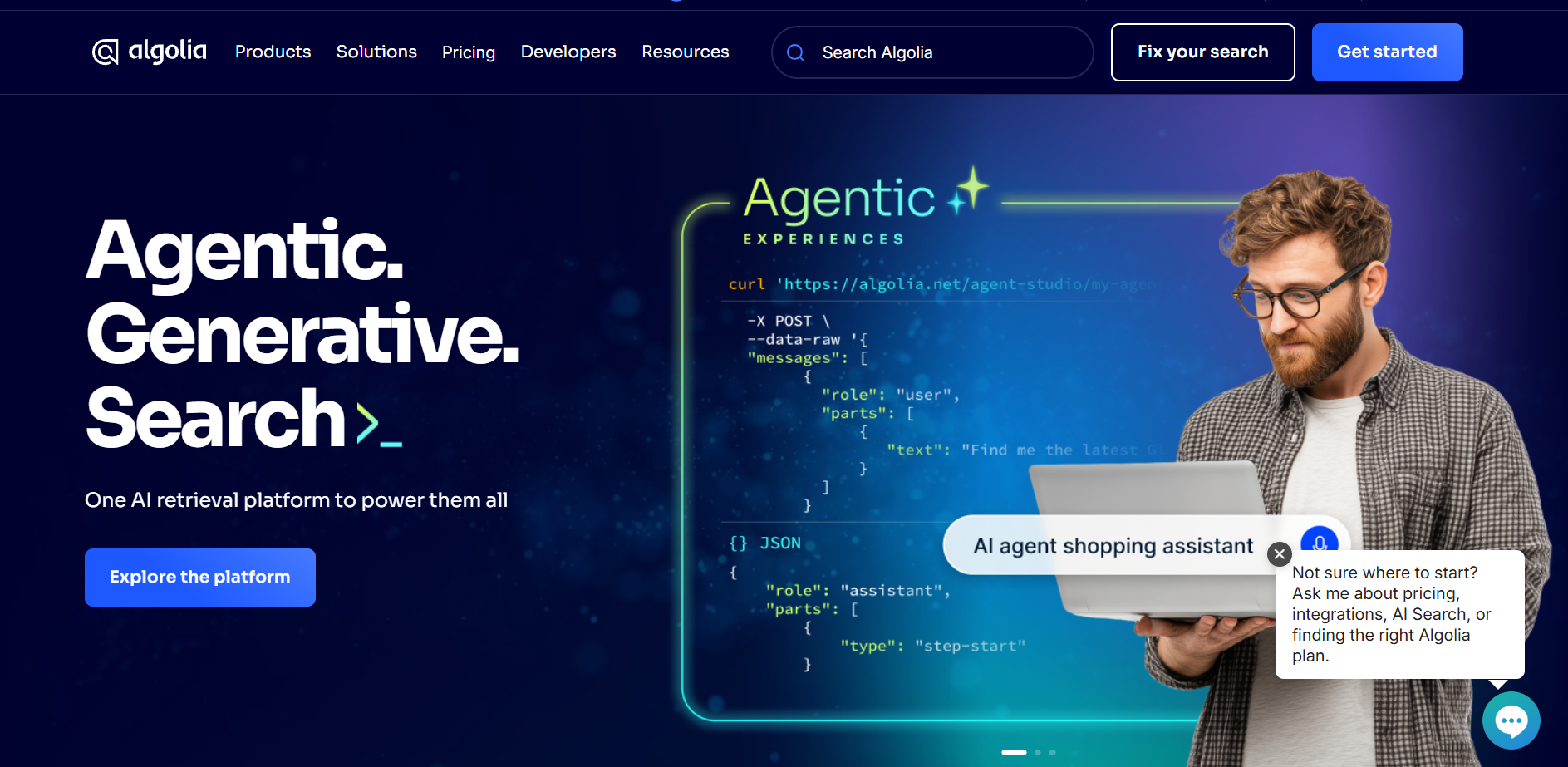
Algolia is API-first search infrastructure built for speed. It blends keyword matching with neural vector search to show accurate results as shoppers type.
Features
- NeuralSearch blends vector embeddings with keyword search.
- Dynamic re-ranking adjusts results using live click data.
- A global edge network returns results in under 20 milliseconds.
- Developer-first SDKs support custom web, mobile, and headless builds.
- AI autocomplete guides shoppers toward terms that convert.
Pros
- Very fast queries, flexible APIs, and an accessible free tier.
- Fine-grained controls for ranking, typos, and attribute weight.
- Strong reliability at high volume.
Cons
- Usage-based pricing can get pricey on high-traffic catalogs, and non-technical teams need developer help.
- No native support workflows, returns handling, or voice.
Klevu: Best for Conversational Product Discovery and Natural Language Search
Klevu offers site search, category navigation, and personalized recommendations. Its MOI assistant acts as a digital shopping advisor.
Features
- NLP search corrects typos and understands multi-word queries.
- MOI guides buyers with conversational recommendations and comparisons.
- Smart merchandising adjusts sorting by stock level and margin.
- Self-learning search improves from historical purchase data.
- Visual filters help shoppers narrow large catalogs fast.
Pros
- Get 15% increase in conversions and 6x more sales via searching.
- Easy to implement in Shopify, Magento and BigCommerce.
- It helps undecided customers find their items without searching forever.
Cons
- $499/month base price is steep for early-stage merchants.
- Deep visual customization needs front-end development.
Nosto: Best for Dynamic On-Site Personalization and Behavioral Targeting
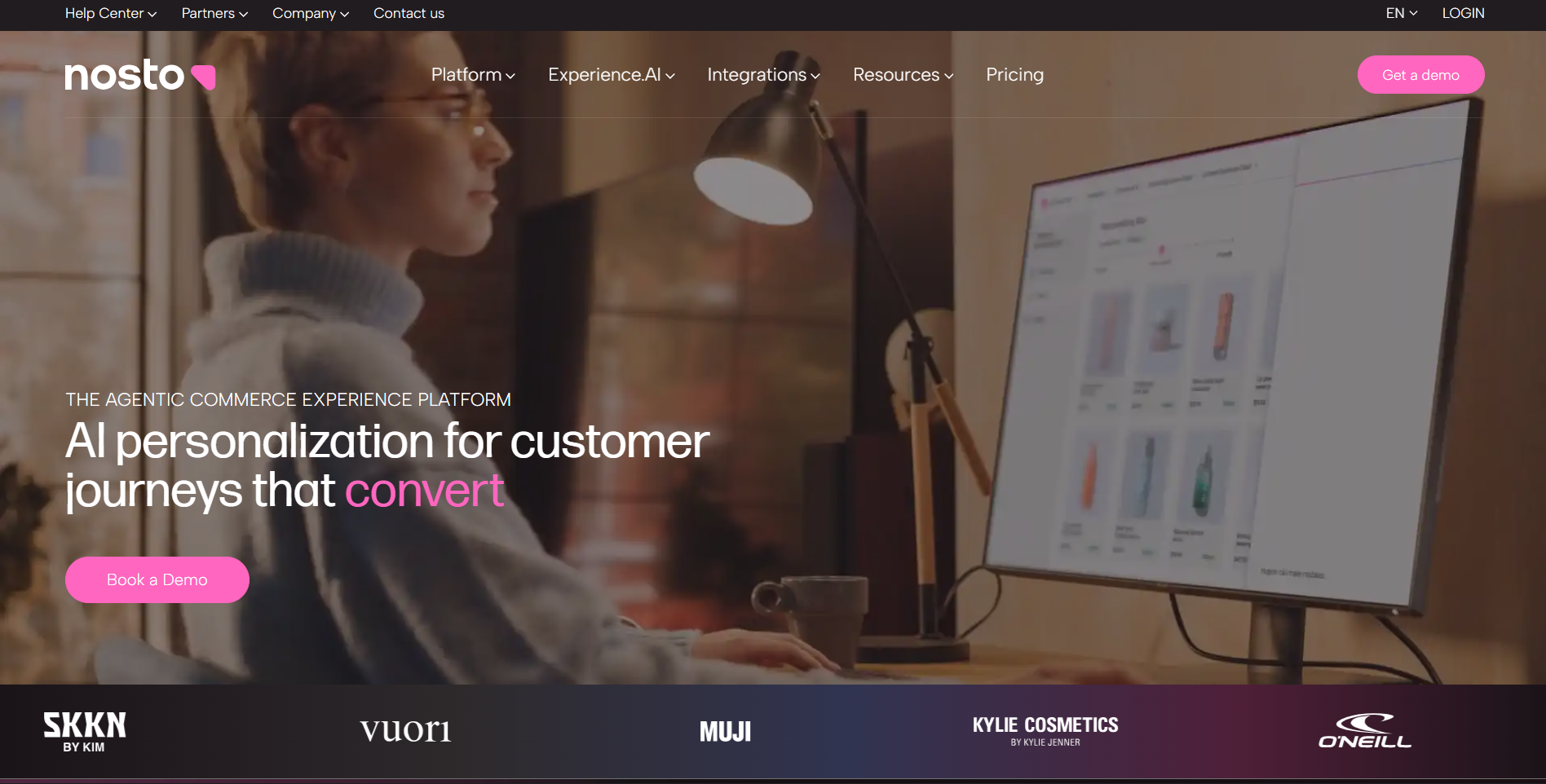
Nosto analyzes shoppers’ actions in real time for customizing journey recommendations, ranking categories, and pop-up messages.
Features
- Predictive carousels show cross-sells on home, collection, and cart pages.
- Automated merchandising organizes grids by browsing history.
- In-session triggers deliver offers to recover abandoning visitors.
- Visual UGC curation embeds customer photos on product pages.
- Continuous A/B testing finds the top-performing layout.
Pros
- Documented conversion lifts up to 3.5x, with fast visual setup.
- A visual builder lets marketing teams launch campaigns without code.
- Segment-specific content tailors banners to each audience.
Cons
- Pricing starting from $99/mo increasing according to the traffic.
- Not dealing with backend or ticketing, only on-site merchandising.
AI Merchandising and Pricing Platforms
Merchandising inside an AI ecommerce platform balances turnover, margin, and dynamic incentives across thousands of SKUs a job no team can do by hand. These tools use predictive analytics to put the right product in front of the right shopper at the right moment.
Rebuy: Best for Intelligent Cart Upselling and Post-Purchase Bundles
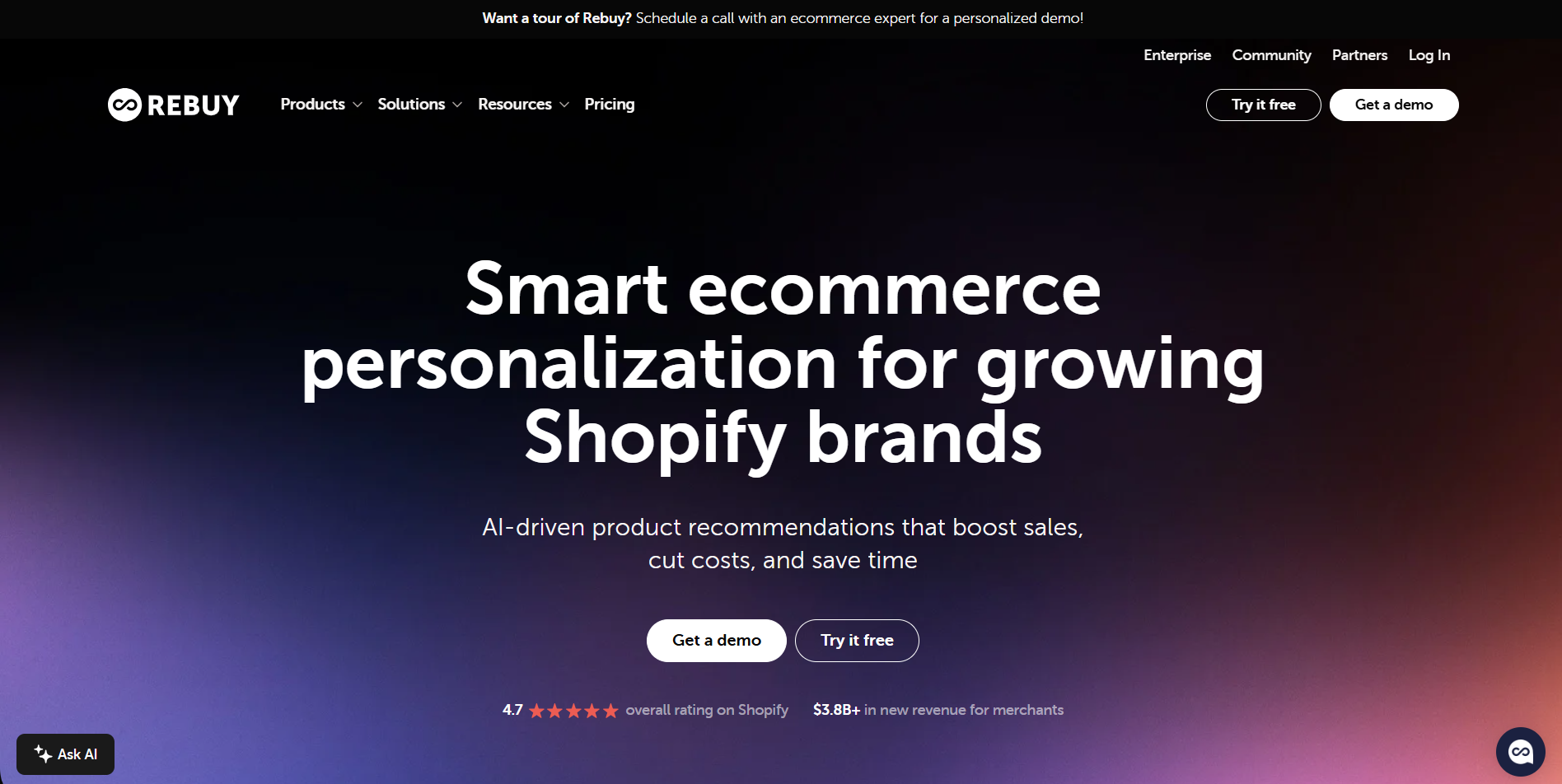
Rebuy automates merchandising and post-purchase upsells for fast-growing brands. It studies transaction patterns to surface relevant add-ons at checkout.
Features
- A smart cart drawer shows free-shipping progress bars and contextual add-ons.
- One-click post-purchase upsells capture a second order after checkout.
- Predictive reorder alerts tell repeat customers when to restock.
- Cross-sell widgets run on product, checkout, and thank-you pages.
- Rule-based controls let merchants exclude specific items from offers.
Pros
- A track record of lifting average order value, with no-code Shopify install.
- Pre-built templates launch upsell funnels in minutes.
- Reporting shows clear revenue attribution per placement.
Cons
- Tiered pricing from $99/month scales with revenue.
- Limited to cart and checkout no omnichannel ticketing or voice.
BigCommerce AI: Best for Mid-Market B2B Catalog Management and Wholesale
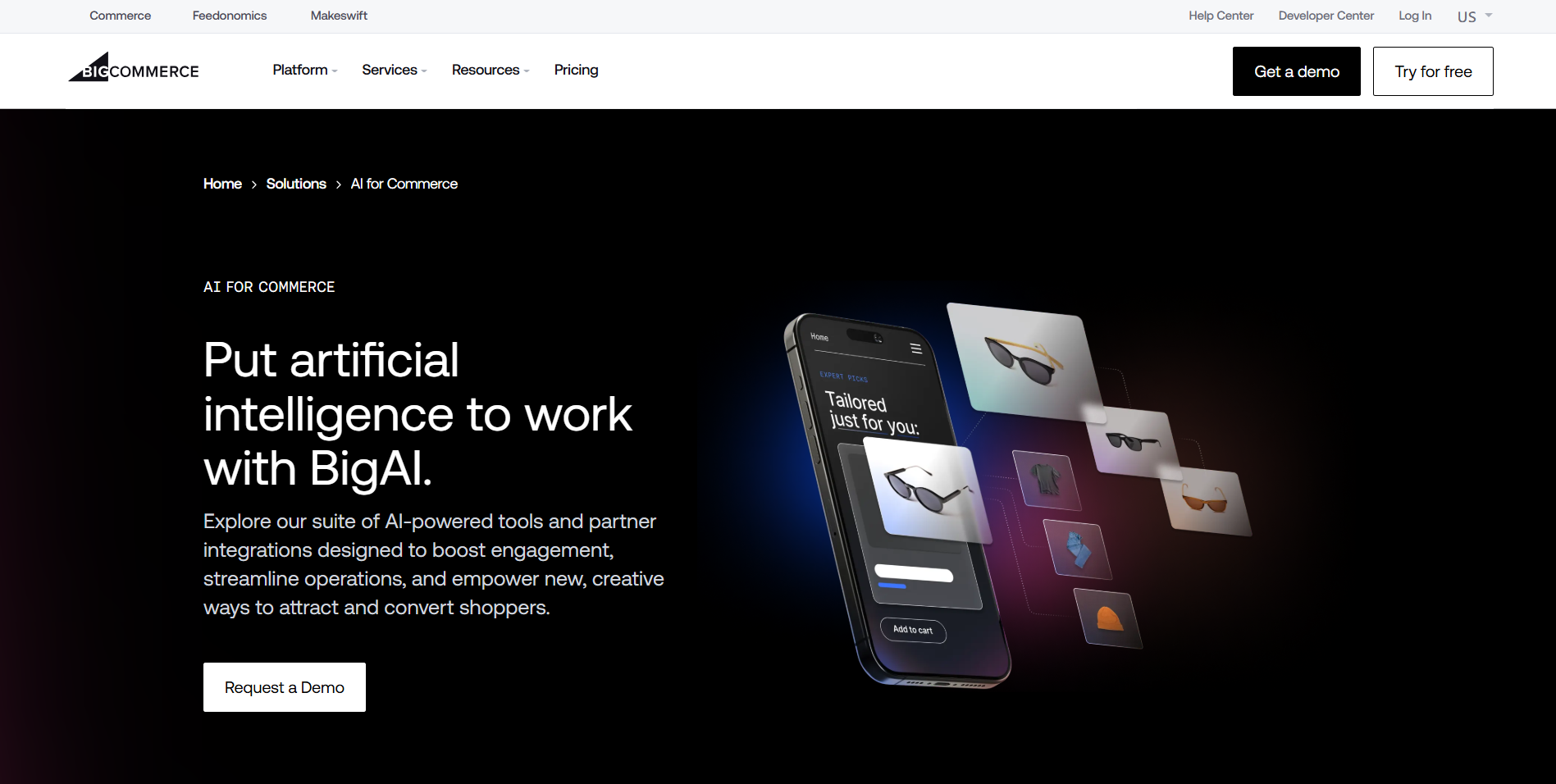
BigCommerce is an open SaaS platform that pairs native AI with enterprise wholesale tools. It optimizes catalog copy, runs multi-storefront operations, and builds custom B2B pricing.
Features
- A native AI copywriter generates product descriptions and category content.
- Open architecture supports direct API integration with outside AI engines.
- A built-in B2B portal manages buyer hierarchies and wholesale price lists.
- Multi-storefront control runs separate regional and international stores from one account.
- Automated promotions calculate volume discounts and wholesale terms.
Pros
- Zero native transaction fees, with 99.9% verified uptime.
- Deep native B2B support without pricey third-party plugins.
- An open API ecosystem for custom workflows.
Cons
- Deep catalog customization needs more technical onboarding than SMB tools.
- Native AI leans toward content drafting, not autonomous execution.
AI Content and Creative Generation Platforms
Content operations inside an AI ecommerce platform produce product media, marketing copy, and localized descriptions at scale. Every launch needs fresh descriptions, social assets, and promo copy. If you run a high-volume storefront, lining up generative content with multi-channel workflows matters.
Shopify Magic: Best for Native Storefront Content and Image Transformation
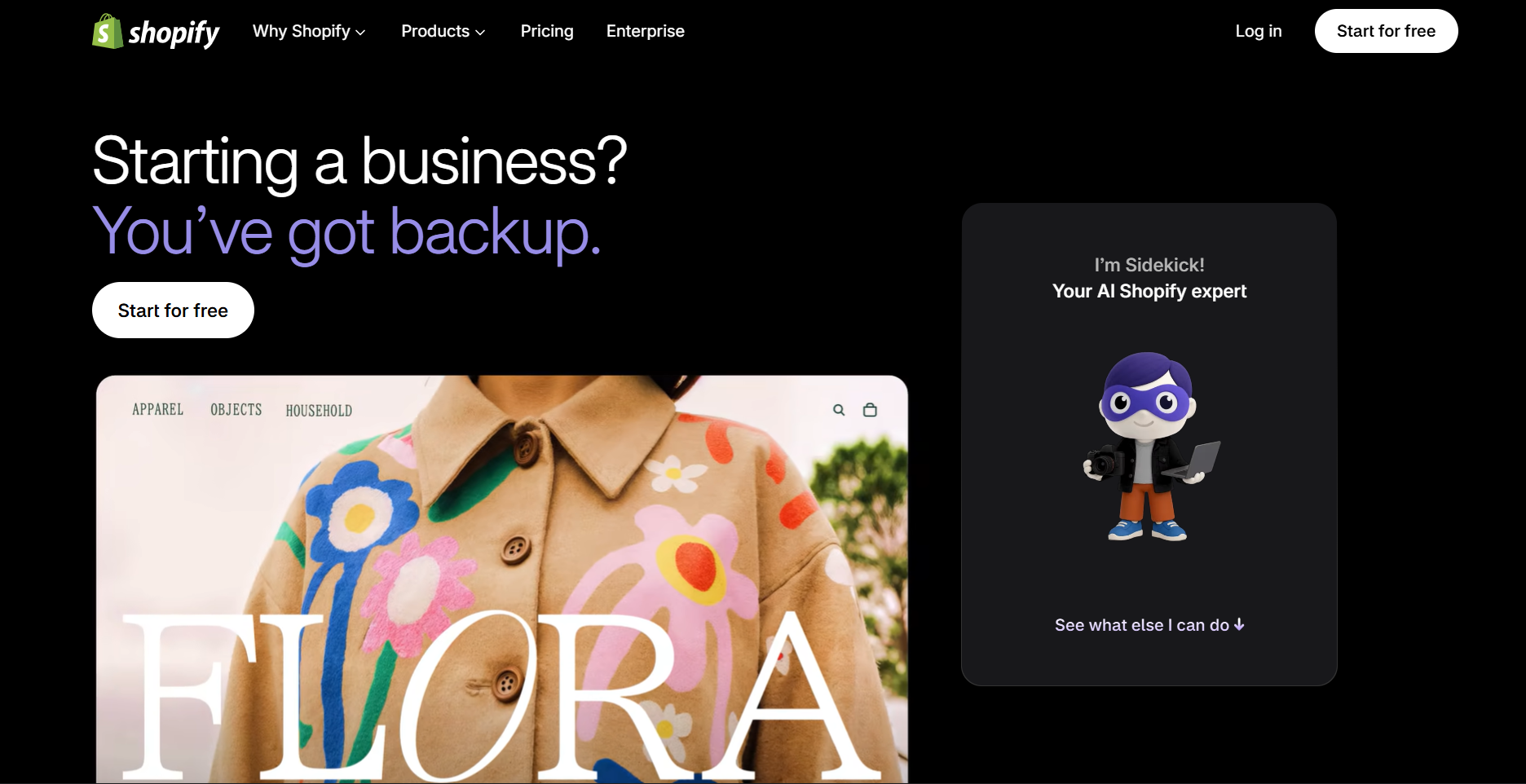
Shopify Magic is a suite of AI tools built into the Shopify admin. It handles copy generation, Sidekick store analysis, and one-click media editing.
Features
- Sidekick reviews traffic and financial metrics to suggest improvements.
- Automated copywriting drafts product descriptions, blog posts, and emails.
- A built-in image editor swaps backgrounds and cleans up photos instantly.
- Contextual reply suggestions assist agents inside Shopify Inbox.
- Conversational search helps operators find admin settings fast.
Pros
- Free with standard Shopify plans starting at $39/month no extra install.
- Fits right into the store admin, so teams need no special training.
- Native background editing skips a separate photo-editing subscription.
Cons
- No autonomous back-office workflows across ERP, warehouse, or carrier software.
- Sidekick's advanced features depend on rollout schedule and region.
Jasper: Best for Brand-Aligned Marketing Copy and Campaign Assets
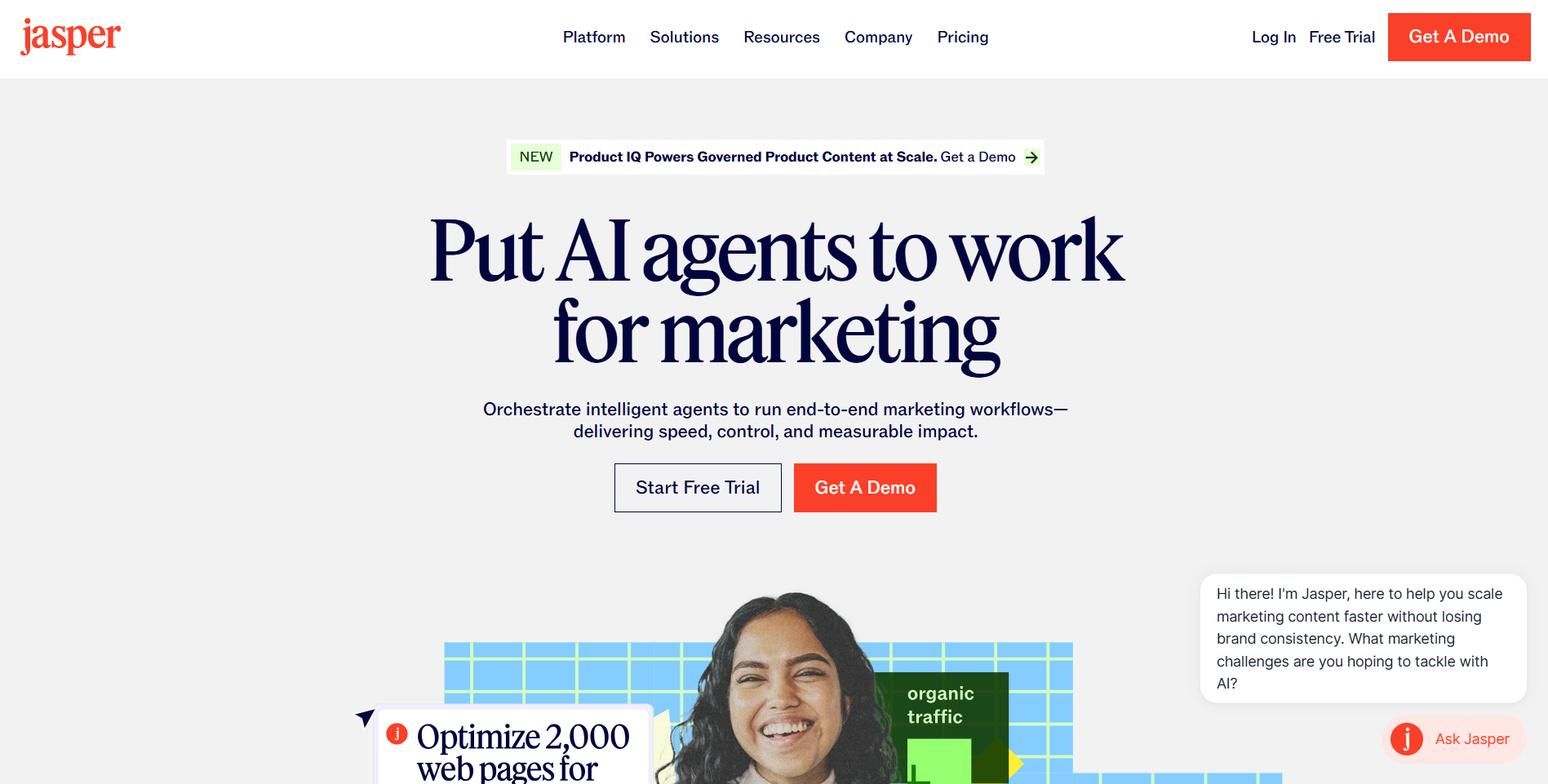
Jasper helps marketing teams produce promotional copy that stays on-brand at scale product descriptions, social campaigns, and email variations.
Features
- A Brand Voice engine indexes your guidelines for consistent tone.
- A multichannel campaign builder generates ad copy, blog posts, and landing pages together.
- A collaborative workspace supports review, editing, and approval.
- A browser extension generates copy inside email clients and web apps.
- Built-in plagiarism and style checks keep output original.
Pros
- Speeds up catalog copy and social asset production for creative teams.
- Brand voice guardrails keep copy on approved terminology.
- Pre-built templates guide non-technical writers to stronger ad copy.
Cons
- Seat pricing from $39/user doesn't support live shopper chat or order management.
- Strictly a marketing tool, with no direct link to carriers or inventory.
AI Analytics and Forecasting Platforms
Predictive intelligence inside an AI ecommerce platform forecasts stockouts, return spikes, and seasonal demand before they hit your operations. Machine learning helps you buy smarter and target campaigns with precision.
Klaviyo AI: Best for Predictive Retention Marketing and SMS Automation
Klaviyo AI applies machine learning to customer behavior and purchase history. It builds automated email and SMS journeys around predictive spending signals.
Features
- Predictive analytics calculate churn risk, next order date, and lifetime value.
- Smart send-time optimization messages each customer when they're likely to engage.
- Generative subject lines and copy tools draft variations per segment.
- Automated segmentation updates lists as shoppers cross spending thresholds.
- Deliverability monitoring protects your sender reputation globally.
Pros
- Direct revenue attribution, backed by a functional free tier.
- Strong segmentation targets shoppers by exact behavior.
- Deep two-way sync with Shopify, WooCommerce, and BigCommerce.
Cons
- Limited to marketing and retention no support or fulfillment.
- Costs rise fast as your contact list grows into the hundreds of thousands.
The Shift from Tool Stacks to Agentic Platforms
Many growing brands stitch together a patchwork of point tools one for email, one for live chat, one for recommendations, one for forecasting. Each tool works fine alone. But six disconnected systems create real friction, and customer data ends up trapped in silos.
A unified AI ecommerce platform solves this. It brings customer interactions, product data, and operations into one decision-making engine.
Why Running 6 Point Tools Costs More Than One Agentic Layer
Six point tools cost more than one unified AI ecommerce platform. Disconnected software creates three hidden expenses that eat into your margin:
1. Connector maintenance and integration overhead. Point tools lean on custom webhooks and connector apps to share data. When a core platform updates its API, those connections break. Engineers burn hours fixing syncs, merging duplicate profiles, and patching pipelines. A unified AI ecommerce platform skips this by running on one native data layer.
2. Costly context switching. When tools don't talk to each other, human agents become the bridge. A rep handling one delivery question has to check the store admin, the carrier portal, the warehouse system, and the CRM. That switching slows handling time and invites mistakes. An agentic ecommerce AI platform pulls all that data instantly, so resolutions take seconds instead of hours.
3. Stacked software billing. Point tools compound costs seat fees for the helpdesk, base fees for search, usage fees for marketing automation. Many helpdesks also charge $0.90 to $1.50 per automated ticket. During a sales surge, that adds up to a real spike in your bill.
Switching to an agentic AI ecommerce platform like Thunai rolls these workflows into one predictable, consumption-based bill with zero seat fees. As a verified enterprise user on Hunter. put it, an integrated AI ecommerce platform is a strong fit for merchants chasing efficiency and lower cost.
How to Evaluate an AI Ecommerce Platform (8 Criteria)
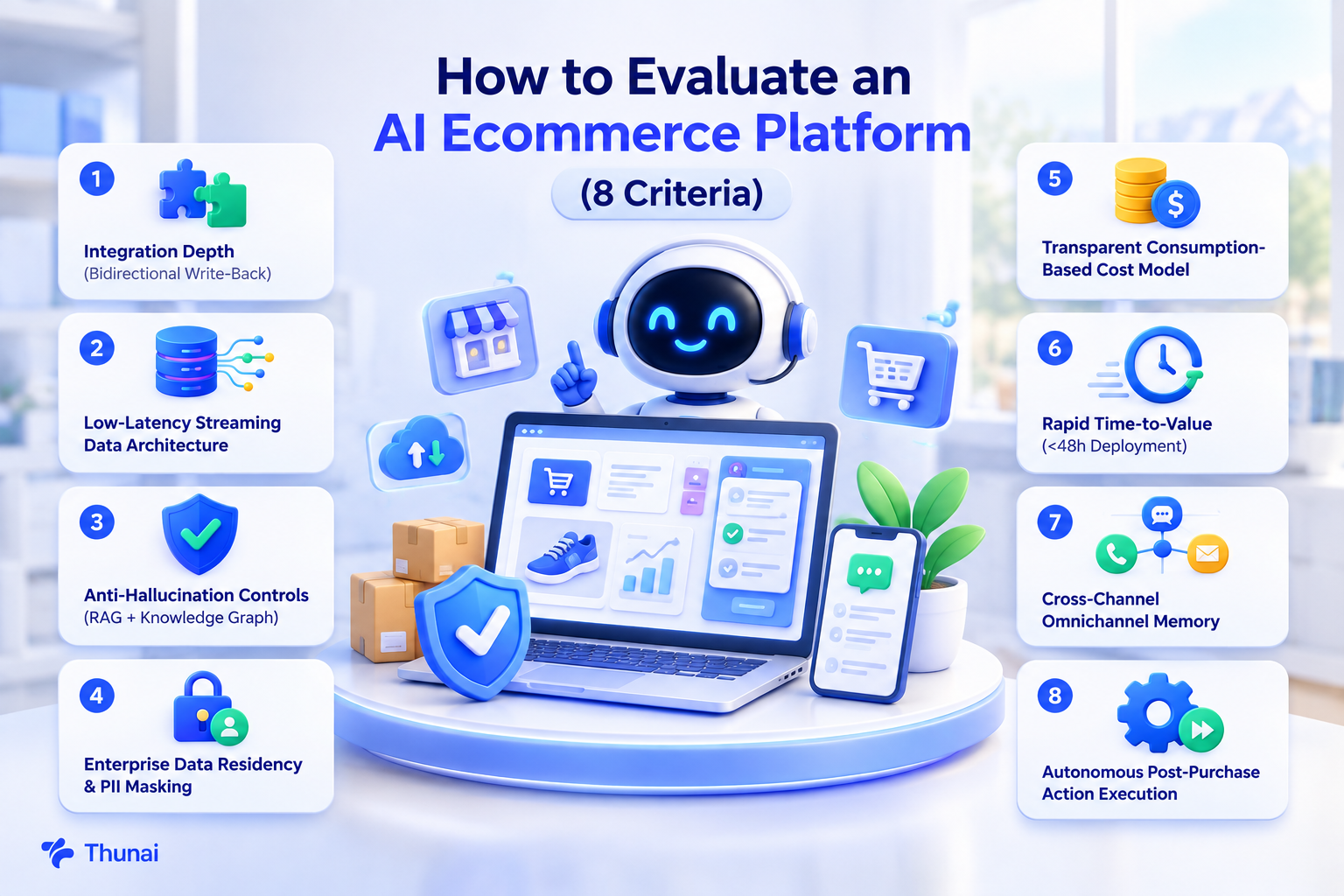
1. Integration depth and bidirectional write-back.
- Many tools claim to "integrate" but only read basic order data.
- A real AI ecommerce platform writes back it creates return labels, updates addresses, issues refunds, and adjusts inventory inside your ERP or warehouse system without a human in the loop.
2. Real-time data streaming.
- Batch-synced databases can't support autonomous retail.
- If a customer emails two minutes after ordering, the system needs to see that order instantly.
- Look for streaming architecture Confluent Cloud, Apache Kafka that processes events as they happen.
3. Hallucination controls and knowledge grounding.
- In retail, a made-up answer costs trust and can create real legal exposure.
- The platform should never invent a discount code, promise an unrealistic ship date, or misstate a return policy.
- Look for Retrieval-Augmented Generation (RAG) grounded in an auditable knowledge graph this is how top platforms cut hallucinations by 95% or more.
4. Data residency, security, and governance.
- Retail data includes home addresses, phone numbers, and payment details.
- Your platform needs to meet GDPR, CCPA, and SOC 2 Type II standards, with automated PII masking so financial data never reaches an external model.
5. Predictable, consumption-based pricing.
- Avoid models that charge per human seat.
- Hiring seasonal staff shouldn't trigger a software penalty.
- Look for consumption-based pricing with unlimited seats.
6. Fast time-to-value.
- A six-to-nine-month rollout rarely delivers the promised return.
- Look for pre-built connectors that deploy in under 48 hours and auto-index your catalog, policies, and ticket history.
7. Omnichannel context continuity.
- A shopper might start on web chat, follow up by text, then call.
- The platform should carry that context across channels so nobody repeats their order number twice.
8. Actionable post-purchase execution.
- The relationship doesn't end at checkout.
- The system should handle post-purchase workflows on its own see our resources on real-time order tracking and management and AI tools for return management.
Real Results: What Teams Actually See
When retailers move from legacy tools to an agentic AI ecommerce platform, the impact shows up in the financial statements and in customer retention.
- Bazooka Candy: 10,000+ accounts mapped, 60% triage reduction, $4M in annual savings
- Neuberg Diagnostics: 5 voice/text agents, 70% resolution boost, 10x faster drafting
- Kirby Allison: 30% of inquiries automated, 46% lift in support-driven sales
Bazooka Candy runs a massive global confectionery supply chain. Email backlogs were overwhelming support and delaying triage. Buyers reporting delivery delays or damaged packaging sat in unmanaged queues, and agents had to dig through CRM records manually just to identify who was writing in.
- By deploying Thunai Brain and the Model Context Protocol, Bazooka Candy connected its inbound email queue straight to enterprise records and forecasting systems. The AI ecommerce platform sorted incoming emails automatically, mapped over 10,000 B2B accounts with zero manual entry, cut triage time by 60%, and delivered $4 million in projected annual supply chain savings.
Neuberg Diagnostics manages heavy patient communication volume across regional medical networks. It needed faster response times without hiring dozens more reps, so it deployed five specialized Thunai voice and text agents grounded in the Thunai Brain knowledge base.
- The rollout sped up resolutions by 70%, tripled multi-channel engagement, and let support teams draft accurate replies ten times faster than manual work all while maintaining clinical accuracy.
Kirby Allison, a luxury footwear and garment care brand, integrated Gorgias Automate to handle sizing questions and shipping status requests. Automated flows resolved repetitive pre-sale questions instantly.
- By automating 30% of incoming tickets and giving instant product advice, Kirby Allison drove a 46% increase in support-attributed sales while keeping satisfaction high.
Ready to move beyond disconnected ecommerce tools? Book a demo now and see how Thunai can automate customer support, connect real-time data, and execute ecommerce workflows from one AI platform.
Frequently Asked Questions
What differentiates an AI ecommerce platform from legacy shopping software?
Legacy platforms run on relational SQL databases and static rules. They need a human to review tickets, check inventory, and push updates. An AI ecommerce platform pairs real-time streaming data with reasoning models. It understands natural language intent and executes complex workflows across inventory, payment, and shipping without manual work.
How much does an enterprise AI ecommerce solution cost?
It varies a lot. Basic tools like Shopify Magic come included in plans starting at $39/month. Point helpdesks run $10–$500/month, often with per-ticket fees of $0.90–$1.50. Enterprise search platforms like Bloomreach run custom annual contracts. Full agentic systems like Thunai use consumption-based pricing starting at $99/month with unlimited seats.
Can an AI platform replace customer service teams?
No. An AI ecommerce platform doesn't replace people. It automates 70–80% of repetitive Level 1 tickets order tracking, address changes, return processing so your team can focus on VIP care, complex claims, and wholesale accounts.
How do Shopify and BigCommerce approach native AI?
Shopify builds AI into its admin through Shopify Magic and Sidekick, focused on copy generation, image editing, and analytics. BigCommerce takes an open SaaS approach, with native B2B tools and easy API access for outside AI engines.
Which AI software fits small online retailers best?
Early-stage stores do best with low-overhead, native tools. Shopify Magic gives you product descriptions and image edits for free. For retention, Klaviyo AI has a working free tier that builds predictive email segments without a developer.
How do platforms prevent hallucinations?
Leading systems use Retrieval-Augmented Generation grounded in an enterprise knowledge graph. Instead of generating from general training data, the platform grounds every answer in real-time catalog records, official policies, and live order feeds. Thunai Brain, for example, cuts hallucinations by 95% by continuously referencing live store data.
How fast can a store deploy an agentic platform?
Modern cloud-native platforms go live in under 48 hours. Pre-built connectors sync catalogs, customer history, and policy documents automatically. Teams can review automated replies in test mode before switching on live autonomous execution.
Can an AI ecommerce platform run a store on its own?
AI ecommerce platform can handle discrete workflows refunds, search re-ranking, shipment alerts but it can't run the whole business alone. Merchandising strategy, brand vision, supplier deals, and creative direction still need real human leadership. Think of the platform as a fast, precise execution engine, not a replacement for it.


.webp)