
After the 2025 Los Angeles wildfires, thousands of policyholders faced delayed, underpaid, or denied claims, with regulators reporting 400+ violations. Customers waited weeks or months, dealing with poor communication during critical moments.
The real issue wasn’t intent, it was systems that failed under pressure, relying on manual workflows, fragmented data, and slow decisions.
The solution is a salesforce insurance platform with unified data and automation, ensuring claims are handled quickly, accurately, and at scale even during crises.
Want to avoid becoming the next headline? See how in this guide.
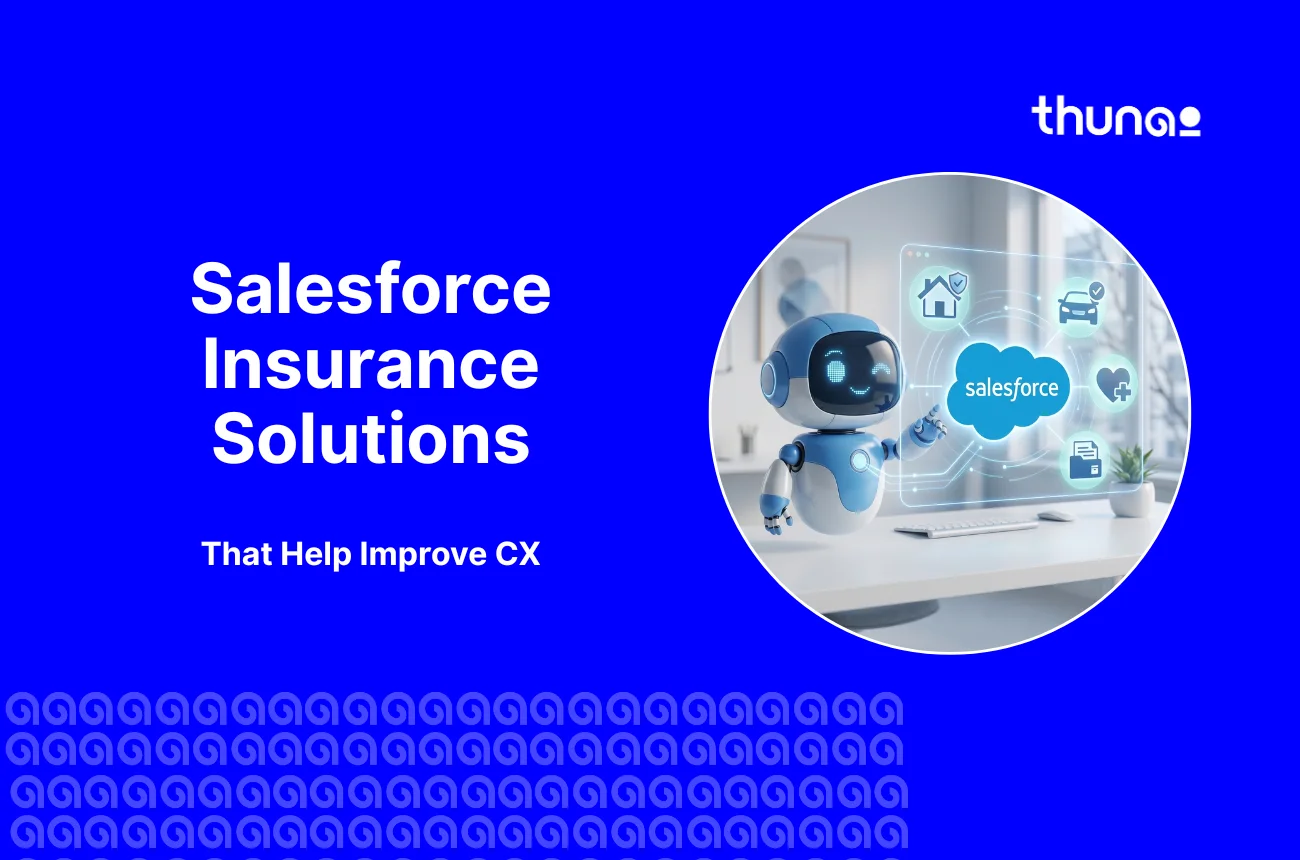
10+ Salesforce Insurance Solutions to Deliver a Better Policyholder Experience in 2026
Building an elite CX stack in 2026 requires a modular, AI-native approach. We are moving away from monolithic legacy cores toward a system of intelligence that connects your frontline agents with your backend policy administration.
Here are the top salesforce insurance solutions that are redefining the industry this year.

1. Contact Center / CCaaS Solutions
The contact center remains the moment of truth for our customers. In 2026, the best salesforce insurance solutions for the contact center are those that blend outbound efficiency with inbound intelligence.
1. Convoso - Best for high volume outbound sales and compliance
Convoso has solidified its place as the premier platform for insurance agents automated voice campaigns salesforce integration. It is specifically engineered for high-volume, regulated contact centers that need to maximize live conversations while mitigating the risk of spam flagging and TCPA violations.
Features
- Predictive Dialing Engine achieves a speed-to-lead of less than 5 seconds, capturing prospects at peak intent.
- 97% Answering Machine Detection (AMD) accuracy navigates iOS call screening to maximize agent talk time.
- Caller ID Reputation Management intelligently rotates numbers to prevent Spam labels and preserve brand trust.
Pros
- Drives a 30% jump in sales through automated outbound cadences managed natively inside Salesforce.
Cons
- Real time agent guidance features are less mature than dedicated coaching platforms.
2. Five9 - Best for enterprise scale quote follow ups and renewals
Five9 is a heavy hitter among salesforce insurance solutions, providing a robust cloud infrastructure that powers massive insurance sales and service operations.
Its integration with the salesforce insurance platform allows for a single pane of glass experience for representatives.
Features
- Intelligent Virtual Apps (IVA) handle self service routing and basic policy inquiries without human intervention.
- Deep Salesforce CTI integration allows agent screens to pop with full policyholder history before the call starts.
- Workflow Automation coordinates tasks across the contact center to eliminate idle time.
Pros
- Increases agent talk time by up to 300% by connecting calls the moment an agent is ready.
Cons
- Enterprise pricing can be complex due to usage based models for high volume carriers.
3. Talkdesk Insurance Experience Cloud - Best for industry specific digital workflows
Talkdesk offers a suite of salesforce insurance solutions pre-built for the unique nuances of the policy lifecycle. It focuses on turning the contact center into a proactive service engine.
Features
- Talkdesk Autopilot provides autonomous AI agents specifically trained for claims intake and policy servicing.
- Insurance Experience Cloud features pre-built workflows for FNOL and policy endorsements.
- Sentiment and Intent Analysis provides real-time coaching prompts to agents based on customer mood.
Pros
- A highly intuitive interface reduces agent training time and improves first contact resolution.
Cons
- Advanced AI features require a higher tier of licensing which may impact smaller agencies.
2. Policy Administration and Claims Solutions
Modernizing the core is the most difficult but rewarding part of any salesforce insurance implementation. You need a salesforce insurance carrier software stack that compresses cycle times from weeks to minutes, which helps insurers automate FNOL, claims validation, and settlement workflows at scale.
1. Salesforce Digital Insurance (Vlocity) - Best for rapid product innovation
This is the bedrock of native salesforce insurance solutions. It provides a unified, digital first environment that harmonizes core insurance processes with modern CRM capabilities.
Features
- Insurance product catalog & bundle designer allows carriers to launch new products in days via a low code UI.
- Omnichannel quote to bind engine supports dynamic repricing and straight through processing.
- Guided digital claims Intake supports peril specific details and photo uploads for instant adjudication.
Pros
- Eliminates data silos by housing the entire policy lifecycle on one trusted platform.
Cons
- Base implementation starts at $180,000/year, requiring a significant upfront capital commitment.
2. Guidewire Cloud Integration - Best for P&C enterprise core excellence
Guidewire remains the industry standard for core systems, and its 2026 partnership with Salesforce represents the pinnacle of Salesforce insurance integrations.
Features
- ProNavigator AI Assistant embeds expert knowledge directly into PolicyCenter and ClaimCenter workflows.
- 360 Degree Customer View within Salesforce FSC gives agents instant visibility into Guidewire account data.
- Automated Coinsurance Workflows reduce leakage by tracking financials across complex leader/follower structures.
Pros
- Industry leading reliability and depth for complex specialty lines and commercial operations.
Cons
- Full scale core modernization typically requires a 12 to 24 month implementation roadmap.
3. Majesco Spring '26 Release - Best for AI-native continuous intelligence
Majesco has quadrupled its investment in salesforce insurance solutions for 2026, positioning itself as the AI leader for the P&C market.
Features
- 13 Specialized Digital Agents interpret context and carry out multi-step workflows across billing and claims.
- Live Weather Intelligence integrated into core workflows allows for proactive catastrophe exposure management.
- Embedded Analytics & Telemetry delivered directly into the flow of work for faster underwriting decisions.
Pros
- AI-native vision compresses cycle times and reduces the total cost of ownership over legacy systems.
Cons
- Initial setup requires a heavy investment in mapping existing internal knowledge bases.
3. Conversational AI and Virtual Agent Solutions
By 2026, we’ve moved from assistive chatbots to agentic systems. These are salesforce insurance solutions that don't just talk, they take action.
1. Thunai AI - Best for high performance agentic automation
Thunai AI is a premier agentic AI platform designed to function as a digital worker for the modern insurer. It also shows how Salesforce integration can transform customer support by enabling end to end automation of service workflows, CRM data unification, and seamless omnichannel experiences, as demonstrated in Using Thunai’s Salesforce integration for automated customer support workflows. It moves beyond simple chat to execute multi-step workflows across the entire tech stack.
Features
- Agent Studio allows for the deployment of specialized AI voice, Chat, and Email agents without writing code.
- Thunai multilingual supports over 150 languages with natural, human-like responses and ultra low latency.
- Agentic workflow execution handles complex tasks like policy issuance and endorsement updates end to end.
Pros
- Increases productivity by offloading 70% of routine work from human agents to digital workers.
- Proven results in handling over 250,000 conversations a month for enterprise clients.
Cons
- Maximum performance requires a well structured internal knowledge base during the initial setup.
2. Agentforce (Salesforce) - Best for native autonomous AI execution
Agentforce is the flagship autonomous solution within the salesforce insurance platform. It moves beyond scripted interactions to reasoning based execution.
Features
- Autonomous Reasoning allows agents to complete multi-step tasks like policy cancellations without human oversight.
- Insurance Service Agent template facilitates the quoting process by gathering demographics and risk profiles.
- Einstein Trust Layer ensures all AI interactions are secure, auditable, and grounded in your own CRM data.
Pros
- Zero integration effort for existing Salesforce organizations and inherits all native security guardrails.
Cons
- Pricing at $2 per conversation can scale quickly for high volume retail carriers.
3. Retell AI - Best for realistic, low latency AI voice agents
Retell AI is one of the top ai voice agents for insurance companies providing the most human sounding voice experiences in the market, serving as an ideal platform for insurance agents automated voice campaigns and salesforce integration.
Features
- 600ms Industry Leading Latency ensures conversations flow naturally without robotic pauses.
- Streaming RAG Knowledge ensures accurate, real-time answers by syncing with your latest policy documentation.
- Real Time Function Calling enables agents to book appointments and update Salesforce records during the call.
Pros
- Ultra realistic voices built from real performance data improve customer trust and engagement.
Cons
- Integration with legacy telephony stacks may require professional service support.
Learn how conversational AI for insurance is transforming claims, renewals, and customer servicing in modern insurance operations.
4. Omnichannel Engagement Solutions
True omnichannel excellence means the customer never has to repeat themselves. This is where the most advanced salesforce insurance solutions prove their value.
1. Thunai Omni - Best for sentiment aware omnichannel intelligence
Thunai Omni is a powerhouse that unifies intelligence across voice, chat, and email into a single, high fidelity dashboard. It is a critical component of any modern insurance CRM software stack.
Features
- Real Time Sentiment Monitoring watches live talks to flag human emotions like angry or high risk policyholders for supervisor intervention.
- Multi Connect Protocol links Thunai to 50+ enterprise apps, including Salesforce, HubSpot, and Epic.
- Agent Studio allows users to deploy specialized digital workers for sales and support without writing any code.
Pros
- Reduces daily workload by acting as an extra team member that knows your projects and tone.
- Proven to manage 250,000 conversations a month, making it fit for large scale operations.
Cons
- The complexity of advanced routing logic can be a burden for smaller teams without IT support.
2. US Tech Automations - Best for independent agency workflow orchestration
For agencies that need a cost effective salesforce insurance implementation, US Tech Automations acts as the glue between disparate systems.
Features
- Cross Tool Workflow Orchestration triggers actions in Salesforce based on events in your AMS (Applied Epic, HawkSoft).
- Automated Renewal Sequences manage 90/60/30 day outreach across email, SMS, and producer tasks.
- COI Auto Issuance handles certificate of insurance requests in under 60 seconds via template based automation.
Pros
- Saves up to 450 hours per year for a 10 producer agency by eliminating manual data entry.
Cons
- Not built exclusively for insurance; requires workflow design investment to align with compliance.
3. US Tech Automations - Best for independent agency workflow orchestration
For agencies that need a cost effective salesforce insurance implementation, US Tech Automations acts as the glue between disparate systems.
Features
- Cross Tool Workflow Orchestration triggers actions in Salesforce based on events in your AMS (Applied Epic, HawkSoft).
- Automated Renewal Sequences manage 90/60/30 day outreach across email, SMS, and producer tasks.
- COI Auto Issuance handles certificate of insurance requests in under 60 seconds via template based automation.
Pros
- Saves up to 450 hours per year for a 10 producer agency by eliminating manual data entry.
Cons
- Not built exclusively for insurance; requires workflow design investment to align with NAIC rules.
5. Knowledge Management Solutions
Knowledge is the grounding layer of any AI strategy. Without verified facts, even the most advanced salesforce insurance solutions will hallucinate.
1. Thunai Brain - Best for contradiction free enterprise intelligence
If I had to pinpoint the most innovative development in knowledge management this year, it is the Thunai Brain. It acts as a centralized system of intelligence and that powers every part of your insurance customer support software.
Features
- Self Learning Knowledge Graph ingests data from documents, videos, and CRMs to create a single source of truth.
- Contextual Conflict Detection identifies and rectifies contradictions across your scattered policy documentation.
- Intelligent Search connects relevant info based on natural language queries, making communication faster and more effective.
Pros
- Eliminates Contradictory Information Across the Organization: Thunai brain’s contextual conflict detection ensures every team works from one accurate, updated source of truth, reducing errors and misinformation.
- Turns Scattered Enterprise Data Into Instant Actionable Intelligence: The self learning knowledge graph connects CRMs, documents, videos, and policy files into one intelligent system that surfaces answers instantly through natural language search.
- Flat rate pricing starting at $99/month provides excellent value for scaling organizations.
- Users like Ram Prasad Rengan (Business Architect) call it a "game-changer" for navigating complex insights.
Cons
- Initial onboarding can be longer than anticipated due to the complex configuration of data sources.
2. Guru - Best for internal trusted source knowledge cards
Guru is an established leader in the salesforce insurance solutions space for internal team knowledge. It ensures your agents always have the most current facts at their fingertips.
Features
- AI-Suggested Answers surface relevant verified cards in the browser while agents are typing in Salesforce.
- SME Verification Workflow makes specific experts accountable for keeping content accurate and fresh.
- Browser Extension enables knowledge retrieval in any context, from the CRM to internal Slack channels.
Pros
- Strong adoption among mid market support teams with a mature interface and clear user based pricing.
Cons
- Requires ongoing human curation to maintain the trusted source status of information.
3. Bloomfire - Best for collaborative knowledge sharing
Bloomfire makes enterprise knowledge easy to access, search, and share across teams by centralizing information in one intelligent platform. It is also one of the best knowledge base software for insurance, helping teams quickly find accurate answers, reduce repeated queries, and improve consistency in customer support and claims handling.
Features
- AI-powered search across documents, videos, and FAQs
- Centralized knowledge hub for teams and departments
- Engagement analytics to track content usage and gaps
- Easy content creation and sharing across the organization
Pros
- Very simple interface for non-technical users
- Strong collaboration and knowledge-sharing capabilities
- Reduces repeated questions across teams
- Quick deployment compared to traditional KM systems
Cons
- Less advanced in deep AI decision automation compared to newer agentic platforms
6. Analytics and Reporting Solutions
To lead an insurance organization in 2026, you need visibility that is both real-time and predictive. You need salesforce insurance solutions that provide actionable insights across the business.
1. Salesforce CRM Analytics - Best for native predictive behavior analysis
Tableau powered CRM Analytics empowers every user in the carrier to transform trusted data into actionable insights.
Features
- Predictive Renewal Risk Scoring flags policyholders at high risk of churning before their expiration date.
- Agentic Analytics allows leaders to ask direct questions of their data and receive visualized answers in seconds.
- Performance Dashboards provide a granular view of producer activity and conversion rates across different lines.
Pros
- Deeply integrated into the Financial Services Cloud, providing the customer 360 view leadership needs.
Cons
- Advanced custom dashboards often require a dedicated analyst or consulting partner to build.
How to Choose the Right Salesforce Insurance Solutions for Your CX Stack
Choosing the right salesforce insurance solutions is not just a technical decision, it’s a strategic one. As an executive, you must align your technology choices with your overarching business narrative.
Are you a low cost leader focused on automation and scale, or a premium service provider where human empathy is the key differentiator?
The CEO’s Strategic Framework
Before committing to a salesforce insurance implementation, ask yourself these three questions:
- Is our data foundation ready?
Disconnected systems are the silent killer of efficiency. You cannot deploy an autonomous agent if your data lives in isolated silos. Prioritize solutions like the salesforce insurance platform that unify your records first.
- Does this tool solve a specific friction point?
Avoid shiny object syndrome. Focus your salesforce insurance solutions on the high volume manual tasks that actually move the needle quoting intake, renewal reminders, and claims triage.
- Is the AI responsible and auditable?
In our industry, black box AI is a legal liability. Every action taken by an AI agent for insurance must be transparent, non discriminatory, and fully auditable.
Ready to Build a Smarter Insurance CX Stack on Salesforce?
Salesforce insurance implementation doesn’t have to be long or complicated anymore. The smarter way is to take it step by step, focus on one important workflow, fix it, see results within 60 to 90 days, and then scale from there.
A strong Salesforce insurance platform helps your business grow over time. When you add AI agents for insurance along with an intelligence layer like Thunai brain, every automated action becomes accurate, compliant, and easy to track.
What Thunai Adds
- Accurate decisions
No guesswork responses are grounded in verified data. - Built-in compliance
Every action is auditable and meets regulatory needs. - Faster resolutions
Handle queries, claims, and renewals instantly. - Less manual work
Reduce repetitive tasks and free up your team. - Consistent CX
Customers get the same reliable experience across channels.
The result is clear: faster operations, better customer experiences, and less manual work so your team can focus on advising customers and driving growth.
Book your call to turn your Salesforce into an intelligent CX engine.
FAQs on Salesforce Insurance Solutions
How should insurance operations teams prioritize their Salesforce integration roadmap?
Start with Quick Wins (0 to 6 months) like automated FNOL triage and mobile claims apps. Move to medium term initiatives (6 to 18 months) for straight through processing of simple claims, and finally toward a fully autonomous AI-driven carrier model.
What third party solutions integrate with Salesforce for insurance CX?
The ecosystem includes CCaaS tools like Convoso for automated voice campaigns , core systems like Guidewire, and specialized agentic platforms like Thunai for knowledge management.
How long does a Salesforce insurance Implementation take?
A standard Salesforce insurance implementation for mid sized projects typically takes 3 to 6 months. Enterprise level core modernizations can span 9 to 12 months, though agentic tools like Thunai can go live in as little as 48 hours.