.webp)

Do your health insurance call center staff find themselves overloaded with increasing call volumes, complex member questions, and stringent compliance standards?
Standard IVR systems and general-purpose AI solutions often have difficulty effectively handling claims, eligibility checks, prior authorization, and Medicare queries, all while adhering to HIPAA and CMS regulations.
In this guide, we will review the 12 best HIPAA-compliant voice AI solutions for health insurance call centers in 2026 and help you find the one that suits your needs.
Best Leading Voice AI Platforms for Health Insurance Call Centers: Comparison
When considering the top voice AI platforms for health insurance customer service, cut through the hype and look for actual capabilities. If it can’t connect to your Epic, Cerner, or Policy Administration System (PAS), it’s simply a fancy FAQ robot.
As the industry is expected to grow to a $22.5B industry by 2026, the true differentiator for success will be accuracy. No more AI that “hallucinates” benefits.
The top platforms, like Thunai and Teneo.ai, utilize LLMs and have accuracy up to 99%.
The financial impact of these best leading voice AI platforms for health insurance call centers is staggering. Organizations typically see a 3 year ROI between 331% and 391%.
Automating between 50% and 70% of incoming phone calls is not only about saving money but providing the opportunity for your employees to deal with complicated issues that need empathy.
How We Evaluated the Top AI Voice Agents for Health Insurance Call Center
To find the top AI voice agents for insurance call centers, my team uses a rigorous five pillar framework. We don't just care if the AI sounds human, we care if it knows the difference between a co-pay and a deductible. And the use case varies a bit when compared to AI voice assistants for health insurance.
- Clinical & Insurance Intelligence: The AI must understand procedurally complex medical terminology. Platforms like Infinitus and Prosper AI lead here because they’ve been trained on millions of minutes of actual payer provider interactions.
- Integration Depth: This is the make or break. A leading voice AI for medical claims support must have bi-directional sync with your EHR and PAS. It needs to be able to confirm a deductible status or update a claim in real time.
- Latency & Naturalism: If there is a delay of more than 500 milliseconds, the caller gets frustrated. We look for platforms that use vertical telephony stacks like Telnyx or Retell AI to keep the conversation fluid.
- Compliance Rigor: HIPAA is the baseline. We require SOC 2 Type II compliance and the ability to sign a Business Associate Agreement (BAA). Security includes PII redaction from transcripts and encrypted storage.
- Resolution Capability: We measure the leading voice AI platforms for health insurance call centers containment rate. The goal is to resolve the issue from start to finish without a human handoff. The top platforms achieve 70 to 80% containment for routine tasks like scheduling and claims status in leading voice AI platforms for health insurance call centers.
HIPAA Compliance Requirements for Voice AI
HIPAA is the first purchase filter for insurance teams since it dictates if the platform is legally able to manage PHI. The vendor should be able to enter into a Business Associate Agreement, have the minimum necessary requirement and offer audit trails for all transactions. The training data must be de-identified and the vendor needs to explain how the PHI is managed.
Before you deploy voice AI platforms for health insurance, use this checklist:
- Confirmation of BAA compliance must be made in writing.
- Encrypted transmission and storage must be confirmed.
- Role-based access controls must be implemented.
- Redaction of PHI and other sensitive fields in transcripts is required.
- Audit logging, storage, and export policies must be reviewed.
- It must be validated that LLM transmission does not expose PHI to non-compliant endpoints.
For health plans, compliance is not just a legal checkbox. It is a trust signal for members, regulators, and internal risk teams. That is why platforms positioned for this market must be evaluated on governance as much as on conversation quality.
10 Leading Voice AI Platforms for Health Insurance Call Centers
1. Thunai - Best for enterprise omnichannel AI agents (voice + chat + email)
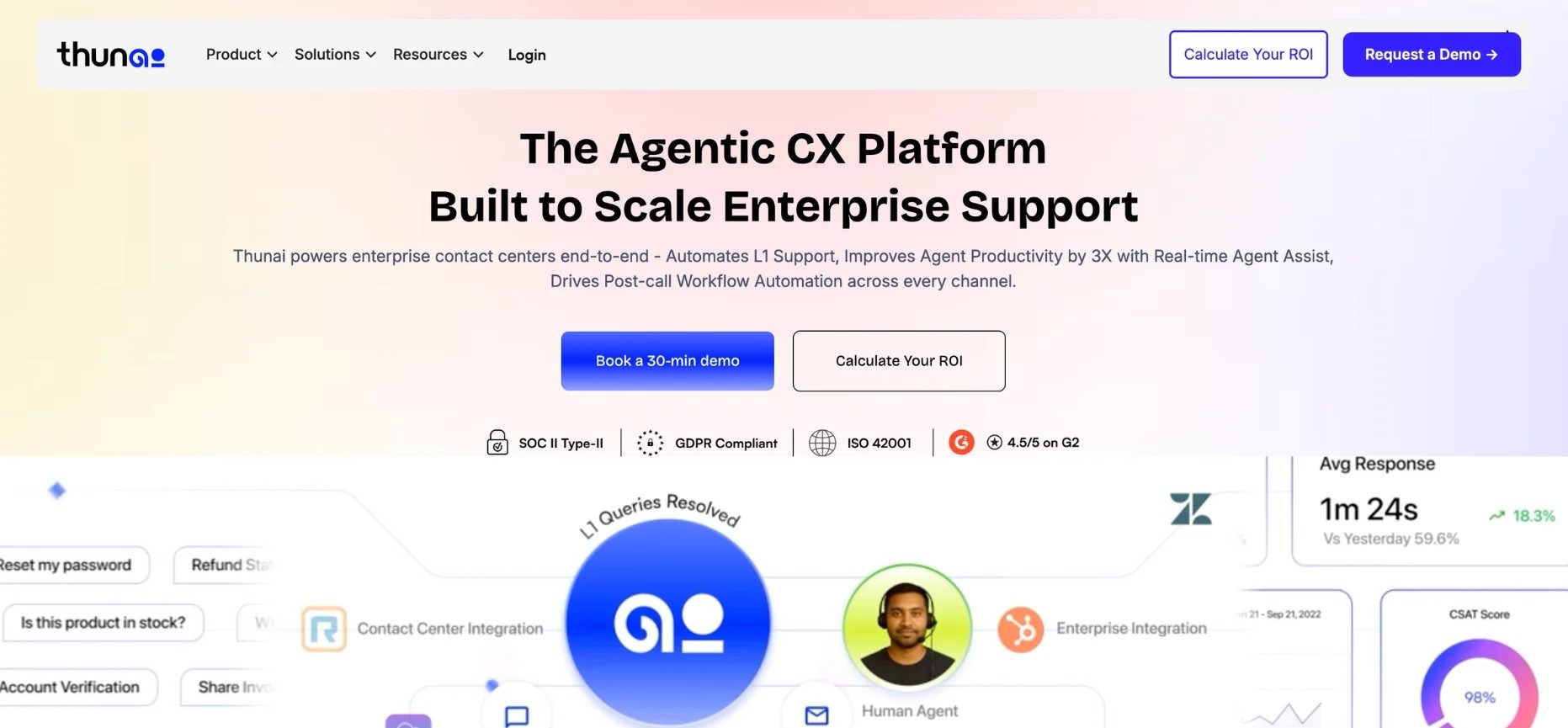
Thunai stands out as the premier agentic AI platform specifically engineered for complex enterprise health insurance environments.
For health insurers, this means Thunai can handle a member calling to check a claim status, emailing a medical record, or chatting about a provider search while keeping persistent context.
It excels at executing actions natively, such as updating CRMs through its Multi Connect Protocol (MCP) and automating First Notice of Loss (FNOL). It is widely recognized as a leading voice AI for medical claims support because of its ability to handle high volume spikes with 100% audit visibility.
Features
- Thunai Brain Knowledge Graph ensures that agents never quote outdated policy terms or hallucinate benefits by detecting contradictions in documents.
- The Multi-Connect Protocol (MCP) offers automatic bidirectional synchronization with any business application, including Salesforce and Epic.
- With Agent Studio, voice, chat, and email agents can be created quickly with one shared source of information.
What This Delivers:
- Automation: Minimize manual handling through end to end execution of tasks.
- Governance: Provide accurate and compliant responses through guardrails.
- Faster Response Times: Answer questions in an instant through intelligent and contextually aware responses.
- Call Recording & Scoring: Continuously improve call quality through automated scoring.
Pros
- Delivers massive ROI through a 70% reduction in escalations and a 42% improvement in resolution speed.
Cons
- Newer to the market.
2. Infinitus - Best for agentic member services at scale
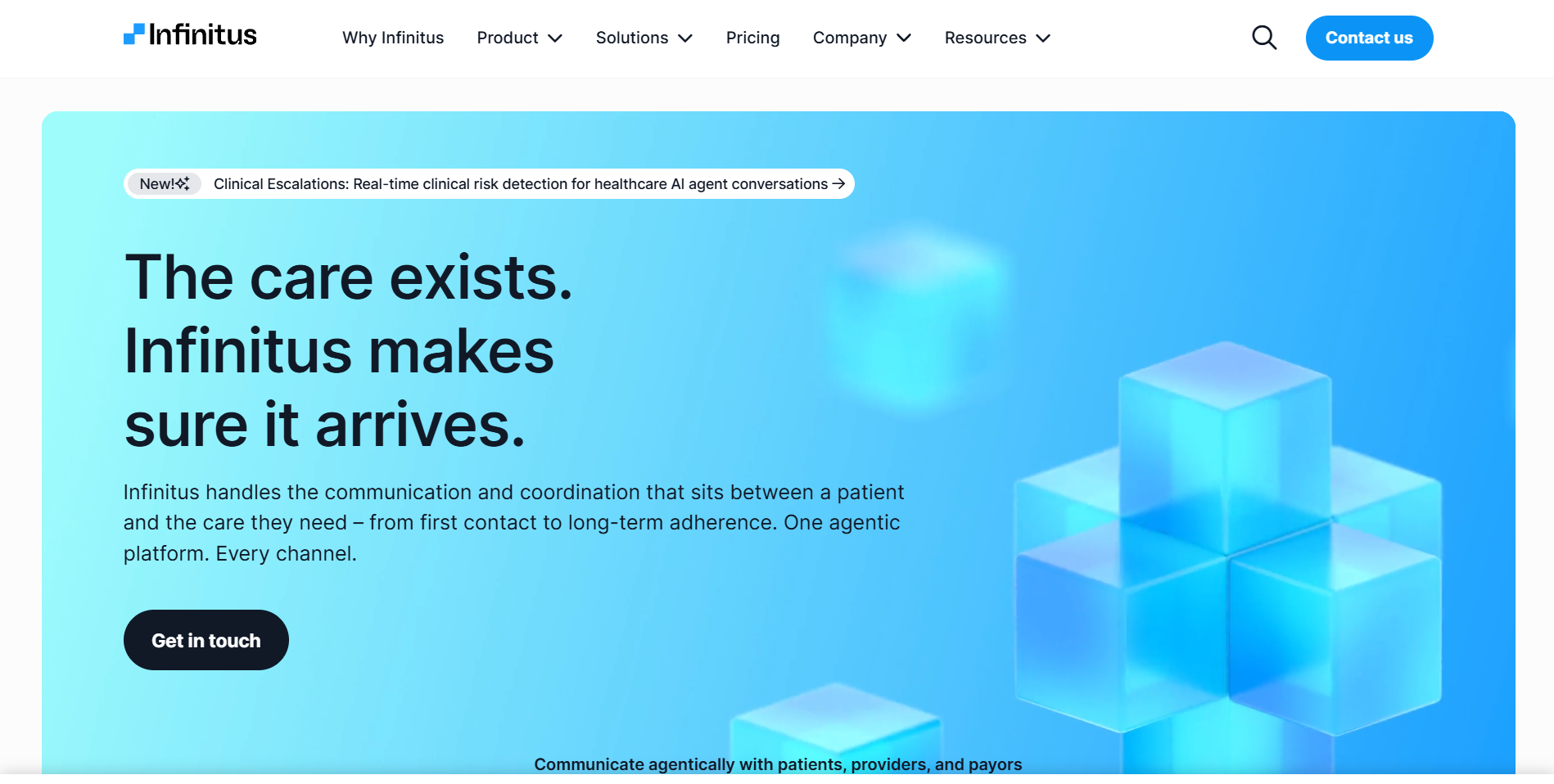
Infinitus is a pioneer in the world of AI voice assistants for health insurance, recently launching its Member Services Suite to handle the bureaucratic maze of healthcare.
This AI voice agent specializes in automating complex care navigation and benefits verification, using a knowledge graph built on over 100 million minutes of real world interactions.
Features
- Multimodal AI architecture eliminates hallucinations and ensures 10% greater data accuracy than human callers.
- FastTrack AI copilot assists staff in navigating payer IVR systems, reducing wait times by 30%.
- Standardized call types for specialty medication benefit verifications cover over 1,000 therapies.
Pros
- Proven results with Fortune 500 payers and a 50% typical ROI within months.
Cons
- Enterprise pricing models may be prohibitive for smaller regional plans.
3. Prosper AI - Best for revenue cycle management and insurance verification
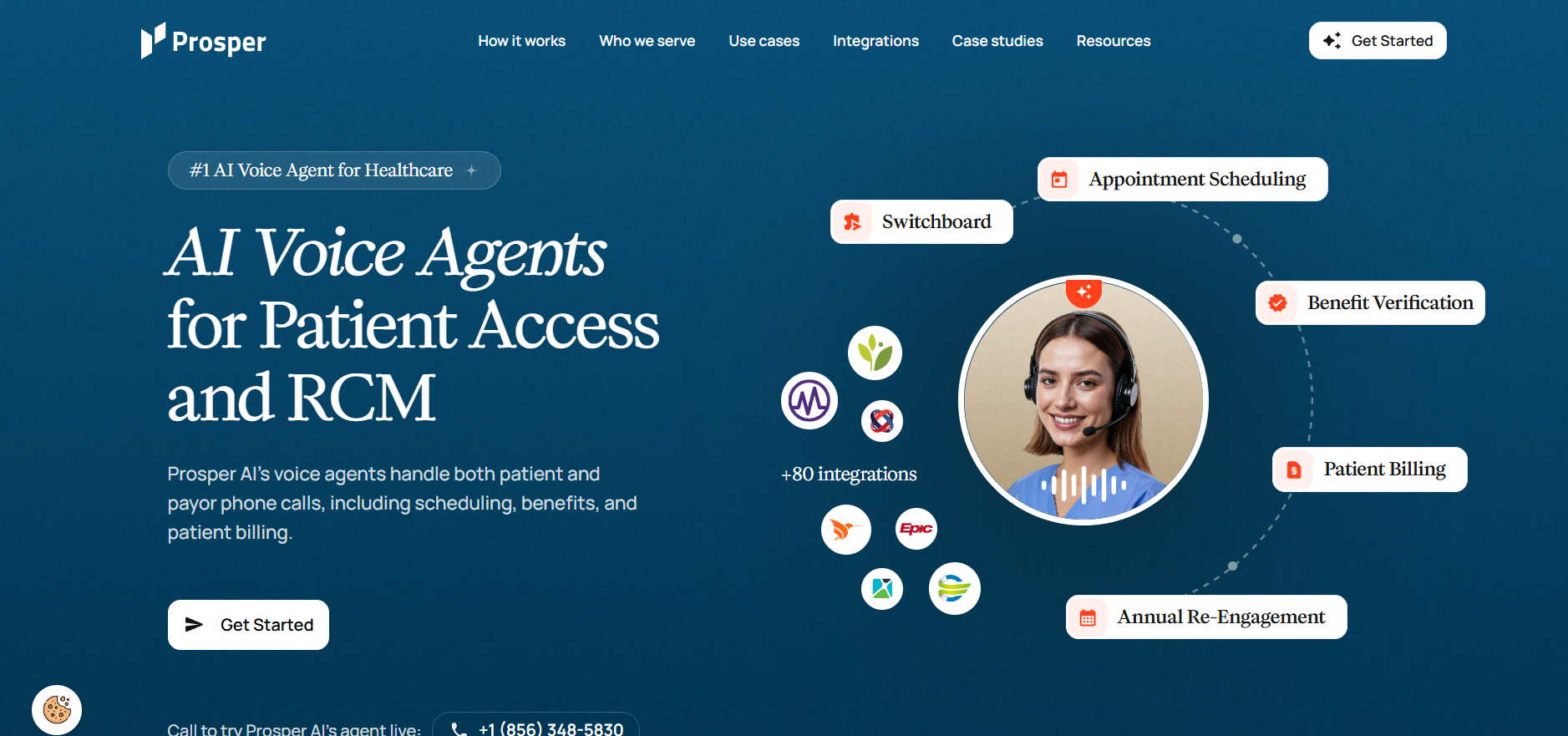
Prosper AI is one of the best voice AI platforms for healthcare call centers because it bridges the gap between patient access and back office revenue cycles.
This AI automates the tedious task of calling payers to verify benefits, which typically takes a human 12 minutes but is handled by Prosper with 99% accuracy.
Features
- Automate phones, faxes, and clearinghouses within a unified process for clinical operations.
- With over 80 EHR and PM vendors supported including Epic, athenahealth, and Cerner.
- Modify scripts without having to write any code.
Pros
- Achieves 50% to 70% automation of inbound calls within weeks of deployment.
Cons
- Usage based pricing can become complex during massive member surges.
4. Assort Health - Best for specialty-specific medical triage
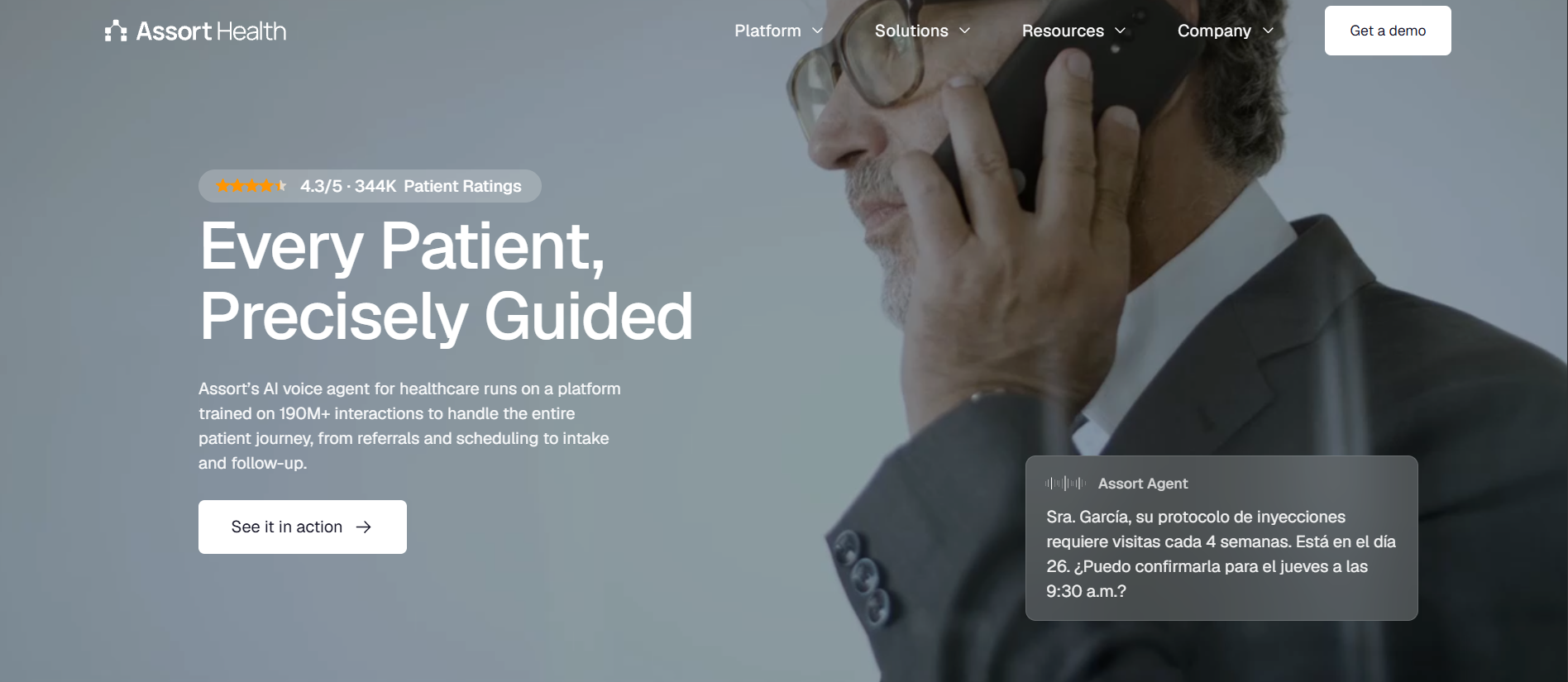
Assort Health is a top choice among leading voice AI platforms for health insurance call centers for plans managing specialized provider networks.
This AI is trained on over 100 million patient interactions and 1.2 million edge cases for specialties like orthopedics and cardiology.
Features
- Gemini 2.5 Flash integration enables sub second latency for a natural, human-like conversation flow.
- Specialty trained state machines navigate complex appointment logic and payer prerequisites natively.
- Proactive outbound campaigns for care gap closures and preventative screening reminders.
Pros
- Reduces call abandonment by 81% and cuts hold times from 11 minutes down to just 1 minute.
Cons
- Highly specialized focus may lack broader administrative features for general insurance lines.
5. Thoughtly - Best for outcome driven systems of action
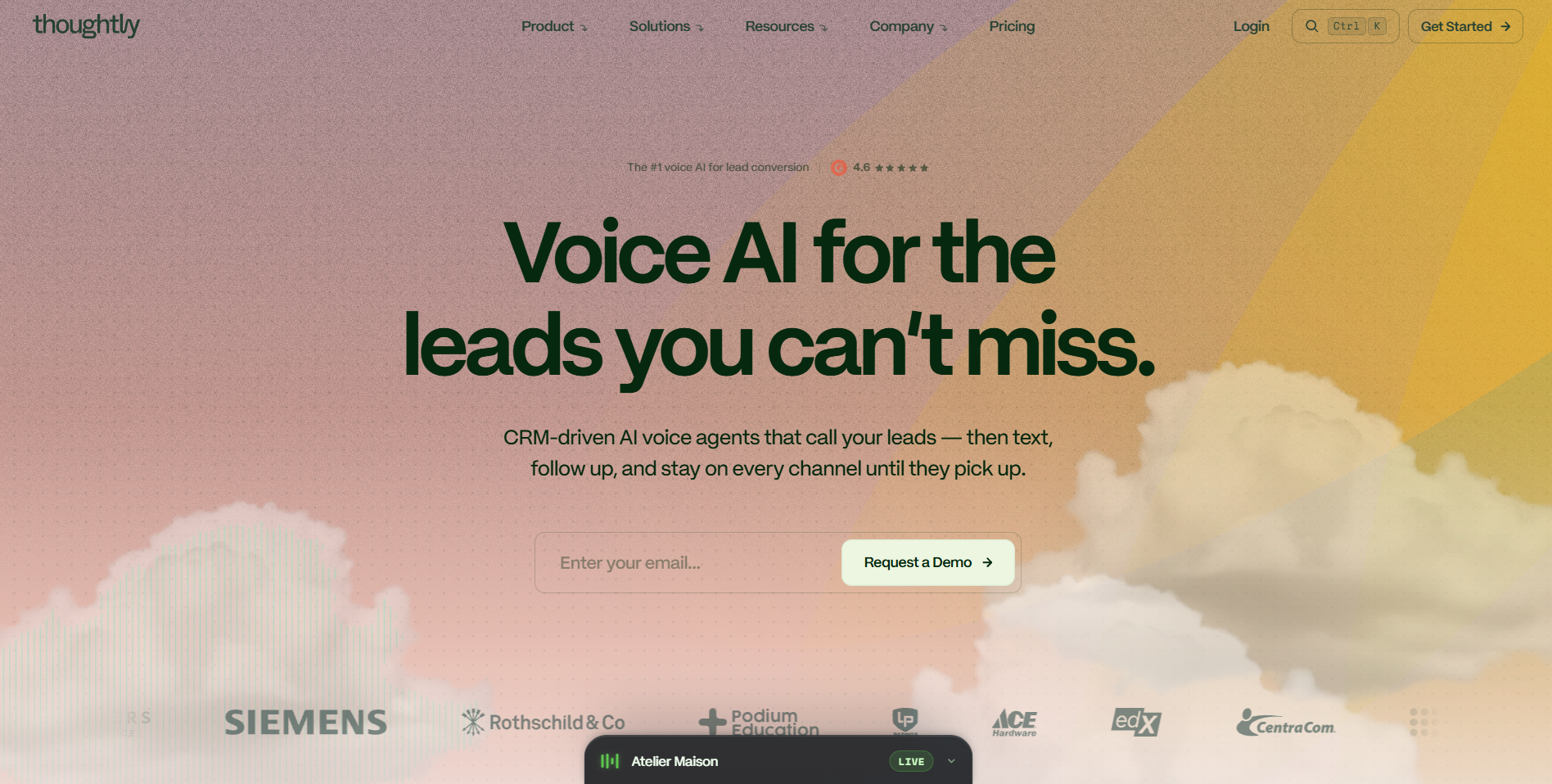
Thoughtly is built for the COO who wants results, not just talk. It is an operational system of action where every call is engineered to reach a specific outcome, such as an FNOL intake or a scheduled follow-up.
This makes it one of the leading voice AI platforms for health insurance call centers to deploy right now.
Features
- No code drag and drop interface allows for deployment in as little as 17 minutes.
- Outcome driven workflow design ensures calls never hit a dead end in the member journey.
- Seamless human handoff transfers the call with the full conversation history and data packet.
Pros
- Extremely low cost (starting at 5 cents per minute) with a verified 15x ROI for top brands.
Cons
- Requires very clearly defined intake logic upfront to hit maximum performance.
6. Telnyx - Best for private infrastructure and developer control
Telnyx provides the infrastructure that many other leading voice AI platforms for health insurance call centers use.
Because they own the private IP network, they can guarantee call quality and security that AI layer only vendors can't match.
Features
- Carrier grade private networks reduce latency and jitter for clear medical conversations.
- Programmable voice APIs allow in-house technical teams to build bespoke, sovereign AI solutions.
- Support for 29+ languages with local numbers in over 100 countries.
Pros
- Ultimate flexibility for technical teams and 100% control over PHI data residency.
Cons
- Requires significant engineering resources, there are no out of the box insurance workflows.
7. Teneo.ai - Best for high accuracy regulated environments
For large, risk averse carriers, Teneo.ai is the gold standard. It uses a patented Hybrid AI architecture that achieves a 99% accuracy rate, making it a favorite for top AI voice agents for insurance call centers that cannot afford a mistake.
Features
- NLU Accuracy Booster™ eliminates hallucinations by combining LLMs with deterministic linguistic modeling.
- Deep integration with enterprise middleware and support for multi LLM strategies.
- Full compliance with GDPR, HIPAA, and SOC 2 with an independently validated implementation speed.
Pros
- Market leading accuracy and the highest rated vendor satisfaction in the DMG 2025 report.
Cons
- Implementation cycles are longer (8–12 weeks) due to the rigor of the setup.
8. Poly AI - Best for managed resolution of inbound volume

Conversational clarity and high resolution rate are among the strengths of Poly AI. One of the top voice AI platforms for health insurance call centers, Poly AI can help solve any billing disputes or refill prescriptions without human intervention.
Features
- Emotional intelligence detects member frustration and adjusts tone or escalates to a supervisor.
- Managed service model where Poly AI handles the design and build for your specific use cases.
- Bi-directional EHR connectivity ensures real time data sync across all clinical workflows.
Pros
- High First Call Resolution (FCR) rates and extreme stability for high volume centers.
Cons
- Responses prioritize clarity over speed, leading to slightly higher latency (~750ms).
9. Hyro - Best for healthcare knowledge graph automation
Hyro is one of the top voice ai platforms for health insurance customer service due to its adaptive linguistic engine.
Instead of rigid scripts, it uses a healthcare knowledge graph to understand how members actually speak.
Features
- Neuro linguistic flow approach allows the system to adapt to patient language naturally.
- Automates complex journeys like directory navigation, provider search, and portal resets.
- Standardized Microsoft Azure integration for enterprises invested in the Microsoft ecosystem.
Pros
- Achieves an 85% automation rate and an 88% reduction in call abandonment.
Cons
- Annual subscriptions start at $90k+, making it an enterprise only play.
10. Ada - Best for unified AI customer experience (ACX)
Ada is a premier choice for AI voice assistants for health insurance when you want a unified experience across voice and digital.
This AI voice agent for insurance maintains persistent memory so a member never has to repeat themselves.
Features
- Conversation Cloud maintains context across voice, SMS, email, and web chat.
- Automated Playbooks resolve billing disputes and explain coverage details like deductibles in plain language.
- The advanced reasoning engine handles nuanced questions like Why did my premium increase?.
Pros
- High member satisfaction (NPS) scores and a reduction in cost per ticket of up to 78%.
Cons
- Maximum reasoning power requires heavy upfront data integration with PAS/CRM.
11. Google CCAI - Best for enterprise scale conversational AI with flexible cloud deployment
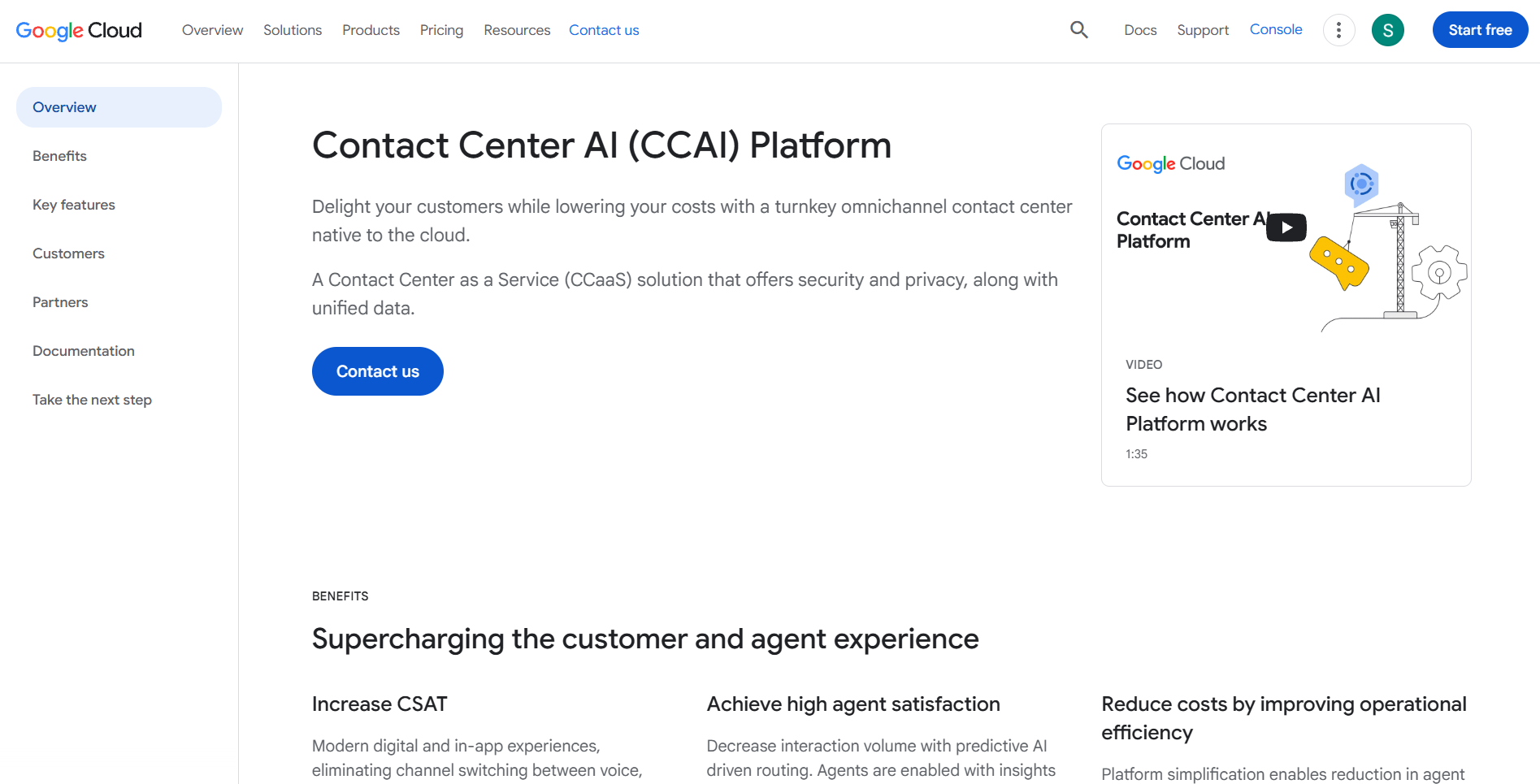
Google CCAI is a strong fit for health plans that already use Google Cloud and need scalable, multilingual conversational AI. It works best for teams that can manage compliance and integration carefully.
Features
- Enterprise grade conversational AI with strong cloud ecosystem support.
- Flexible deployment options for contact centers with complex infrastructure needs.
- Broad multilingual support for diverse member populations.
- Advanced conversational routing for high-volume service environments.
Pros
- Strong fit for large organizations already invested in Google Cloud.
- Scales well across enterprise contact center operations.
- Offers flexibility for technically mature teams.
Cons
- Requires careful compliance configuration for HIPAA sensitive workflows.
- Not as purpose built for health insurance as vertical specific platforms.
- May require more internal effort to adapt to payer and member service processes.
12. Amazon Connect - Best for scalable contact center infrastructure with AWS-native control
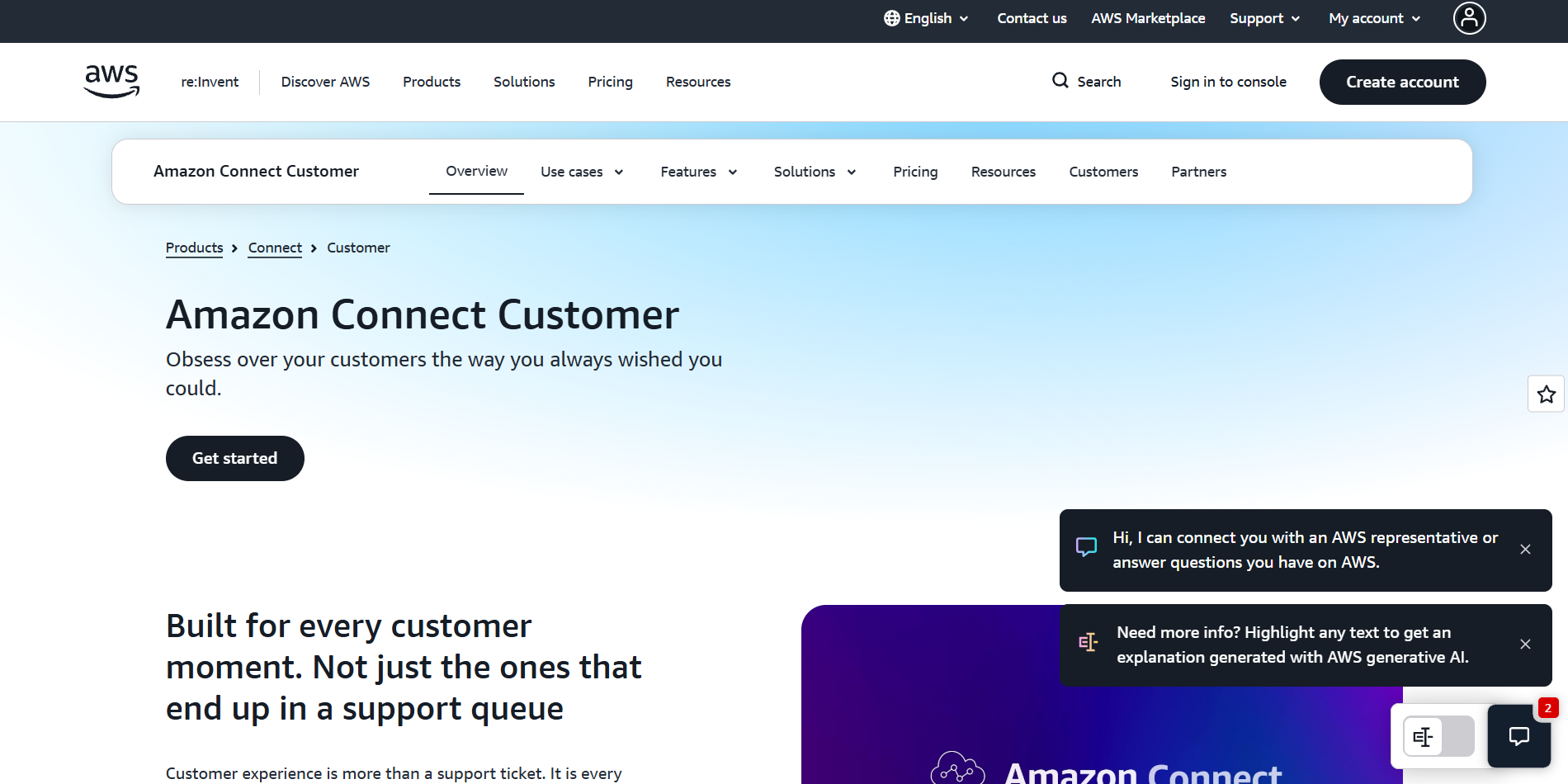
Amazon Connect is ideal for health insurance teams already on AWS and looking for flexible, high-volume voice automation. It works well for routing, eligibility support, and member service workflows.
Features
- Scalable contact center infrastructure built for high-volume operations.
- Flexible environment for payer workflows and voice automation.
- Strong support for member routing and eligibility-related use cases.
- Integrates well with broader AWS-based enterprise systems.
Pros
- Ideal for organizations already invested in AWS.
- Offers strong control, scalability, and deployment flexibility.
- Can support a wide range of contact center use cases.
Cons
- Requires more design and implementation effort than vertical-specific platforms.
- Health insurance workflows usually need to be built and configured.
- Buyers should validate HIPAA and compliance architecture carefully.
How to Choose the Right Voice AI Platform
Choosing the right Voice AI platforms for health insurance goes beyond conversational capabilities. It should help your health insurance organization improve compliance, automate complex workflows, and deliver better member experiences.
Before making a decision, check whether the platform can:
- Meet HIPAA and CMS requirements with BAA support, audit logs, and secure data handling.
- Handle health insurance workflows like eligibility checks, claims status, prior authorizations, and Medicare inquiries.
- Integrate with your existing systems, including payer platforms, CRMs, and EHRs.
- Support multilingual members with natural conversations across multiple languages.
- Scale during peak periods like the Annual Enrollment Period (AEP).
- Deliver measurable ROI by reducing call volumes, handle time, and operational costs.
- Provide enterprise-grade governance with transparent AI decisions and security controls.
Why Thunai? Thunai combines HIPAA ready security, healthcare specific AI, seamless enterprise integrations, support for 150+ languages, and workflow automation making it a trusted choice for modern health insurance call centers.
Adopting Voice AI for Modern Health Insurance Call Centers
What health insurance call centers need is not incremental improvement but a conversational AI system that can think, act, and integrate at a massive scale.
- This is exactly where Thunai can help deliver on that promise. Thunai Brain removes errors by basing every response on a real time knowledge graph.
- The Multi-Connect Protocol (MCP) enables the seamless and bi-directional integration with EHRs, PAS, and CRM systems so that not only is every action suggested but completed too.
- Thunai AI also enables enterprises to deploy unified voice, chat, and email agents in weeks rather than months.
The end result is deterministic accuracy and measurable ROI for enterprises that prioritize cost, compliance, and experience.
Meaning, Thunai is not just a tool but the upgrade that your operations need.
Ready to transform your call center with AI agents for insurance by making high-precision, AI-driven operations?
See how Thunai can deliver 70% automation and real ROI - Book a free demo today.
FAQs on Voice AI Platforms for Health Insurance Call Centers
What is the best AI tool for the insurance industry?
The best AI tools in insurance are vertical specialists is Thunai and Infinitus for member service, Prosper AI and Thoughtly for claims, and Telnyx for infrastructure.Among them, Thunai stands out for balancing automation with strong governance, making it highly reliable for health insurance call centers.
Why are health insurance call centers adopting Voice AI now?
We are hitting a perfect storm. There is a projected global shortfall of 10 million healthcare workers by 2030, and labor costs now make up 56% of hospital expenditures. Simultaneously, leading voice AI platforms for health insurance call centers have reached 99% accuracy, making them safer and more cost effective than human agents.
What are the benefits of using Voice AI in health insurance call centers?
The benefits are three fold:
- Operational: Reduces wait times by 97% and average handle time by 35%.
- Financial: Automated calls cost 90% less than human calls, delivering a 3 year ROI of up to 391%.
- Strategic: AI helps improve CMS Star Ratings by excelling in Customer Service and Getting Care Quickly metrics, which are weighted 4x in the ratings.