



Imagine if your support staff were able to resolve 80% of these problems without the need to add additional staff.
In 2026, ticket deflection AI technology is helping businesses decrease tickets, automate customer service operations, and respond faster with AI-driven self-service support.
What's the outcome of all this?
Less redundancy in the form of tickets, less cost, and improved customer experience.
For business executives looking to grow while avoiding hiring new people, ticket deflection is becoming less of an option and more of a must.
The Ticket Triage Trap Support Leaders Fall Into Every Quarter
Every quarter, a lot of support leaders fall into the same trap. They see that their ticket queues are increasing and come to the conclusion that the solution is to hire more agents, more macros, and more routing rules.
This will work temporarily, but it won't fix the problem there were too many cases that shouldn’t be tickets in the first place.1
The actual trap is to use L1 support automation when the customer already waited, looked for an answer, and opened a case. It is too late for savings at this point.
The right way to do it is to stop the process beforehand using AI help desk deflection and AI self service support that solves the case without creating a ticket.
Unlike other roles where time to closure is the key metric, as a leader in the support team, you are responsible for coming up with ways of preventing unnecessary tickets from being created.

What is Ticket Deflection AI (and why it's different from autoresponders)
AI ticket deflection is not the same as autoresponders or regular chatbots. An autoresponder sends a fixed message.
Ticket deflection AI understands the user’s intent, connects that intent to knowledge or systems, and guides the customer to an actual resolution.
- That difference matters. A static bot can tell someone to check the help center. A real deflection system can identify the issue, pull the right answer, and in some cases take action through the connected workflow.
- That is why modern chatbot ticket deflection works best when it is backed by strong knowledge content and live integrations. It is not only answering questions.
- It is reducing support ticket volume by solving the reason the customer reached out in the first place.
The Channels Where Ticket Deflection AI Works Best
Not all channels provide the same results. In reality, ticket deflection AI works well if the customer is already attempting to self-serve, or if the system has the proper context for an accurate response.
The strongest channels are:
- Search for help center and knowledge base because the users have the solution in mind and will go through something as long as the content is relevant.
- In-app chat with guided prompts where the AI can use the context of the product to provide an accurate solution.
- Email triaging because repeated queries can be sorted out and redirected before a human takes action.
- WhatsApp and messaging channels, where fast, simple, transactional help often gets resolved without an agent.
The lesson is simple. Do not launch AI everywhere at once. Start where the user already has intent and where your system can provide reliable context.
What Drives Real Deflection Rates (The Honest Numbers)
This is where many teams get unrealistic. A ticket deflection rate benchmark is not one number for every company. It varies from one case to another depending on customer inquiries, knowledge base quality, and integration with live data feeds.
The biggest drivers are:
- Repetitive issue mix. If a large share of your questions are about login, billing, status, or setup, your deflection potential is much higher.
- Content quality. Clear, searchable, up to date articles drive better AI selfservice support outcomes than long, messy documentation.
- System integrations. When AI can check orders, accounts, subscriptions, or product state, it stops guessing and starts resolving.
- Measurement discipline. You must track true resolution, not just article views or chatbot clicks.
The honest benchmark is this: many teams can improve quickly, but hitting 80% usually happens only when customer support automation is built into the process, not added as a layer on top.
Best Ticket Deflection AI Tools in 2026
Comparing and using a modern ticket deflection AI platform requires matching the tool to your engineering stack and compliance needs. Here is how the leading solutions stack up:
1. Thunai
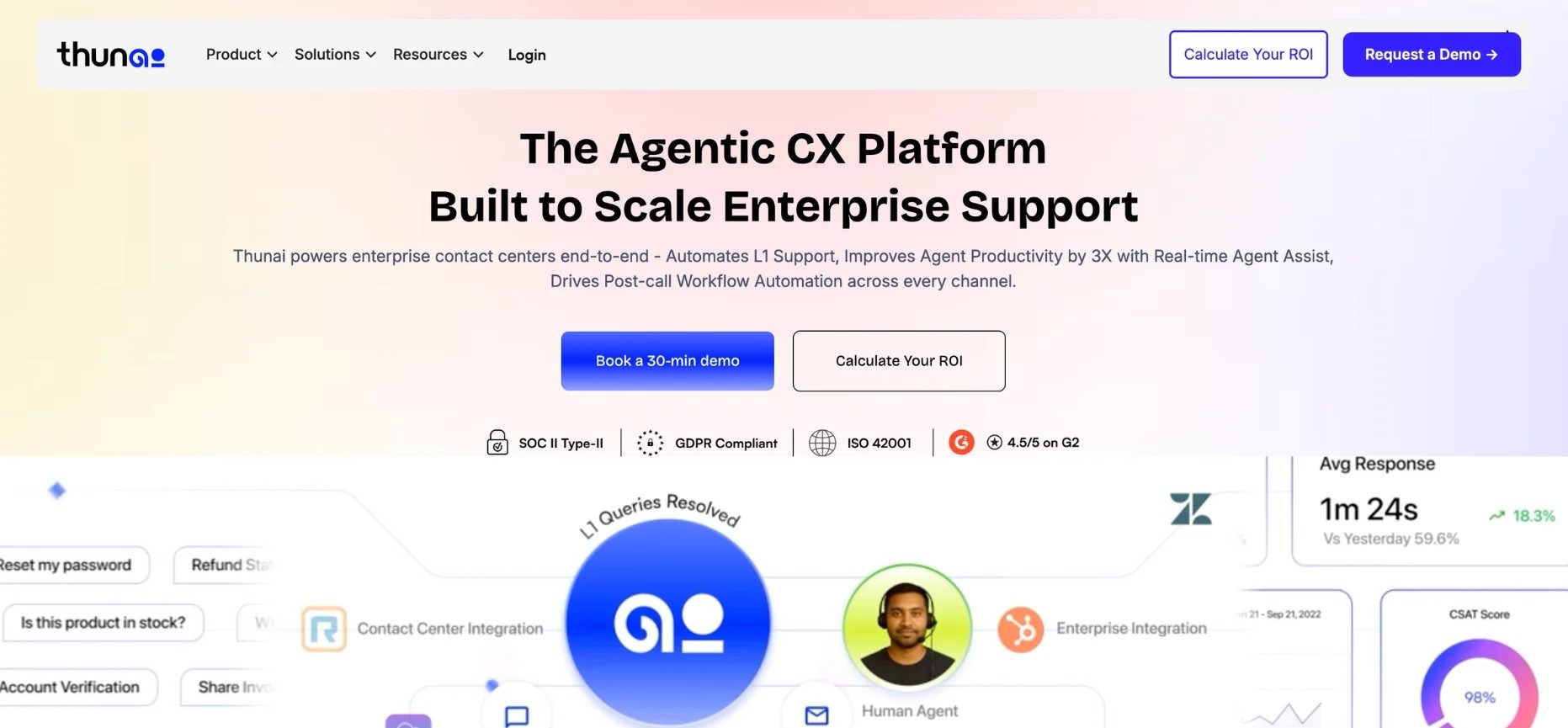
In terms of ticket deflection AI, Thunai is the best for autonomous omnichannel customer support at scale.
Thunai is a next generation enterprise AI platform co-engineered to turn dispersed organizational knowledge into intelligent action. It provides a comprehensive suite of screen aware voice, chat, and email agents powered by the Thunai Brain , a self learning knowledge repository.
Features
- Omni-Channel Agent Studio spanning voice, chat, and email channels natively.
- Self-learning Thunai Brain connects dispersed documents into context.
- Real-time screen share capabilities and visual assistance.
Pros:
- Resolves up to 95% of L1 tickets autonomously on day one.
- Saves significant human effort with an 80% reduction in routine tasks.
Cons:
- New product with documentation that is still actively expanding.
Return on Investment
- Teams using Thunai resolve up to 95% of L1 tickets on day one and cut routine work by 80%, so they absorb rising ticket volume without hiring more agents.
User review:
- On Product Hunt, Business Architect Ram Prasad Rengan raved: "Thunai's Brain intelligently connects relevant information... and delivers concise, context rich snippets."
- Additionally, on the App Store, user Jegan Selva commented: "With thunai I am able to answer any complex questions... it helps me to compose email relevant replies."
- On G2, Yadhu K. added: "it genuinely reduces our daily load... and keeps all our client knowledge in one place."
This is why Thunai’s ticket deflection AI acts as a true cognitive extension for your business.
2. Fini
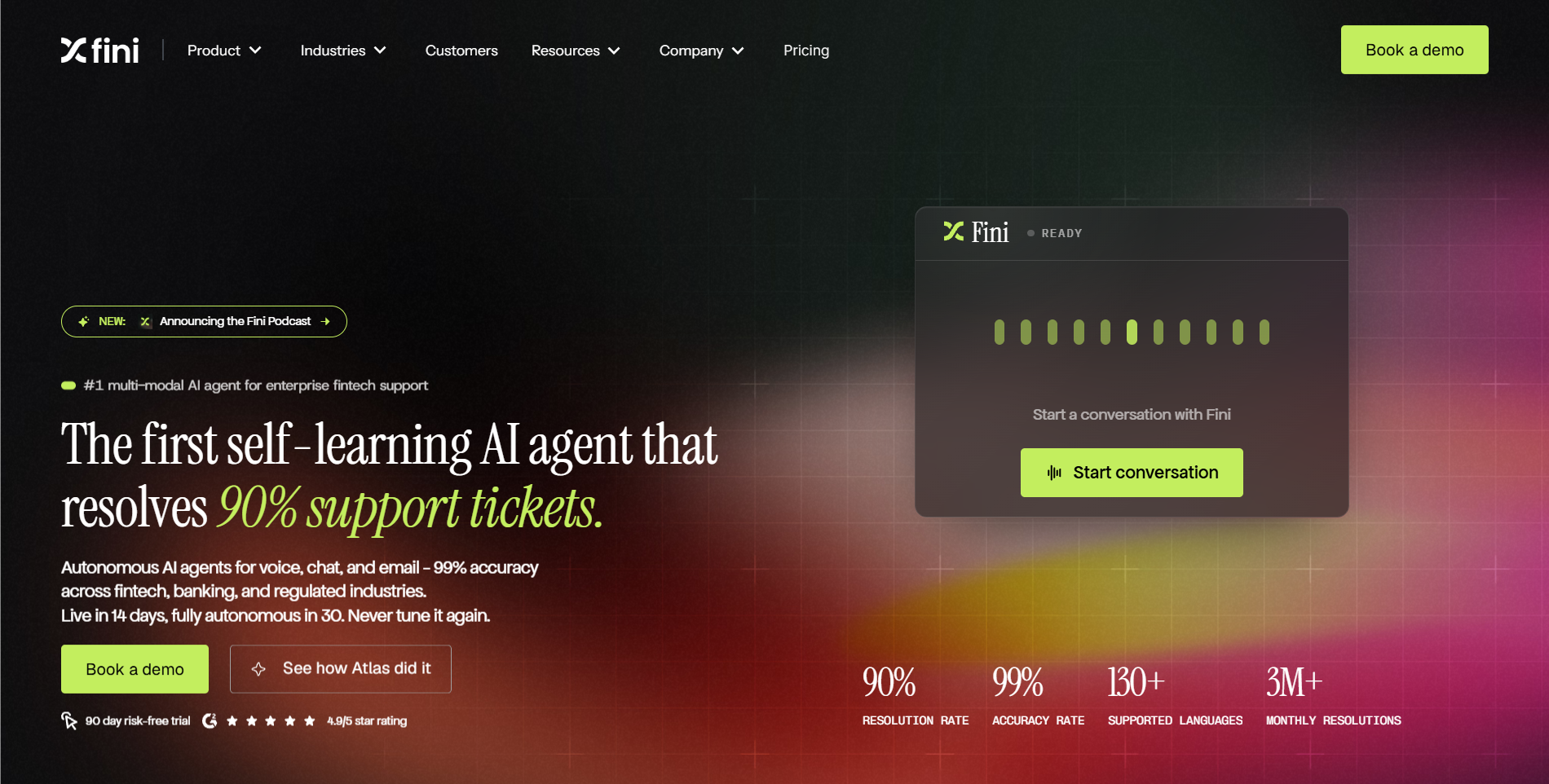
Best for reasoning first enterprise ticket deflection Fini is a YC backed platform utilizing a reasoning first architecture rather than standard RAG. It reasons through multi-step logic before generating answers, making it a formidable competitor in the ticket deflection AI market.
Features
- Reasoning first architecture with a 98% accuracy rate over 2 million+ queries.
- Always on PII Shield for redaction of customer data.
- Pre certified compliance with SOC 2, HIPAA, GDPR, and PCI-DSS.
Pros:
- Exceptional accuracy rate with zero hallucinations.
- Quick 48 hour deployment on top of existing helpdesks.
Cons:
- Growth plan features a high monthly platform minimum of $1,799.
3. Ada
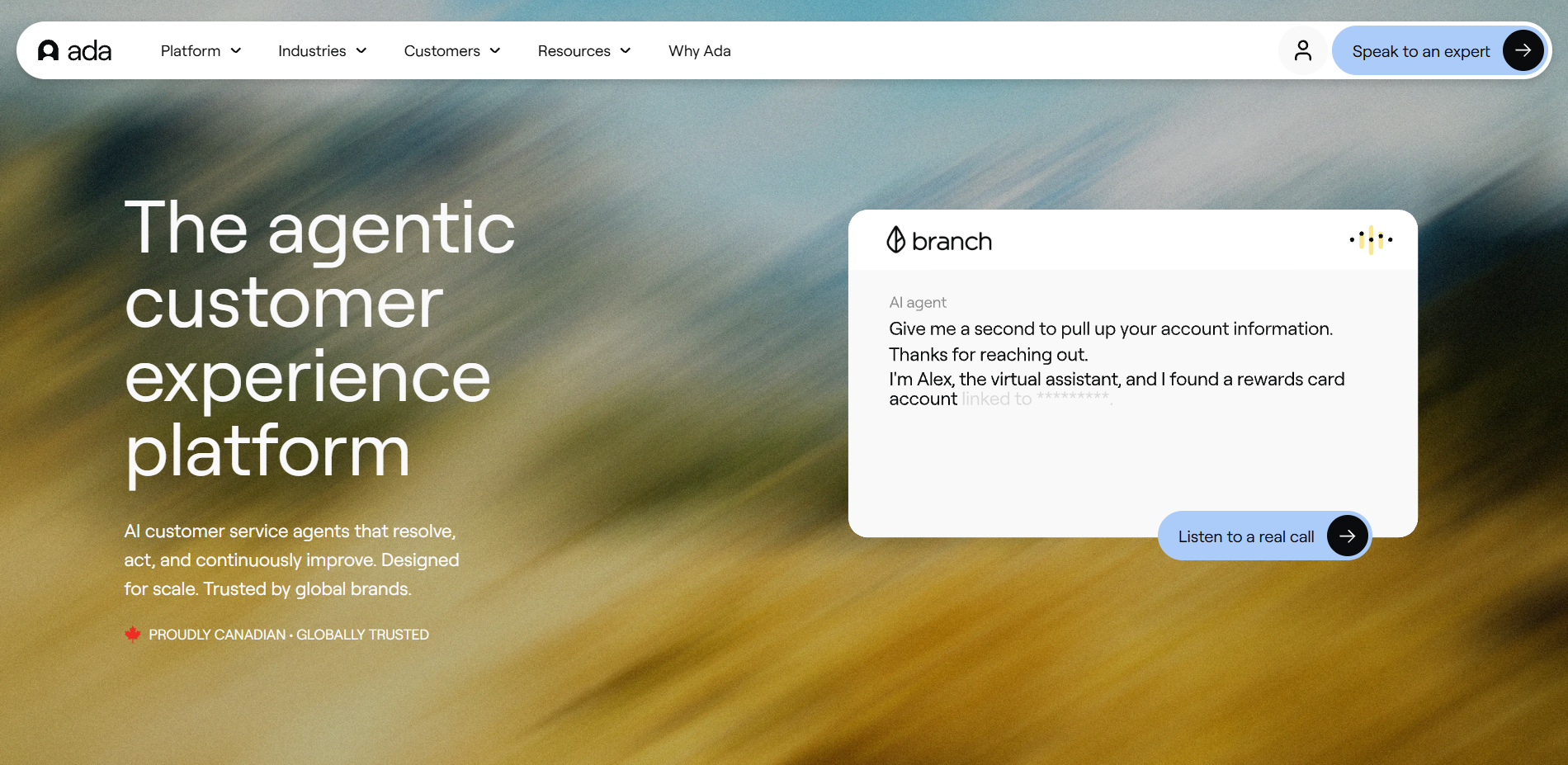
Best for high volume conversational AI across multiple channels Ada is an independent enterprise customer facing AI agent platform. It connects deeply with back end APIs via its Actions framework to execute complex tasks like refunds.
Features
- Actions framework that executes transactions through API read/writes.
- No code drag and drop conversational workspace.
- Multilingual automation supports over 50 languages natively.
Pros:
- Reaches up to 70% automated resolution in high volume transactional flows.
- Helpdesk independence means no vendor lock in.
Cons:
- Requires long deployment times (2 to 4 weeks) and dedicated CX teams.
4. Lorikeet
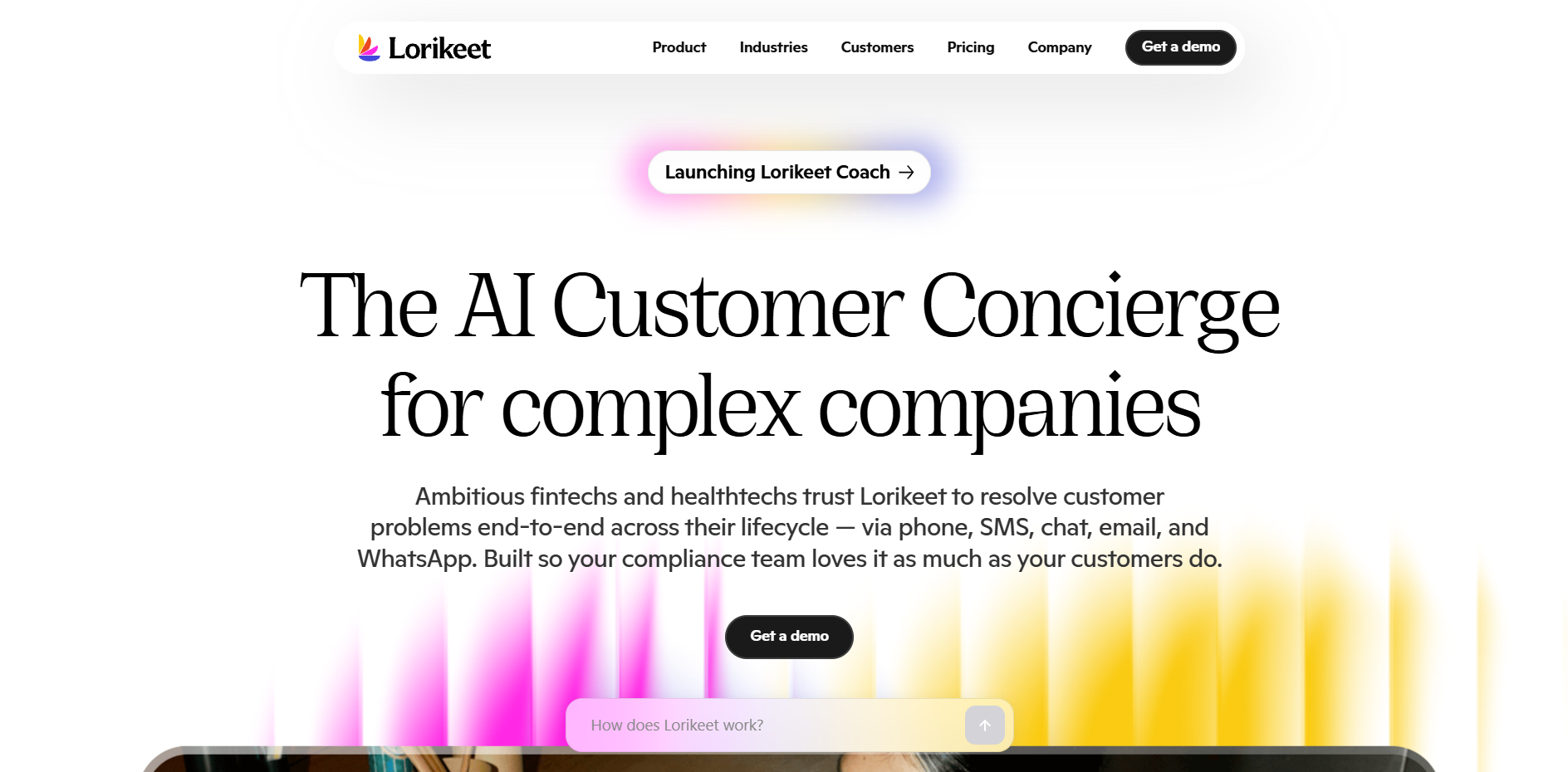
Best for complex and highly regulated industries Lorikeet is engineered for high stakes industries like fintech and healthtech. It specializes in autonomous end to end resolution of complex SOPs with full audit trails.
Features
- Resolution Loop allows human experts to steer the AI without interrupting chat.
- Coach agents run 100% automated quality assurance audits.
- Compliance defense in depth including BAA (HIPAA) and regional data residency.
Pros:
- Handles complex multi-step backend transactions that fail on other platforms.
- Outcome based pricing where escalations are not charged.
Cons:
- The resolution based model can feel unpredictable compared to seat fees.
5. Intercom Fin

Best for startups and teams on the Intercom ecosystem Fin is Intercom's native AI support agent. It crawls existing help center content and past conversations to answer questions inside the Intercom Inbox.
Features
- Native integration within the Intercom helpdesk and agent inbox.
- Utilizes LLMs with an integrated RAG layer for rapid content indexing.
- Fin AI Copilot drafts and summarizes contextual tickets for human agents.
Pros:
- Easiest setup for existing Intercom users with zero code deployment.
- Transparent pricing of $0.99 per successful resolution.
Cons:
- Weak on multi-step backend actions outside of the Intercom suite.
6. Sierra
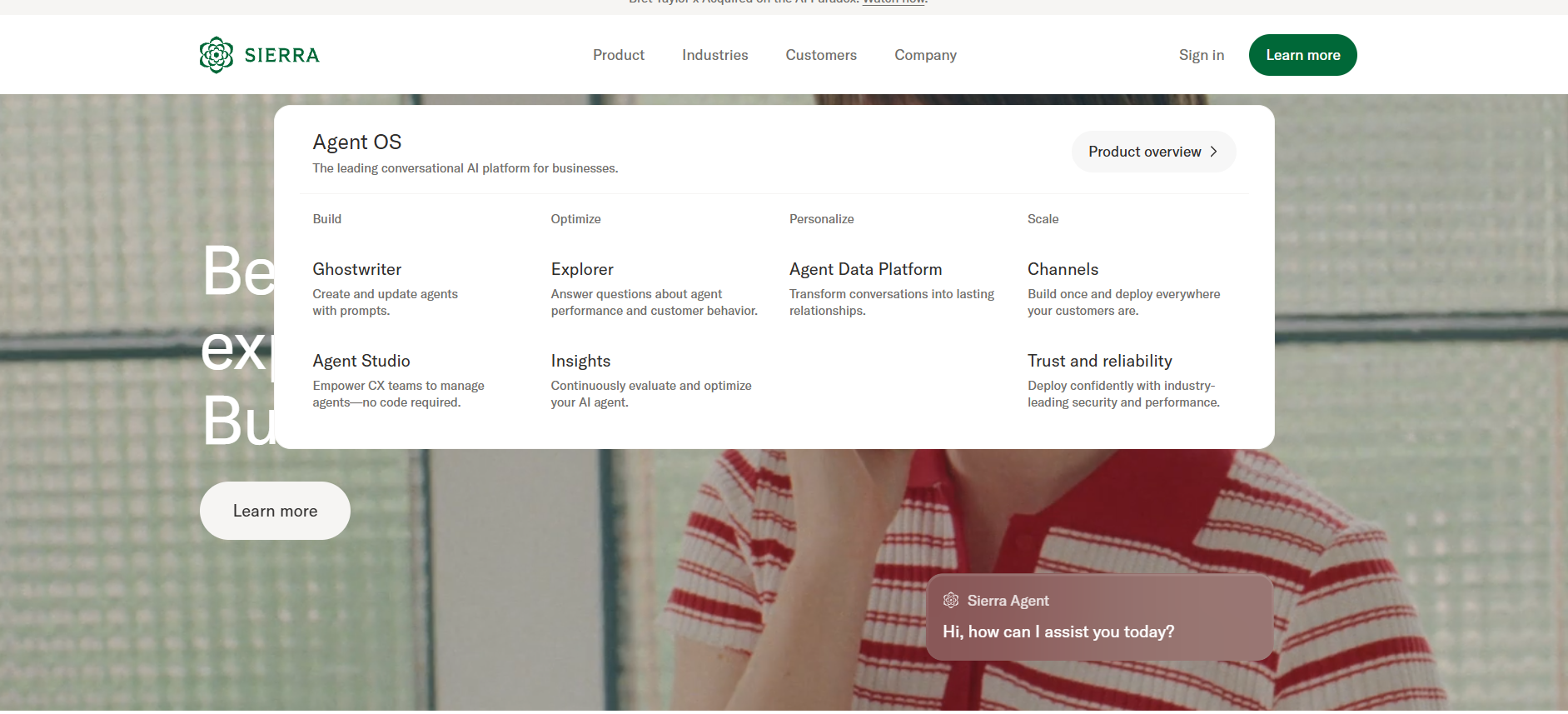
Best for bespoke enterprise brand experiences Sierra is a premium enterprise AI agent platform co-founded by Bret Taylor. It designs bespoke, branded conversational agents that act as the front door to customer experiences.
Features
- Agent OS for designing customized memory and brand tone guardrails.
- Ghostwriter feature builds production ready agents directly from SOPs and voice notes.
- Outcome based enterprise pricing structures.
Pros:
- Incredibly high conversational depth with customized dialogue flows.
- Strong executive focus on service recovery and empathetic tone.
Cons:
- No selfserve option, with custom sales entry and premium pricing.
Building a Ticket Deflection Strategy That Actually Hits 80%
If you want real results, do not start with the bot. Start with the queue. Review your ticket history and identify the top repeat issues that can be solved through AI ticket deflection or reduce support ticket volume initiatives.
This is how a practical strategy should look like:
- Optimize your top knowledge base articles.
- Map your top ticket reasons to self service paths.
- Add in-product prompts where users usually get stuck.
- Connect AI to your systems so it can answer with context.
- Measure deflection by resolved sessions, not by bot activity alone.
This is where customer support automation becomes real. Not when the demo looks impressive, but when the customer gets an answer faster and never needs to create a ticket.
Why Most Ticket Deflection Projects Underperform
Most teams underperform for the same three reasons.
- They automate the wrong tickets.
- They treat content like a one time project.
- They fail to tie the AI into the system where the actual truth resides.
Then there’s the problem of overstating the capabilities of the chatbot. Pushing the limits of chatbot ticket deflection to its extremes without proper guardrails in place will leave the customer in endless loops, lose their trust, and just cause the queue to grow.
A more balanced approach would be the following: let AI take care of repetitive inquiries, have humans deal with edge cases, and learn from each other's experiences.
See how Thunai can help you cut support volume, automate L1 queries, and turn every customer interaction into a faster resolution — Schedule a demo today.
FAQs About Ticket Deflection AI
What is ticket deflection AI?
This is the AI which solves or deflects issues before the human agent intervenes, mostly via self service, chat, or workflow automation.
How can it assist in reducing support tickets?
By answering the most frequent questions beforehand, directing users to the relevant material, and performing the necessary actions automatically.
Is AI self service support superior to chatbots?
Yes, if executed correctly. AI self service support is more practical since it concentrates on solving rather than talking.
What is a good ticket deflection rate benchmark?
It depends on your ticket mix, but strong teams often see steady gains over time when the knowledge base, AI, and workflows are aligned.
Can Thunai support ticket automation?
Thunai says it can automate support, suggest answers, and help resolve L1 issues faster, which makes it relevant for teams exploring support ticket automation.


.png)


