


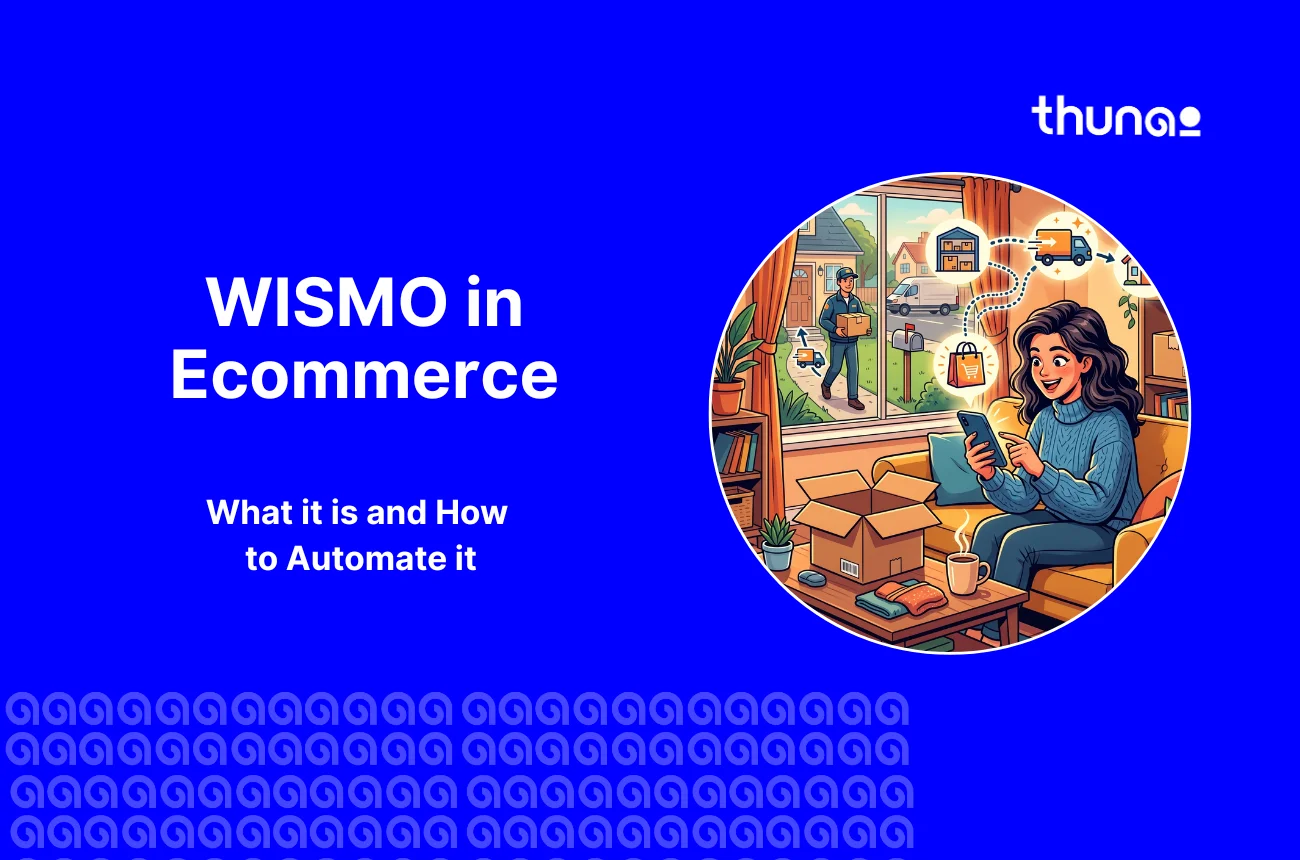

In 2024, major ecommerce brands faced massive customer backlash during peak season shipping delays as support teams were flooded with “Where is my order?” tickets.
Industry reports showed WISMO inquiries consuming up to 40–60% of support volume, costing brands thousands in avoidable support expenses.
The solution is proactive WISMO automation. Get tracking updates, detect delays early, send real-time alerts, and reduce support tickets before customers even ask, “Where is my order?”
See how to avoid becoming the next headline with smarter ecommerce support automation.
Your Support Queue Is Full of the Same Question and That's a Structural Problem
When I sit down with operations leaders, the conversation often circles back to scaling the support team. But here is the truth: if your queue is full of customers asking "Where is my order?", you don't have a staffing problem, you have a structural failure in your post purchase journey.
In the modern digital economy, global ecommerce sales are set to exceed $6.88 trillion by 2026. As volume grows, so does the logistical black hole that period of silence between the buy button and the delivery truck.
When a brand allows its support team to become a manual interface for carrier data that already exists in a database, it is essentially paying for robotic data retrieval performed by expensive human agents.
This drives up operational costs, crushes team morale, and accelerates turnover within retail call centers.
We are currently seeing a reality where WISMO ecommerce inquiries account for 40% to 60% of all support tickets.
This is dead money. It is expenditure that does nothing to improve your product or your market share. It is simply a tax you pay for lack of transparency.

WISMO Meaning and Definition: What Ecommerce Teams Need to Understand
To solve this, we need to move beyond the acronym. While the wismo meaning is literally "Where Is My Order?", as a CEO, I view it as a KPI for visibility gap. It is the delta between what the carrier knows and what the customer knows.
Technically, what is wismo?
- WISMO is the volume of “Where is my order?” customer inquiries caused by unclear shipment updates.
- It’s the result of possession lag.
- In physical retail, the lag is zero.
- In ecommerce, this gap is the breeding ground for order anxiety.
When the expected delivery date passes or remains vague, the customer's initial dopamine hit is replaced by cortisol, the stress hormone. The wismo calls you receive are simply the customer’s attempt to regain control over their money.
The Real Cost of WISMO Tickets That Most Ecommerce Teams Don't Calculate
- Most brands underestimate the financial drain of these inquiries because they look at them as just a few emails. But the math is staggering. Every manual interaction costs between $5 and $25.
- If your agents are handling 500 WISMO ecommerce tickets a week manually, you are likely burning over $100,000 annually on a single question.
Let’s look at the formula we use to calculate the labor cost:
$$\text{Labor Cost per Ticket} = \frac{\text{Agent Hourly Wage} \times \text{Working Hours per Day}}{\text{Average Tickets Answered per Day}}$$
- With an hourly wage for an agent being $30, and handling 20 tickets daily, the labor cost would be $12 per ticket.
- With the inclusion of help desk expenses, an average manual WISMO ecommerce request would amount to around $12.40 per ticket. Contrast this with the $0.18 to $0.40 cost for an AI-powered response.
- The hidden cost is the opportunity cost. Every hour an agent spends on data entry is an hour they aren't spending on high value tasks like VIP relationship building or pre sales questions.
- Furthermore, 73% of customers will switch to a competitor after one bad experience. You aren't just losing $12; you're losing the Customer Lifetime Value (LTV).
The 5 Root Causes of High WISMO Volume in Ecommerce Operations
High WISMO ecommerce volume doesn't happen by accident. It follows predictable operational gaps:
- The Information Vacuum: Going silent after the order confirmation. If you don't communicate milestones, the customer becomes the active party in tracking.
- The Label Created Trap: Sending a shipped email the moment a label is printed, only for the package to sit in the warehouse for 48 hours. This triggers immediate anxiety.
- Inaccurate Delivery Promises: Over promising to win a conversion, then missing the window. Realistic timelines build more trust than optimistic ones that slip.
- Fragmented Data Systems: When your CRM, ERP, and carrier portals don't talk to each other, your agents can't give fast answers, leading to re-contacts.
- Uncommunicated Exceptions: Weather, customs, or hub stalls. Customers are understanding if you tell them before they have to ask.
WISMO Automation in Ecommerce: From Reactive Tickets to Proactive Resolution
The shift toward WISMO automation ecommerce is a move from defense to offense. Legacy chatbots followed rigid scripts that often led to dead ends. Today, we have agentic AI.
Effective ecommerce customer service automation uses tools that connect directly to your Shopify or ERP systems via APIs.
Instead of a bot saying "Here is your link," an agentic system understands the intent, retrieves real time data, and can actually perform actions like updating a shipping address or initiating a refund.
This is the essence of where is my order automation: preventing the ticket by providing the answer through the customer's preferred channel (SMS, Email, WhatsApp) before they ever feel the need to reach out.
WISMO Ticket Reduction Strategies That Work at Scale

Scaling an operation requires you to stop handling volume and start eliminating it. Here are the wismo ticket reduction strategies that move the needle:
- Branded Tracking Pages: Stop sending customers to generic carrier portals. A branded page keeps them in your ecosystem and can reduce queries by 50%.
- Multi-Channel Milestone Updates: SMS for "Out for Delivery", Email for "Shipped." 93% of customers require these proactive messages.
- Predictive Exception Handling: If a package is held at a hub longer than 24 hours, use AI to proactively notify customers that you’re working on the issue.
- Consolidated Support Toolkit: Provide your agents one source of truth rather than forcing them to toggle through 10 tabs.
Choosing the Right E-Commerce Order Tracking Solution for Your Support Volume
Not all ecommerce order tracking solutions are created equal.
- For SMBs, tools like ShipStation or AfterShip provide excellent low barrier entries with branded pages and basic automation .
- Enterprise brands need more. You need predictive ETAs and deep ERP integration. Tools like Narvar or Parcel Perform excel here .
- But if you want more than tracking, Thunai AI stands out as one of the best tools for ecommerce support automation.
Unlike traditional tools that only show tracking updates, Thunai can:
- Handle WISMO inquiries automatically.
- Process returns and refunds.
- Resolve Level 1 support tickets.
- Detect delayed shipments early and proactively send updates before customers raise WISMO tickets.
- Thunai omni provides 24/7 support across chat, voice, WhatsApp, and email.
- Context aware AI agents which understand customer history, order details, and delivery context to resolve Level 1 support issues instantly by using thunai brain.
User Feedback:
- One user commented on hunter.space “This AI platform can be very beneficial for those who are looking for efficiency and reduced costs!”
- One user, Arun S., called it a "game-changer" for its intuitive learning and seamless integration.
- Thunai doesn't just provide a tracking link, it can process returns, modify shipping addresses, and resolve Level 1 queries with 99.9% human-like accuracy.
Book a demo with Thunai AI and transform WISMO chaos into proactive ecommerce customer support.
Tracking WISMO: The Numbers That Actually Move the Needle
You cannot manage what you do not measure. The WISMO ecommerce rate is your primary health metric.
Using a CX ROI Calculator alongside WISMO metrics helps brands identify operational inefficiencies and measure the financial impact of support automation.
$$\text{WISMO Rate} = \frac{\text{Total WISMO Inquiries}}{\text{Total Shipments}} \times 100$$
- World Class (< 2%): Proactive multi channel alerts are fully optimized.
- Healthy (3% to 4%): The target for most high growth DTC brands.
- Sub Optimal (8% to 15%): Indicates systemic fulfillment or data gaps.
Beyond the rate, track the Cost per Inquiry and Shadow Costs (like Item Not Received chargebacks, which cost $15 to $25 per fee).
5 WISMO Automation Mistakes That Undermine an Otherwise Good Post Purchase Experience
If you're going to use wismo automation software/tools, avoid these five common pitfalls:
- AI Hallucinations: Using generic AI that guesses a delivery date. You must use grounded AI that pulls from live carrier APIs.
- High Friction Inputs: Forcing a customer to find a 15 digit order number. Better systems use email or phone number authentication.
- Dead End Bots: Automations that don't have a clear, context rich path to a human when things get complex.
- Static Workflows: Using rigid "if-then" rules that can't handle delivery exceptions or nuanced questions .
- Missing Revenue Opportunities: Seeing WISMO ecommerce as only a cost. A resolved tracking question is a moment of high trust, the perfect time to offer a personalized recommendation.
FAQs on WISMO in Ecommerce
What does WISMO stand for in ecommerce?
WISMO is short for "Where Is My Order?". It is the standard name used when customers ask about their order.
How much of ecommerce support volume is typically WISMO?
In general, it makes up between 30% to 50%. During holidays such as Black Friday, it goes up to between 50% to 80%.
Can WISMO be fully automated, or does it still require human agents?
Between 70% and 90% of regular WISMOs from an ecommerce platform can be handled without humans. Human intervention is required in exceptional cases where packages have gone missing or there are issues with carriers.
What's the difference between reactive WISMO handling and proactive resolution?
Reactive handling happens after the customer is already stressed and contacts you. Proactive resolution involves the brand sending updates (milestones) before the customer has to ask.
What metrics should I track to measure WISMO reduction progress?
Focus on your WISMO Rate, Cost per Ticket, and L1 Deflection Rate. Also, monitor your NPS impact following delivery, as 98% of customers tie loyalty to their delivery experience.



.png)
