
Is Gorgias becoming harder to scale as your support volume grows? Ticket price hikes, lack of voice functionality, multi-step queries, and high AI expenses may make it hard to keep the process of customer support effective.
When handling different brands or during peak times, a helpdesk should be more sophisticated than just a ticket management system.
Based on Salesforce, 30% of the customer service cases were solved by the use of AI, whereas the service teams set an ambitious goal of reaching 50% in 2027.
Here are 11 Gorgias alternatives that work for you, considering factors such as price, AI resolutions, voice agents, capabilities, integration, scalability, and time to value.
The Short Answer
I work in an AI business whose clients include contact centers. For a living, I study pricing pages.
Whenever my support department asks me to tell them something about competitors to Gorgias, I reply in the same way I would answer my own people. Go for the right solution, not the most vocal homepage.
Here is the short version.
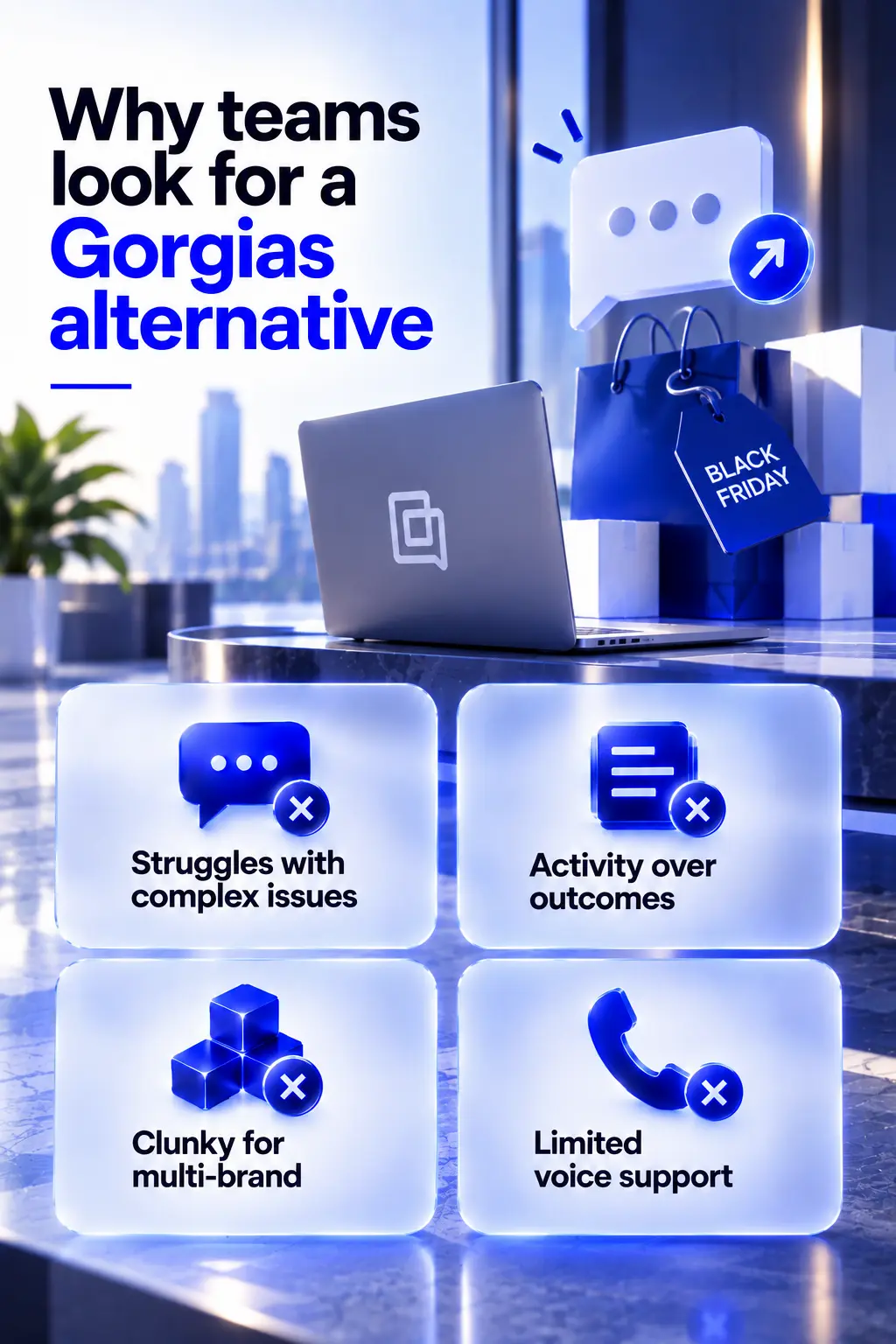
Why teams look for a Gorgias alternative
Most teams do not leave Gorgias because they hate it. They leave because the bill grows fastest at the worst possible time.
Gorgias charges by the conversation, not by the seat. A store selling ten times its normal volume on Black Friday pays ten times its normal support bill that same week, right when cash is already tight.
The pressure is not only on support costs. 85% of CX leaders say customers will leave a brand after an unresolved issue on the first contact.
This makes AI resolution and effective escalation important when evaluating a Gorgias alternative.
Previous prices: There are three common complaints about the AI when reading the review:
- The AI handles simple questions well but stumbles on anything with more than one step.
- Performance is monitored in terms of activity rather than efficiency, making it difficult to calculate cost per resolved inquiry.
- Running several brands or storefronts inside one account gets clunky fast.
- Voice support exists, but it is thin next to tools built for phone-first teams.
The pricing model problem, explained properly
Every Gorgias pricing alternative on the market bills you one of three ways.
None of these models is wrong. They reward different behavior. Pick the one that matches how your volume moves.
How we evaluated these Alternatives
I judged every tool on the same seven things: pricing predictability, true resolution versus soft deflection, voice and omnichannel strength, Shopify and back-office integration depth, multi-brand handling, reporting quality, and time to value after signing up.
The 11 best Gorgias alternatives
Zendesk - best for scaling multi-department support
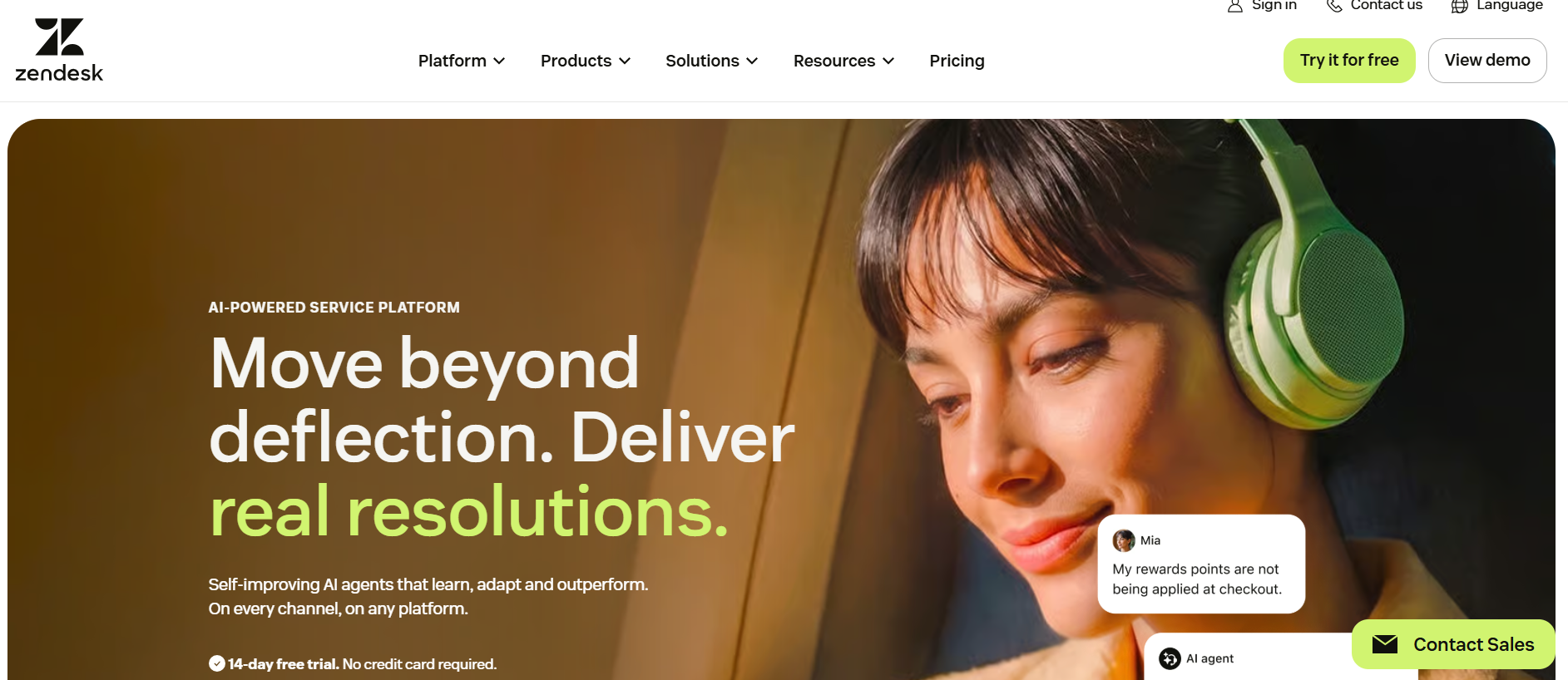
Zendesk is the old guard of customer support software, and it still earns that spot. It handles email, chat, voice, and social in one workspace, built for teams that need strict access controls.
Features:
- Unified communication from email, live chat, phone, and social media into one workspace.
- Has fine-grained permissions and enterprise access control systems for intricate companies.
- Includes flexible routing rules and robust reporting analytics.
Pros:
- Houses the largest app marketplace in the category alongside enterprise-grade routing and reporting tools.
Cons:
- Requires significant time, technical resources, and effort to properly configure and deploy.
Fin by Intercom - best for AI resolution economics
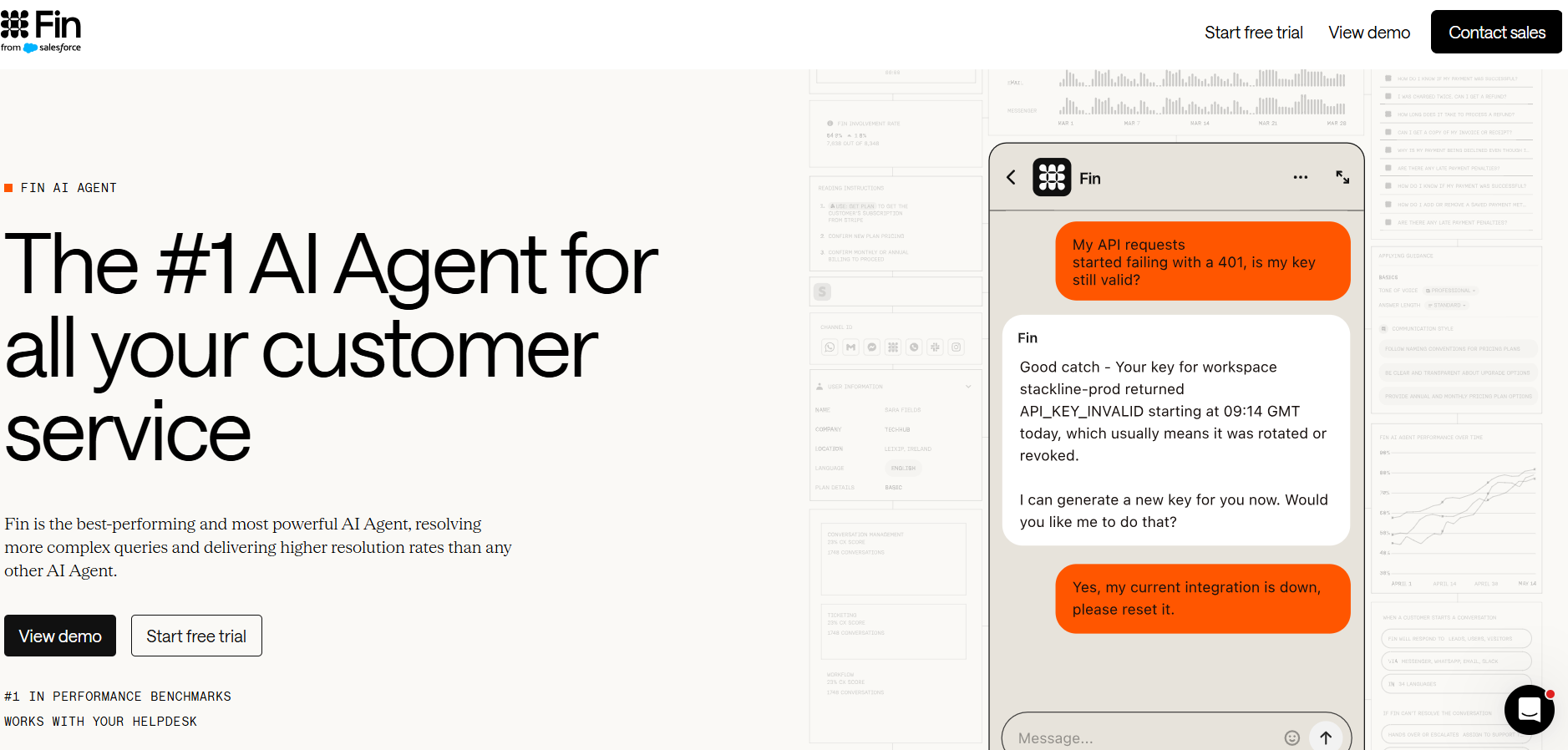
Fin is Intercom’s dedicated AI support agent designed to resolve customer inquiries autonomously. Rather than merely assisting human agents, it independently handles and closes support tickets end-to-end.
Features:
- Resolves customer issues independently across more than 50 languages.
- Operates with a chat-first architecture built for modern digital brands.
- Automates repetitive tier-one support inquiries without human intervention.
Pros:
- Delivers predictable high-volume automation without complex or hidden operational tiers.
Cons:
- Voice capabilities are limited, and it lacks built-in order-editing tools required by retail helpdesks.
Kustomer - best for relationship-centric support
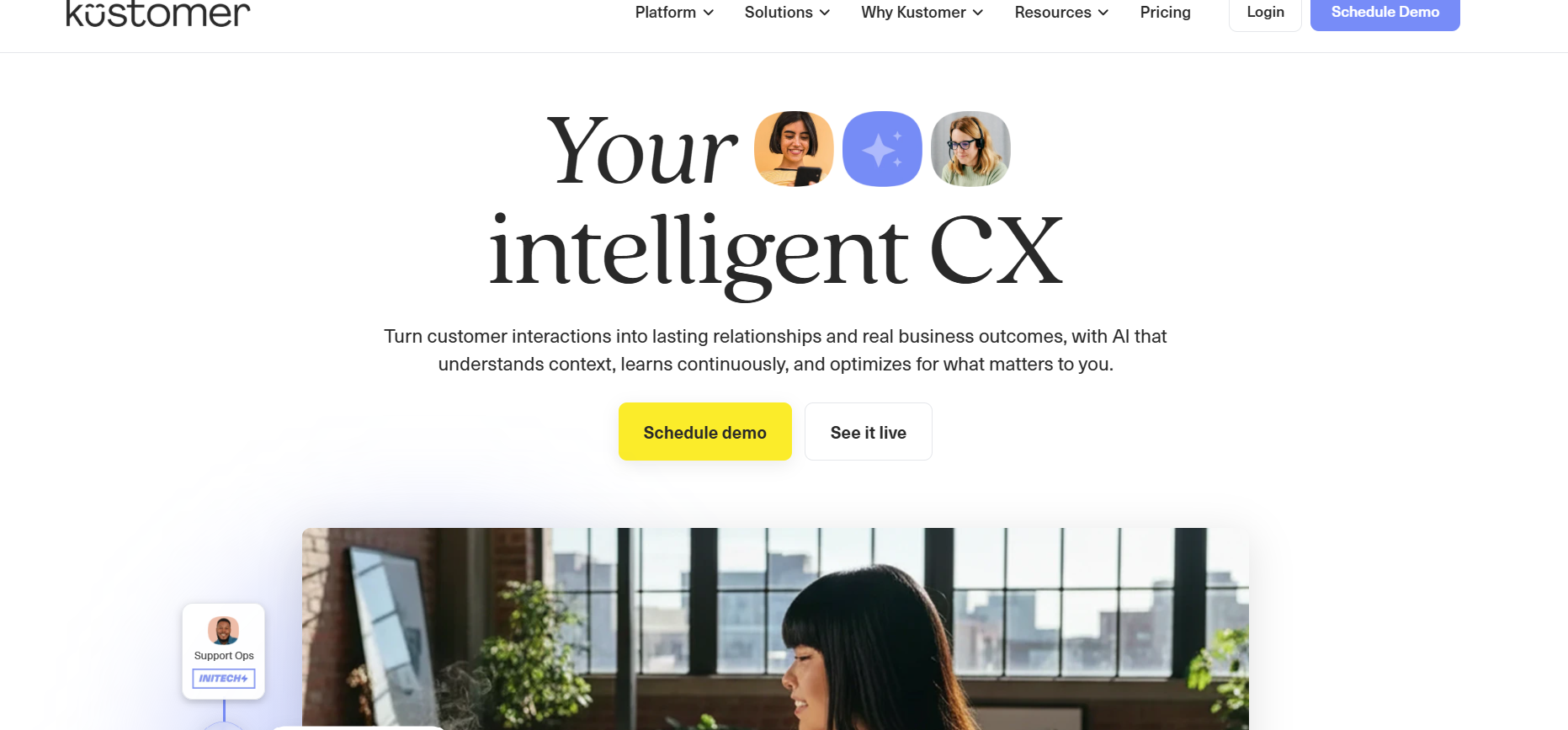
Kustomer drops the ticket queue. Every agent sees one continuous timeline per customer, across every brand and channel.
Features:
- Consolidates all customer interactions into one continuous timeline per user.
- Supports complex, multi-brand environments within a single dashboard.
- Eliminates traditional ticket queues to streamline agent workflows across channels.
Pros:
- The continuous interaction timeline prevents agents from asking customers the same question twice.
Cons:
- High seat minimum requirements push the barrier to entry beyond the reach of smaller teams.
Gladly - best for people-centered, high-touch brands
Gladly shares Kustomer's timeline approach but leans harder into voice.
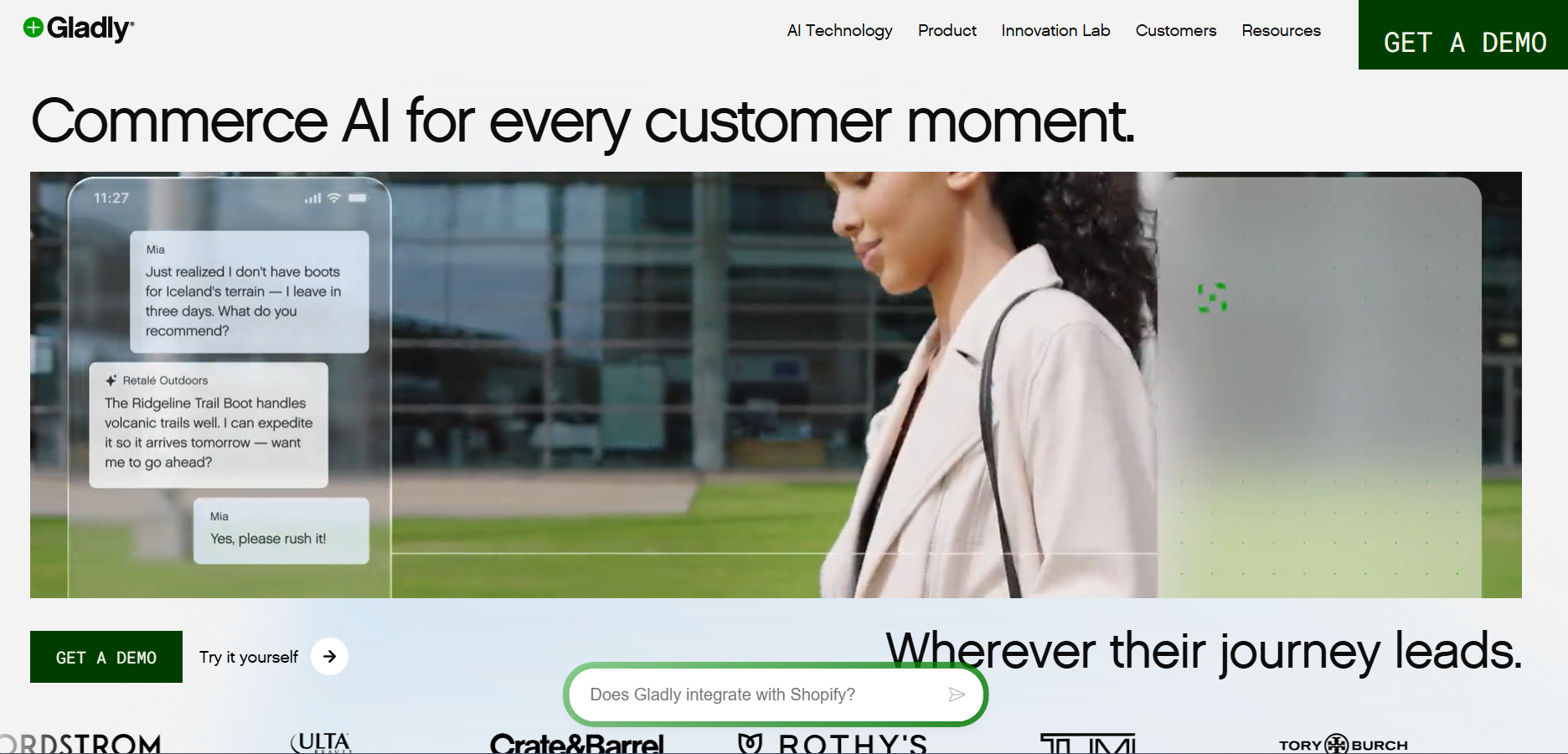
Features:
- Combines voice, chat, and email into one unified customer conversation view.
- Emphasizes voice channel capabilities alongside digital chat for high-touch service.
- Eliminates per-channel messaging friction across customer touchpoints.
Pros:
- Delivers an exceptionally strong, human-centered phone and chat experience for premium lifestyle brands.
Cons:
- Targeted strictly at enterprise organizations with high minimum contract requirements.
Freshdesk - best for budget-conscious growing teams
Freshdesk is a classic ticketing tool that scales cleanly from a small inbox to a full omnichannel setup.
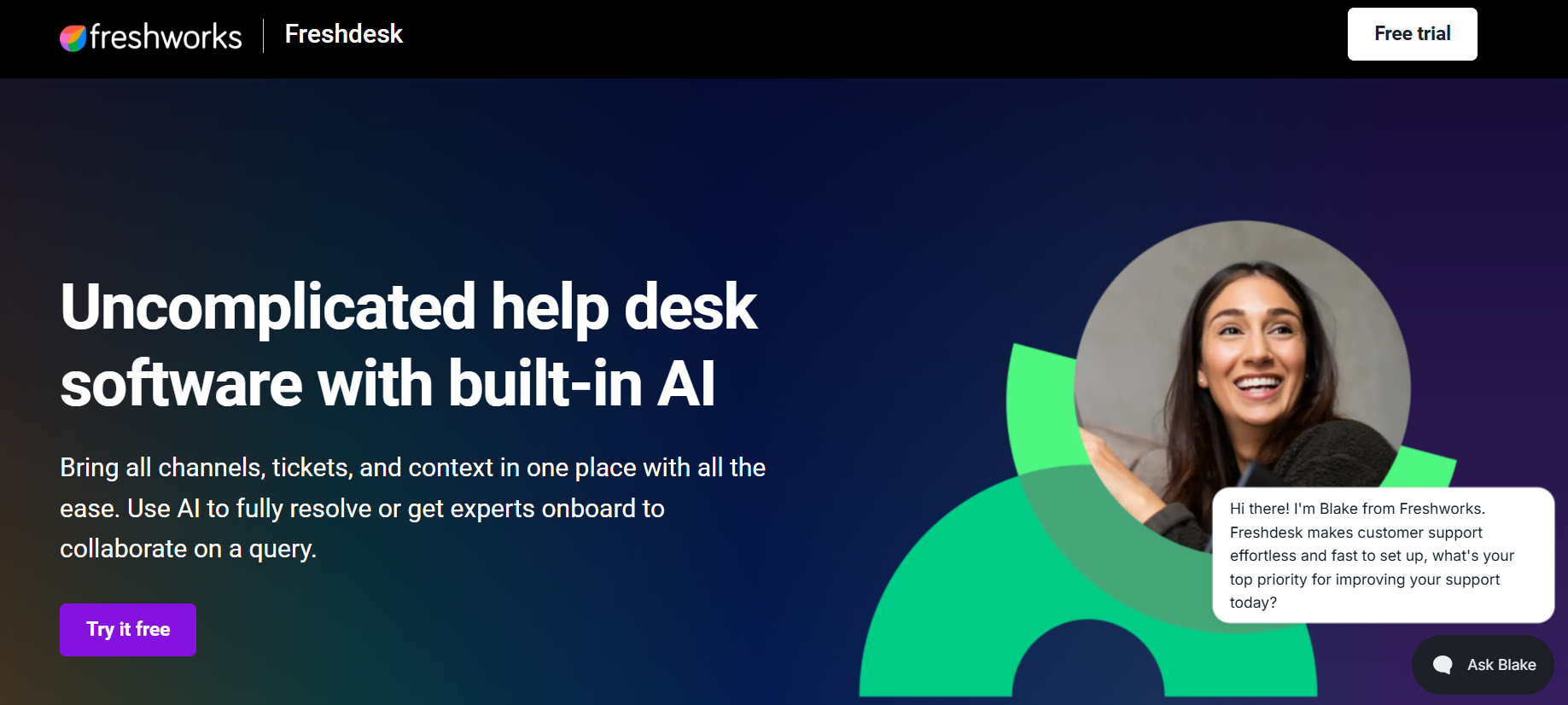
Features:
- Scales cleanly from simple email ticketing up to a multi-channel support hub.
- Upgrades from Omni that enable live chat, SMS, and WhatsApp to be integrated into the dashboard.
- Offering simple ticket management workflows.
Pros:
- Easy to onboard and predictable for mid-market organizations that are growing their channels.
Cons:
- Advanced AI capabilities require add-on modules, and unused AI session packs expire monthly.
Help Scout - best for simplicity and fast onboarding
Help Scout is a polished shared inbox. It skips the clutter that builds up in older helpdesks.
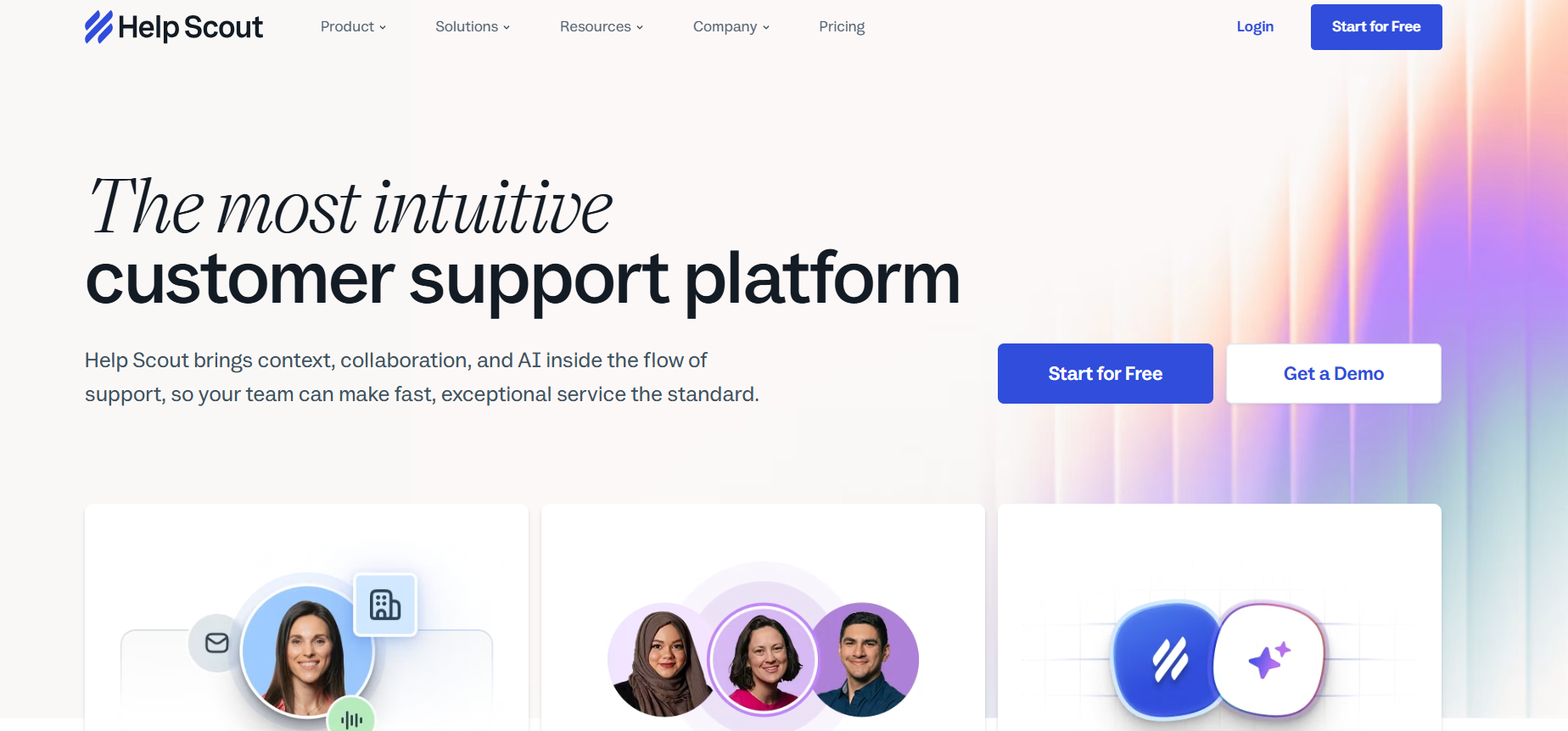
Features:
- Operates as a clean shared inbox optimized for personal, human-toned email support.
- Includes built-in self-service knowledge base tools for customer self-service.
- Offers straightforward setup processes designed to get small teams up and running quickly.
Pros:
- Extremely quick to learn and deploy, providing a calm alternative to bloated helpdesks.
Cons:
- Lacks deep e-commerce API integrations and does not support a native voice channel.
Re: amaze - best for lightweight multi-store ecommerce
Re: amaze, now owned by GoDaddy, brings email, chat, social, and SMS into one dashboard for merchants running several stores.
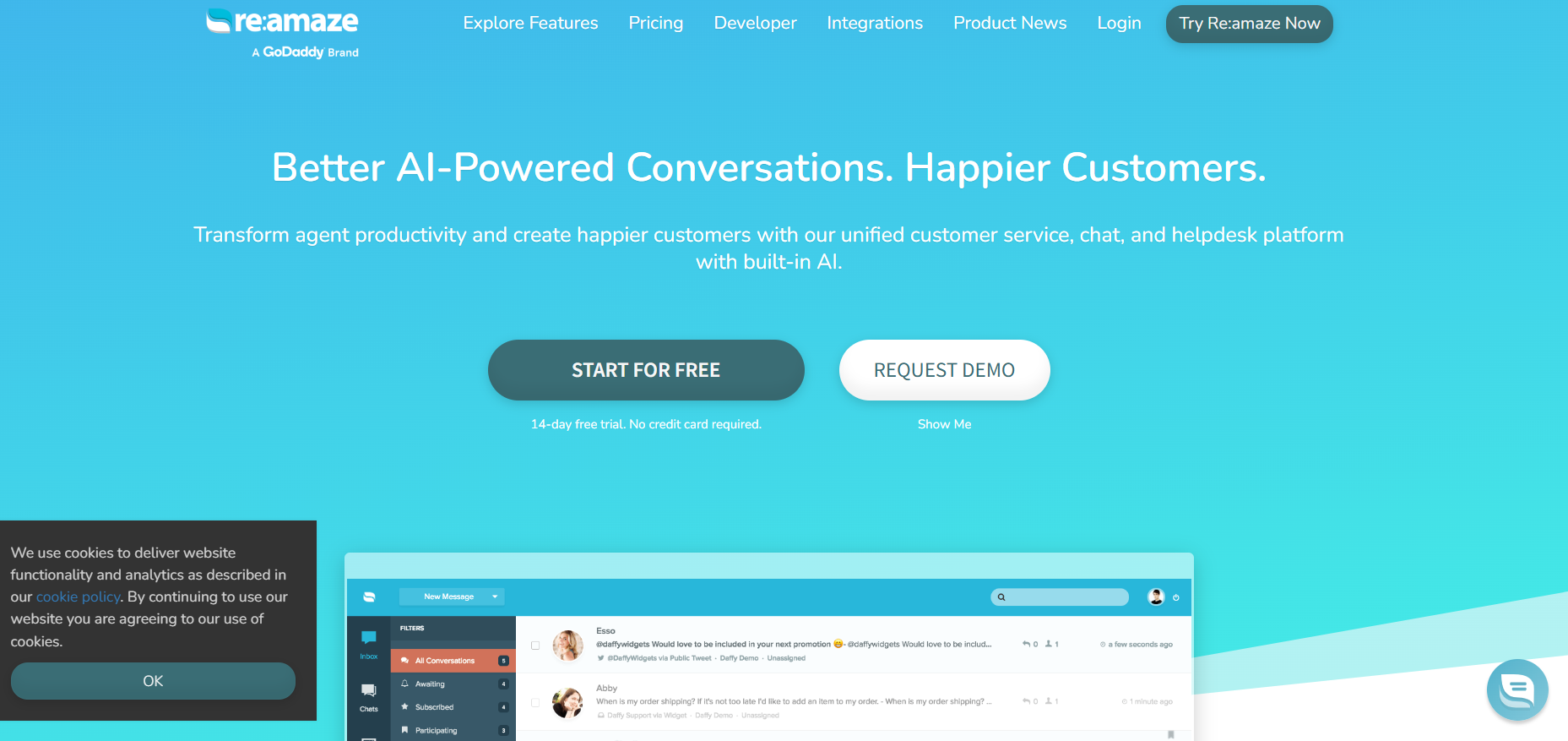
Features:
- Emails, live chat, and SMS are all in one inbox.
- It has built-in integration for e-commerce platforms, including Shopify, WooCommerce, and BigCommerce.
- It has native functions like SMS and Voice over Internet Protocol (VoIP).
Pros:
- Offers a powerful multi-store inbox that effectively supports growing multi-brand merchants.
Cons:
- Reporting features are thin, and order-editing depth is shallower than specialized e-commerce tools.
Tidio - best for chat-first small stores
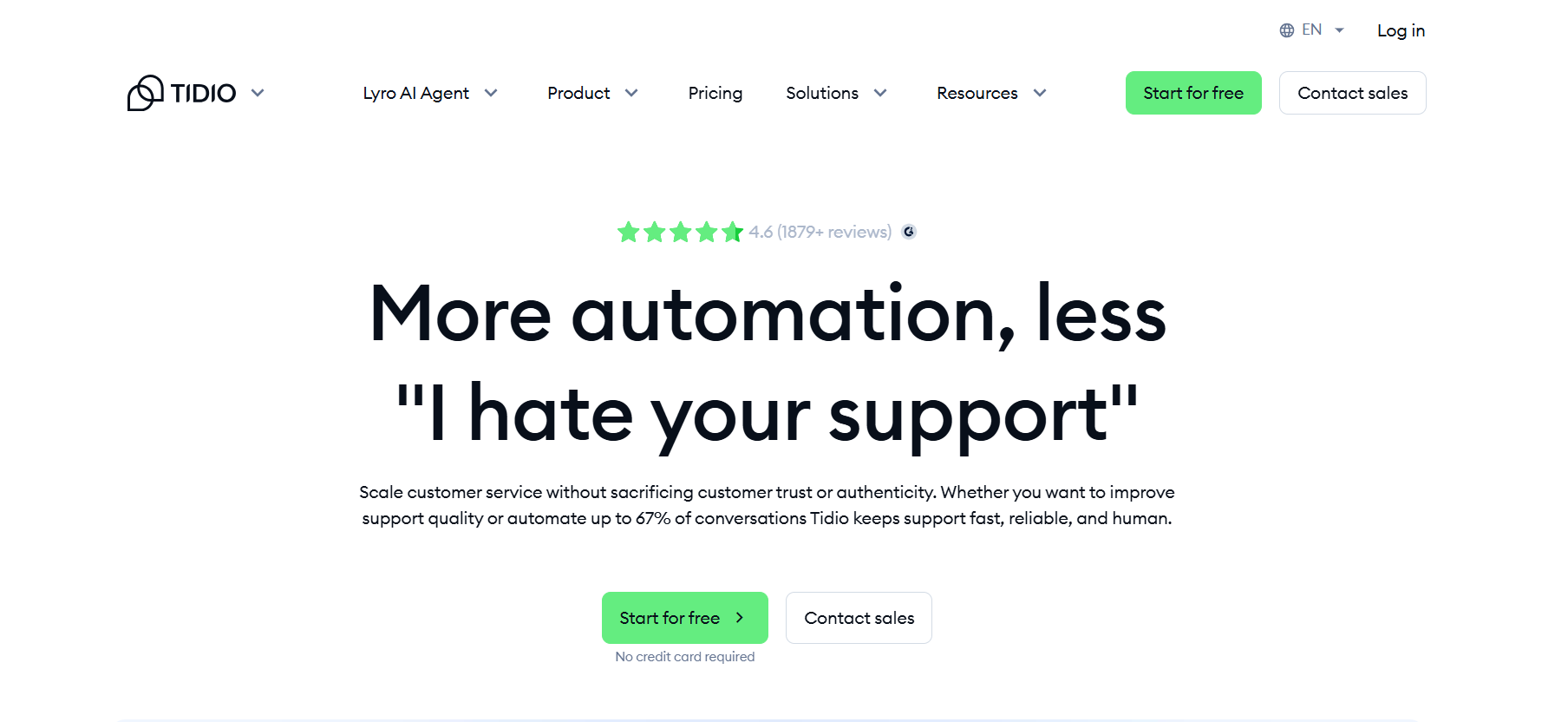
Tidio pairs a light ticketing system with aggressive live chat and chatbot tools built to catch website visitors before they leave.
Features:
- Utilizes live chat with triggers to engage visitors.
- Has a tool for building chatbots where you can create workflows without programming.
- Features a basic ticketing system for managing customer questions.
Pros:
- Sets up extremely fast, helping small online store operators capture sales directly through live chat.
Cons:
- Chatbots struggle with complex nuances, and the system cannot handle multi-team routing logic.
Zoho Desk - best inside an existing Zoho stack
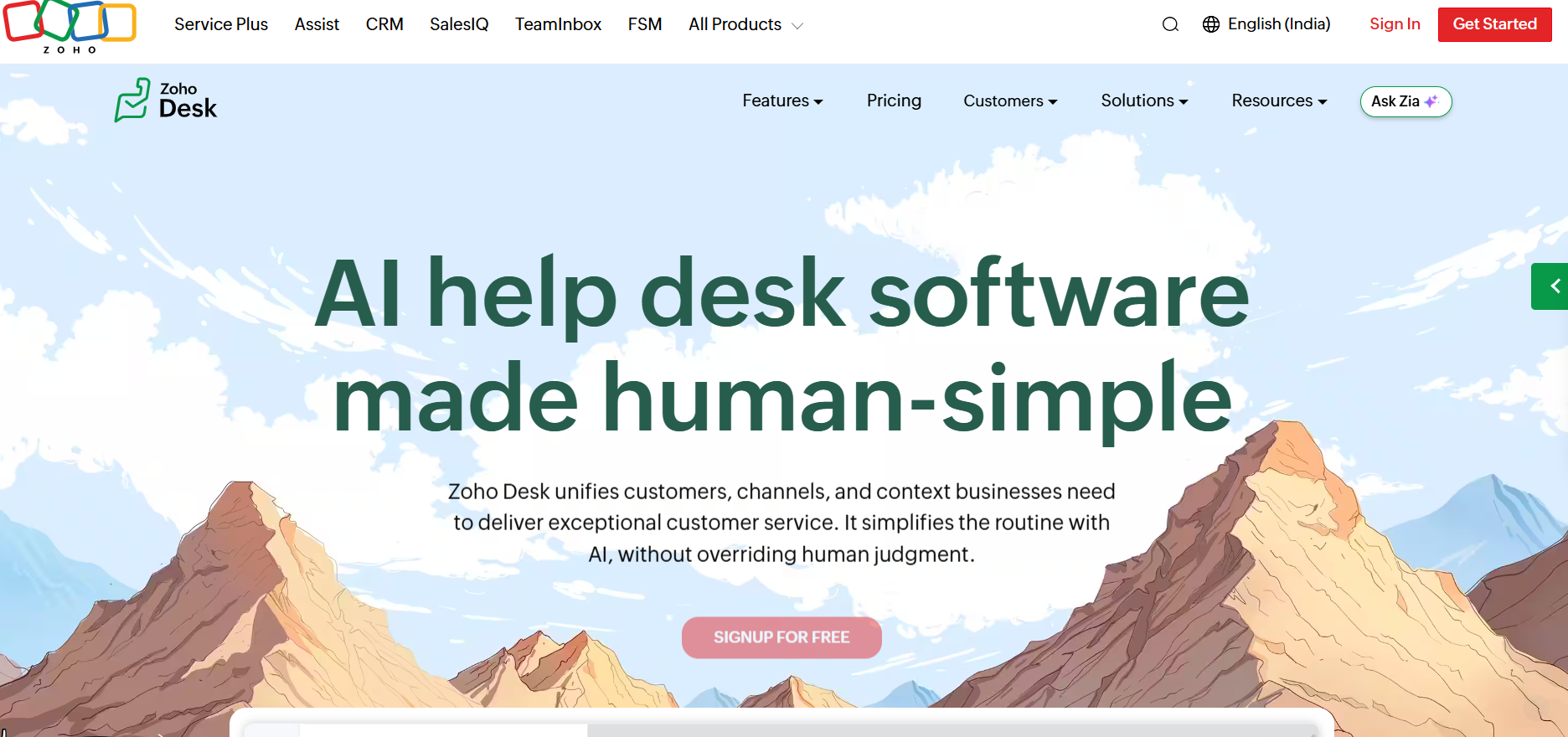
Zoho Desk is a flexible ticketing tool built to plug into the wider Zoho suite.
Features:
- Plugs natively into the wider Zoho software suite, including CRM, Inventory, and Books.
- Supports custom API-driven workflows and tailored ticket management rules.
- Provides flexible channel management across email, chat, and phone.
Pros:
- Extremely practical and cost-effective for organizations already running their operations on Zoho.
Cons:
- Features a dated user interface and requires significant manual setup when used standalone with Shopify.
Thunai - best for adding agentic voice and AI resolution over an existing stack
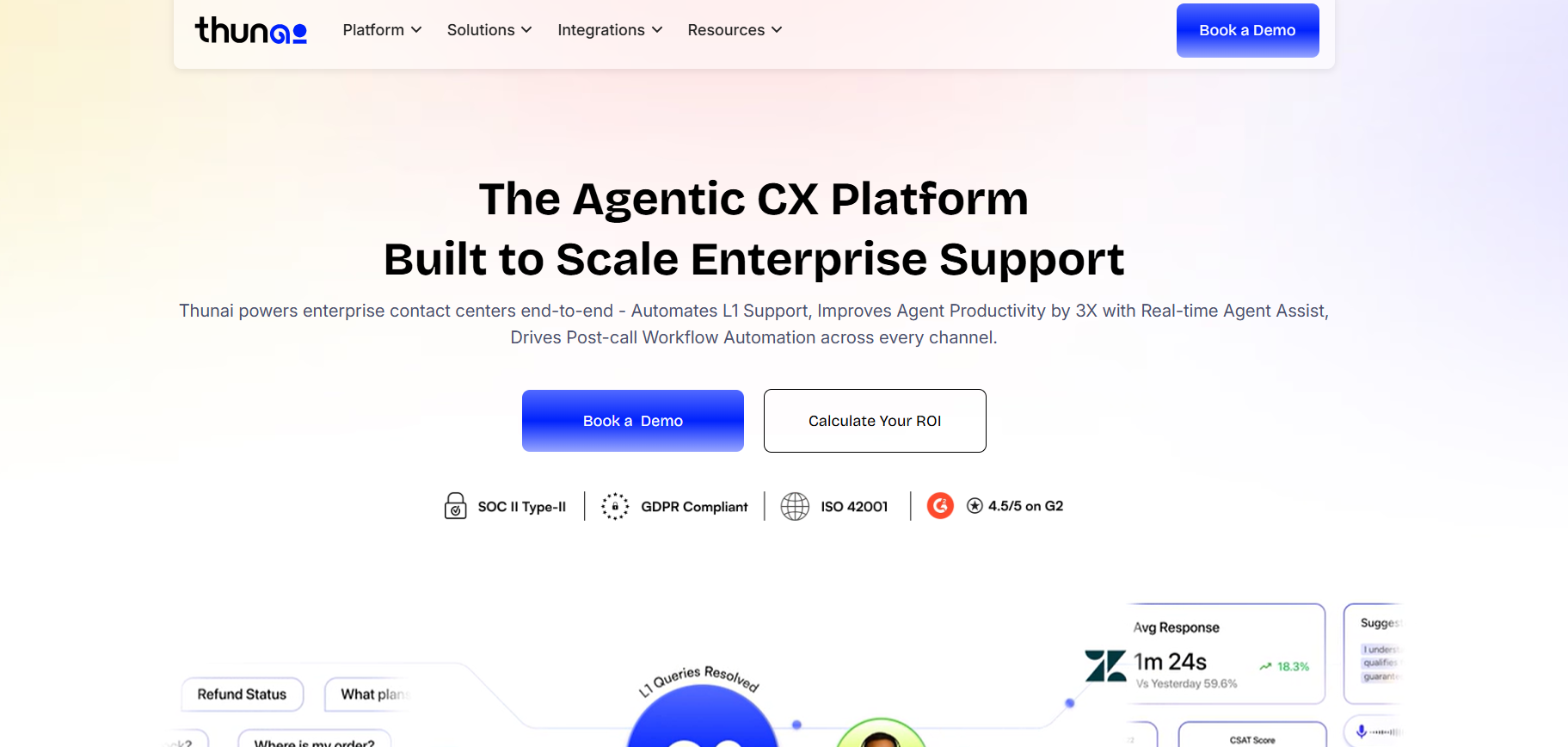
Thunai sits over your current helpdesk or call center optimization and handles voice, chat, and email resolution with agentic AI, plus automated QA on top.
Features:
- Deploys agentic AI to automatically resolve complex phone, chat, and email inquiries.
- Sits directly on top of legacy contact center insights without requiring a complete rebuild.
- Includes automated Quality Assurance (QA) to monitor interaction standards continuously.
Pros:
- Handles complex multi-step voice workflows that traditional chat-focused bots cannot manage.
Cons:
- Excessive and overly complex for small businesses looking for a simple single-store inbox.
Crescendo and Decagon - best for outcome-priced AI CX
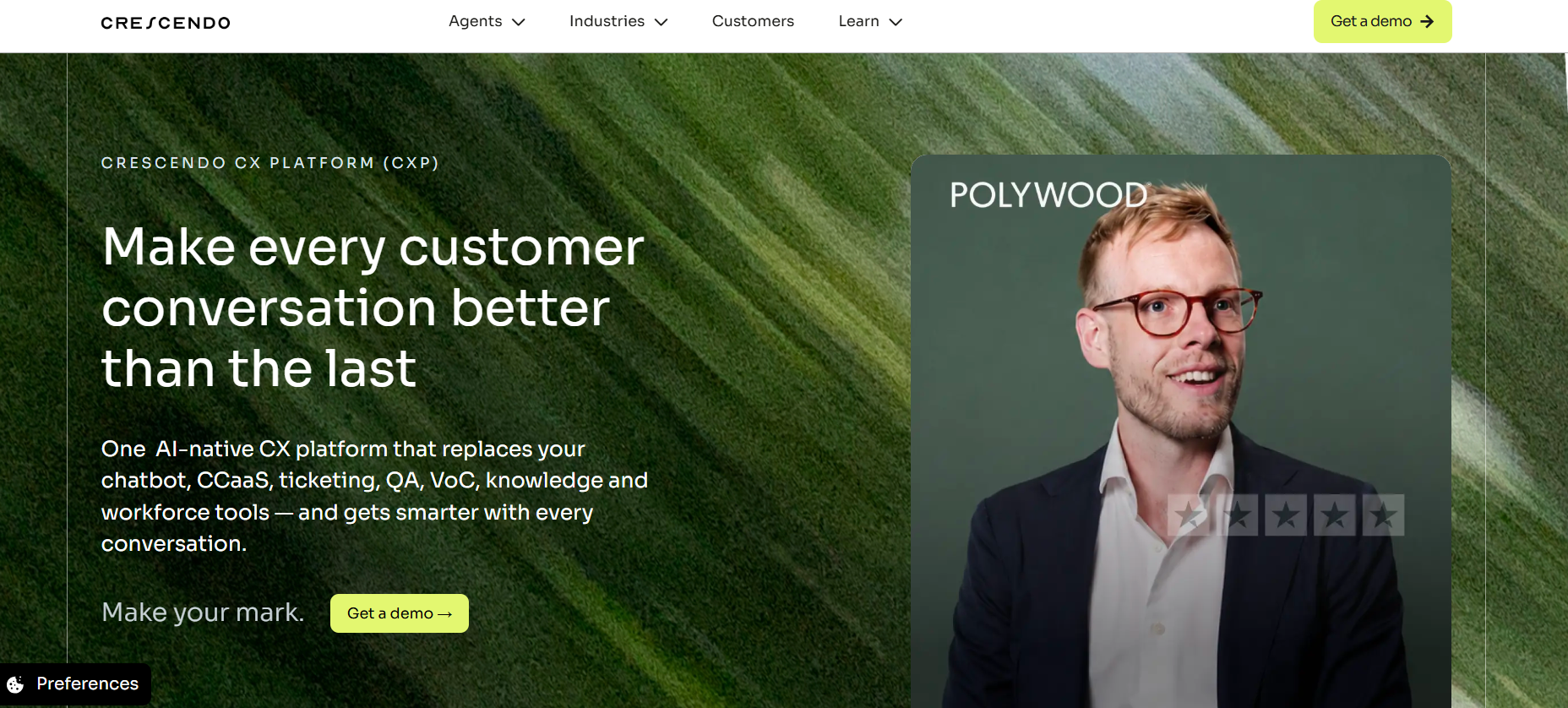
Crescendo and Decagon work more like a managed service than software. They own the AI workflow and the human fallback, closer to a BPO than a SaaS tool.
Features:
- Delivers a fully managed customer support service combining AI automation and human agents.
- Takes full ownership of building, maintaining, and executing automated support workflows.
- Provides complete operational coverage without requiring internal software management.
Pros:
- Ensures you never pay for unused software licenses or idle agent seats.
Cons:
- Requires giving up direct technical control over your support stack, making future migration difficult.
Full comparison table
Two paths: replace the helpdesk, or add an AI layer
Most teams searching for AI customer service for ecommerce assume they must tear out their whole stack. They do not.
A full Gorgias replacement means exporting years of ticket history, retraining agents, and rebuilding every automation rule from zero.
That path makes sense only when the core system actually blocks the business. It is slow, it takes months, and it is hard to undo.
Adding an AI layer, the way Fin or Thunai work, sits on top of what you already run. The AI catches routine questions and resolves them, then hands anything complex to a human.
Intercom report shows that only 10% of support teams have reached mature AI deployment, where AI is fully integrated into their support operations and working at scale.
No agent retraining. Value shows up in weeks, and you can turn it off without breaking anything underneath.

How to compare quotes on cost per resolution
A $25-per-seat helpdesk looks cheaper than a $1.50-per-resolution AI agent, until you run the real numbers.
Comparing cost per resolution support properly means adding seat cost, ticket overage fees, AI fees, and the time your team spends maintaining automation.
Here is a worked example at 10,000 monthly tickets, with AI resolving 4,000 of them.
Vendor A looks more integrated on the sales call. Vendor B still comes out 30% cheaper per ticket at this volume. Run your own numbers before signing.
When you should stay on Gorgias
No other source writing on this topic says it so openly. But here is the thing, if you are using Gorgias, have just one Shopify store, the volume of tickets remains constant throughout the year, and the agents mostly spend their time editing orders and making refunds in the chat window.
If you do not require any phone support at all and never use more than one brand, then Gorgias will always remain the best helpdesk for Shopify. Switching would only add friction you do not need.
Migration checklist
If you do decide to move, plan around these steps:
Choose in five minutes
Ready to scale customer support with AI? Book a demo to see how Thunai can automate resolutions across voice, chat, and email.
FAQs on Gorgias Alternatives
Why do ecommerce teams switch from Gorgias?
Mostly the pricing. Ticket-volume billing rises fastest during peak sales, right when support teams are stretched thin. The AI also struggles with multi-step issues, reports track activity over results, multiple brands get harder to manage, and voice support stays thin.
What is the best Gorgias alternative?
No single winner exists. Re: Amaze fits Shopify-only simplicity. Fin wins on AI pricing. Kustomer fits multi-brand CRM needs. Thunai fits enterprise contact centre and multi-brand support layered over an existing system.
Is there a cheaper alternative to Gorgias?
It depends on the pricing model, not the sticker price. Gorgias starts cheap, but overage fees ($0.36 to $0.40 per ticket) and AI fees ($0.90 to $1.50) add up fast at scale. Compare per-seat and per-resolution tools at your real volume before deciding.
Do I have to migrate off my helpdesk to add AI?
No. An AI layer on top of your current helpdesk catches routine tickets and resolves them, then routes anything complex to your team.
Is Gorgias still worth it in 2026?
Yes, for the right team: one Shopify store, steady ticket volume, no need for voice, and a small support staff. Add a second brand, real call volume, or seasonal spikes that trigger overage fees, and it stops being the efficient choice.