If your phone bill continues to rise but your customer hold times continue to be long, is your present communication system actually worth the money?
You need a good Vonage alternative that will help you handle calls, customer support, and make the most of AI.
This article will provide you with 8 alternatives to Vonage, including RingCentral, Zoom Phone, Dialpad, Twilio, and Thunai.
Why Businesses Look for Vonage Alternatives
No tool fits every team. Here is why buyers start looking at Vonage alternatives.
- Cost adds up. Extra lines, call recording, and advanced features raise the bill.
- Too many products. Phones, contact center, and APIs often run as separate products.
- Limited AI. AI often arrives as a paid add-on, not part of the core.
- Setup takes effort. Small teams rarely have spare IT staff.
- Support varies. When a call drops, you need help now.
Smart buyers compare Vonage alternatives before they renew. You stop paying for features you never use.
Vonage Competitors at a Glance (Add Comparison table)
This table sums up the eight Vonage alternatives. Prices were checked in October 2026, so confirm them on each vendor’s site.
Best Vonage Business Communications Alternatives
Vonage Business Communications covers calls, texts, video, and chat. These Vonage alternatives match that scope.
1. RingCentral RingEX
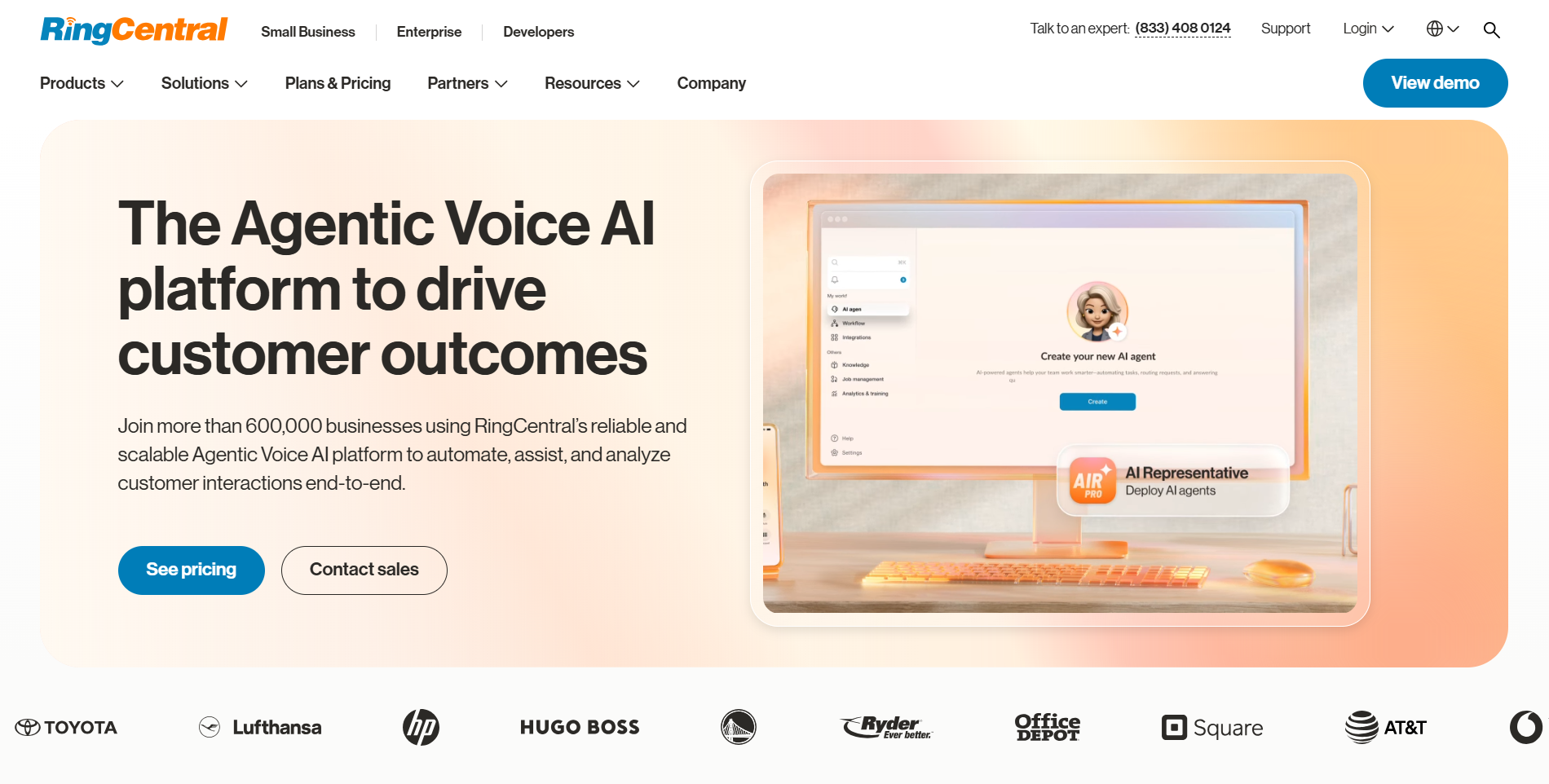
RingEX is the best like-for-like replacement for Vonage's UCaaS offering and the closest Vonage alternative for unified communications. It includes voice, SMS, fax, messaging, and video. AI is included at the plan level with no additional charges. Scales from 10 users up to enterprise-level global deployments.
Best for: Medium to large organizations looking for unified communications that include AI, CRM, and uptime SLA. This solution does not suit those customers who have come from Vonage and do not prefer an API-first approach.
What RingEX does well:
- Uptime SLA: 99.999% uptime is promised through all plans. In case of failure of one data center, another will take control.
- AI features: AVA is the AI Virtual Assistant that allows call transcription, meeting summaries, and recall after calls without an extra license. You may choose AIR for off-peak hours and extra traffic.
- Live Support: Free live support is available 24/7 through phone, chat, and email support.
- Global presence: Cloud PBX works in more than 40 countries. Local numbers are available in more than 200 area codes.
Watch out for: The admin panel is deep. Small teams may not use every feature.
Pricing: $20 Core, $25 Advanced, $35 Ultra per user per month (annual); $30, $35, $45 monthly.
2. Zoom Phone
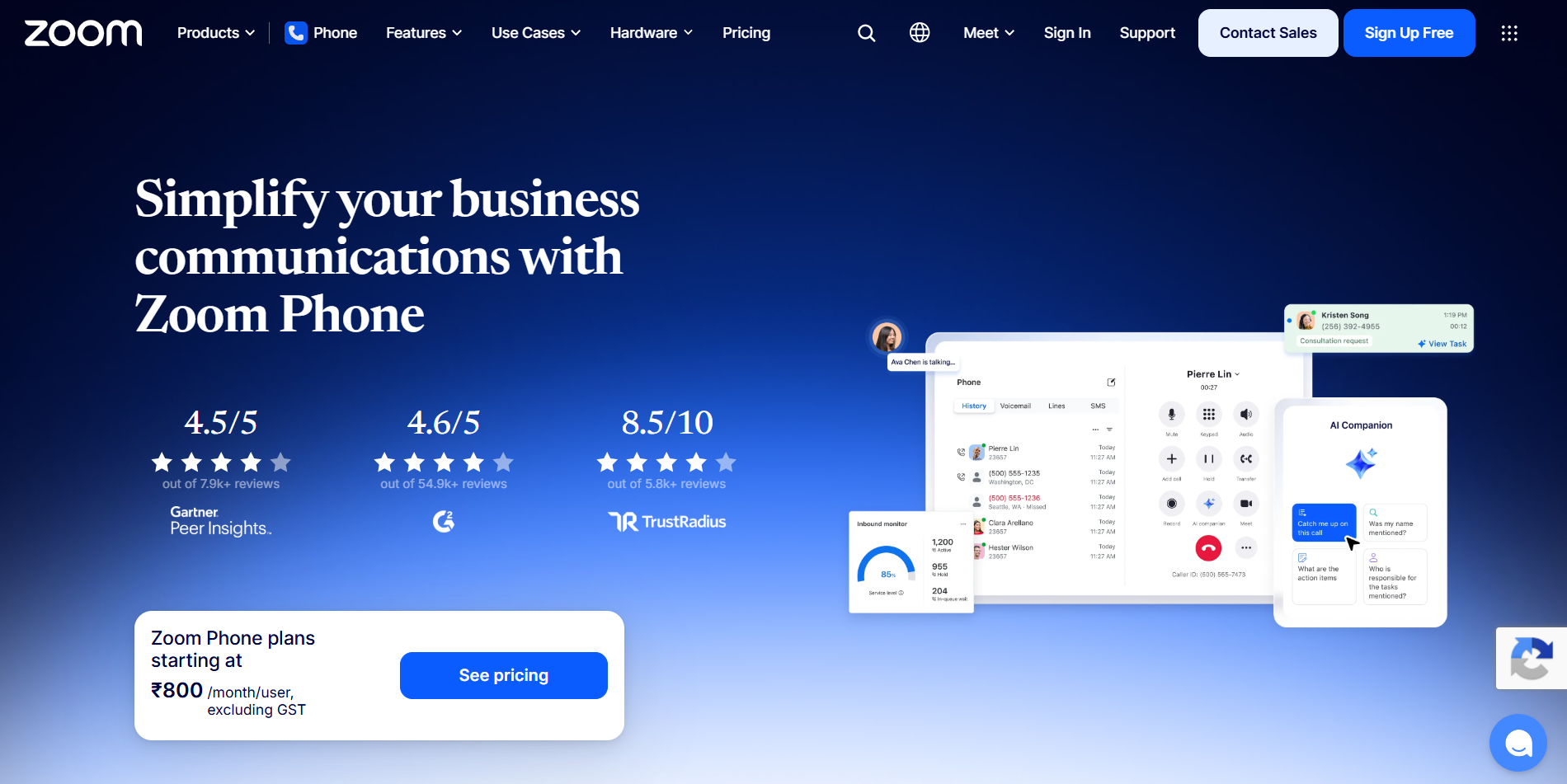
Zoom Phone adds cloud-based phone services to an app that your employees use regularly. Zoom Phone is one of the easiest Vonage alternatives to implement. Everything from calls to meetings to chats takes place in one single place without the need for logins.
Best for: Teams who are already using Zoom and would like less software to learn.
What Zoom Phone does well:
- One app: Calls, meetings, and chat sit side by side. A call can turn into a video meeting in one click.
- Easy rollout: Admin tools are simple and clear. A small IT team can run the system alone.
- AI help: Zoom’s AI Companion offers summaries and notes. Check which features your plan includes.
- Familiar feel: Staff already know the app. That cuts training time and speeds up adoption.
Watch out for: Contact center depth is lighter than in specialist tools.
Pricing: Starting from $10 per user per month, $15 for US and Canada Unlimited.
3. 8x8
8x8 blends phone, video, chat, and contact center in one platform. It is a frequent pick among Vonage alternatives for firms with staff in many countries. One vendor and one contract cover every office.
Best for: Mid-size and large companies with international teams.
What 8x8 does well:
- Global calling: It reaches many regions with one provider. This helps teams that call across borders every day.
- One platform: Voice, video, chat, and contact center sit under one vendor. You manage one contract and one admin view.
- Analytics: Reports show call volume and team activity. Managers can spot trends and fix gaps fast.
- Scale: It increases as you add more people and more offices. There is no need to change tools when you grow.
Watch out for: The features and plans differ from one level to another. Make sure you get a plan map.
Pricing: From $15 (Express), $24 (X2), $44 (X4) per user per month; contact center X6 to X8 is priced from $85 to $140.
4. Nextiva
Nextiva is known for warm, helpful service. Staff picks up its tools fast. Among Vonage alternatives, it is one of the calmest switches.
Best for: Small and mid-sized teams looking for easy-to-use and good customer service.
What Nextiva does well:
- Strengths: It’s highly rated for its fast and friendly customer service. Those who work in non-IT teams enjoy it the most.
- Simple Communication tools: Making calls, sending instant messages, and making video calls are all very easy things to learn. Employees can learn how to use these tools in just one day.
- Smooth transition process: Small companies don’t have problems transitioning from Vonage to Intermedia.
Watch out for: Very large enterprises may want deeper customization.
Pricing: From $15 (Core), $25 (Engage), $75 (Power Suite CX) per user per month.
5. Dialpad
Of all the Vonage options available, Dialpad relies heavily on call data. It converts calls to real-time transcriptions and analysis. Managers get information about what the clients are saying without listening to each conversation.
Best for: Sales and support teams that want call insights and coaching.
What Dialpad does well:
- Live transcription: Text appears on the screen when someone speaks. The representatives do not need to make notes about everything instead they will be able to focus on the client.
- Call summaries: Notes and tasks come immediately after the call. The managers do not waste time listening to long records.
- Training: Managers analyze patterns from multiple calls. They use these for coaching the representatives.
- AI inbuilt: This is the case where AI is integrated within the core product. You do not require any additional solution.
Watch out for: Insight will only be useful if managers utilize it. Training should be part of the plan.
Pricing: $15 Standard and $25 Pro per month per user (annual) and Enterprise on request.
Vonage Contact Center Alternatives
Customers want instant replies. Teams want lower costs. Hiring more agents isn’t always the answer. Among Vonage alternatives for contact centers, Thunai stands out.
6. Thunai
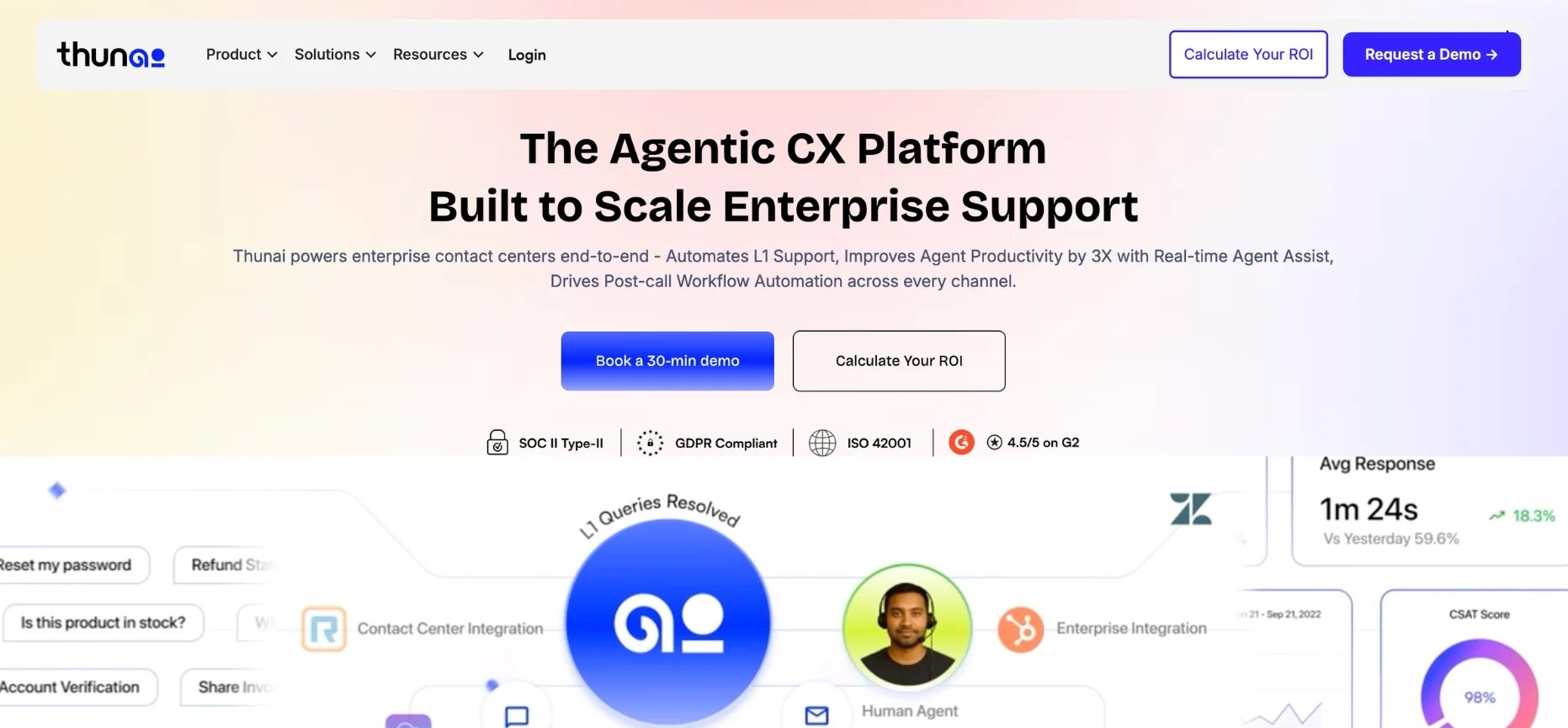
Thunai revolves around AI agents. AI is not an add-on. It is the main component of the software. The agents respond, dispatch, and solve customer queries at any time of the day, thus reducing the waiting time of the customers. As compared to Vonage, it is the one that was made keeping AI-based customer support in mind.
Best for: Teams working in support centers and contact centers looking for AI-based customer support.
What Thunai does well:
- AI voice agents: They answer in a natural voice. Common questions, like order status or store hours, get fast replies with no queue.
- Smart routing: Complex issues go to the right human agent with full context. Customers never repeat themselves.
- Knowledge-based answers: Replies come from your own help docs and policies. Answers stay accurate and on brand.
- 24/7 coverage: No call goes unanswered at night or on weekends. Traffic spikes don’t create long waits.
- Fast setup: Teams can go live without a long IT project. You see value in days, not months.
- Better agent days: Routine work goes to AI, so humans handle complex talks. Morale and customer happiness both rise.
What teams say: Users often praise the quick setup, the natural voice, and the drop in repeat tickets. Users value the capabilities of Thunai for making customer support easy and providing company information. The software is also lauded for its workflow automation features, voice agents, and its compatibility with other business applications.
Learn more: Read how Thunai stacks up in Thunai vs Parloa and in the best AI collaboration platforms roundup.
Watch out for: Thunai is AI-first. In case you require basic desk phones only, a conventional package may suit you better.
Pricing: Free plan, $9 Starter, $99 Business/Pro, custom pricing, with unlimited seats.
Other options: Five9, Genesys, and Talkdesk are more sophisticated alternatives offered by Vonage for extremely large contact centers. They will cost you more and take more time to implement.
Vonage API (Nexmo) Alternatives: Twilio, Plivo, and Telnyx
Developers have their own Vonage alternatives. Vonage bought Nexmo and built its API platform on it. These three suit builders.
7. Twilio
Of the Vonage alternatives for developers, Twilio is the best known. It has deep docs and a large community.
Best for: Dev teams who want the biggest ecosystem and many ready tools.
What Twilio does well:
- Many channels: One platform offers voice, SMS, video, and email APIs. Developers skip the vendor sprawl.
- Docs and community: Guides and answers are easy to find. Teams solve problems faster.
- Scale: It is proven at high message and call volumes. Growing apps can trust it under load.
Watch out for: Prices may increase according to usage. Be aware of notifications and announcements.
Pricing: $0.0083 for each SMS going out of the United States and $0.014 for voice minutes going out.
8. Telnyx
Telnyx runs its own global network. It is more efficient in terms of call quality and delay than other Vonage competitors.
Best for: Programmers looking to have control over voice quality and routing.
What Telnyx does well:
- Private network: Decrease reliance on third-party providers. This will result in more control over the path followed.
- Low latency: Lowered time for call transfer. This makes voice applications sound clearer and more natural.
- Flexible APIs: Voice, SMS, and number tools fit many app designs. Developers pick only the parts they need.
Watch out for: The community is smaller than Twilio’s.
Pricing: Pay as you go: Voice API from $0.002 per minute and SMS from $0.004 per message part.
Bonus: Plivo
Plivo is a simple, often cheaper option for voice and SMS. Startups and lean teams like its focus.
Best for: Startups and lean teams that want clear pricing.
What Plivo does well:
- Clear pricing: Costs are easy to forecast. Lean teams avoid surprise bills.
- Core coverage: It handles voice and SMS well. Most small apps need nothing more.
- Quick start: Fewer extras mean less setup work. Developers launch fast.
Watch out for: Fewer add-on products than Twilio.
Pricing: Pay as you go, with US SMS rates reportedly raised in 2026, so check plivo.com/pricing for the current rate.
Vonage Business vs RingCentral: Quick Comparison
The short take: RingCentral offers more features, built-in AI, and a stated uptime commitment. Vonage can feel lighter. If you’re weighing Vonage alternatives for AI-led support, compare both with Thunai.
How to Choose a Vonage Competitor

A well-planned strategy will guarantee that you can easily select from the many Vonage alternatives available.
- Know your requirements. Consider factors such as the volume of calls, number of employees, and computer programs.
- Prepare a budget. Get a quote for everything from installation to upgrades.
- Check your technology platform. Make sure that the system you choose is compatible with your CRM and helpdesk programs.
- Look at AI. Is it built in or added later? Thunai’s AI agents are core to the platform, not a bolt-on. See the Thunai vs Parloa breakdown for a closer look.
- Test before you buy. Run a pilot with real agents and real calls.
- Read honest reviews. Look for patterns, not one-off comments.
- Plan the switch. Ask about number porting, setup time, and training.
Rule of thumb for Vonage alternatives:
- Phone Suite: RingCentral, Zoom Phone, 8x8, or Nextiva.
- Call insights: Dialpad.
- Custom Applications: Twilio, Plivo, or Telnyx.
- AI to handle support and cut wait times: Thunai.
Looking for a real-life demonstration of AI assistance? Book a demo from Thunai and pit it against the list of Vonage alternatives.
FAQs
What is the best Vonage contact center alternative?
Thunai is one of the options to consider when you would like AI agents to handle all customer inquiries without any delays.If you have an extensive call center that needs enterprise solutions, Five9, Genesys, and Talkdesk should also be considered.
What are the best Vonage API alternatives?
Twilio, Plivo, and Telnyx are some of the options to consider when you are a developer working on your voice and messaging applications.
What is the time period needed to move from Vonage?
The time required to migrate is dependent on the type of phone system you have, porting of numbers, and complexity of your communication process. Simple migrations will only take a few days, whereas complex migrations will take weeks.
Can AI take the place of humans in their roles?
AI has the ability to handle routine questions by customers and forward them to the correct department. But when it comes to complex issues, human intervention is essential.