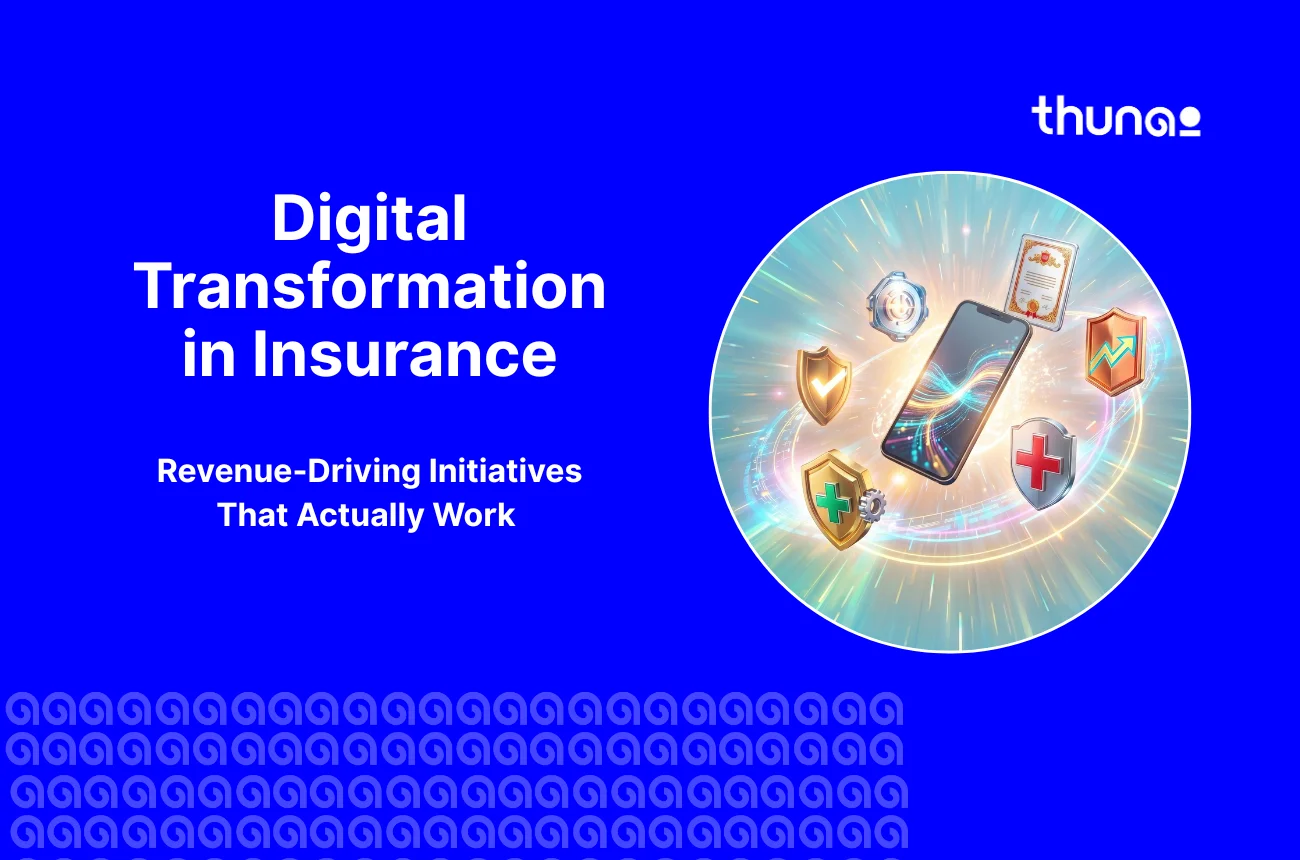

Are you being pushed to grow revenue while still relying on outdated systems that slow your teams down?
Yet many digital transformations in Insurance projects focus only on cutting back office costs, not driving real growth. Knowledge sits in scattered PDFs, agents waste hours on manual data entry, leads go cold without follow up, and teams juggle too many disconnected apps.
The result is lost sales, slow service, and frustrated employees.
The solution is not more tools, but digital transformation in insurance. By turning knowledge into intelligence, automating routine work, and unifying systems into one connected field stack, insurers can free their teams to sell more, serve better, and grow faster.
Introduction: Why Insurance Digital Transformation Keeps Failing
- I have sat at the head of this table for a long time, and I have seen the same story play out over and over.
- A big firm spends millions on a new tool, the board gets a flashy deck, and then two years later, we are still looking for the money. As we enter 2026, the data tells a sobering story that we can no longer ignore.
- About 70 percent of digital transformation in insurance projects fail to hit their marks for payout.
- Most of the time, it is because we fall into what I call the trap of speed. We take a slow, messy process and we use tech to make it a fast, messy process. That is not winning.
- The problem is that most firms treat tech like a cost cutting tool. They want to lower the head count or save on postage. But if you only look at the bottom line, you miss the chance to grow the top line.
- Real digital transformation in insurance means looking at how we win new business and keep the clients we already have.
- We are facing a world where medical inflation is hitting 8 percent and natural disasters are costing the industry over 100 billion dollars every single year. In this high stakes game, just being faster at being mediocre is a recipe for a slow death.
- I want to be clear with you: technology does not fix what you do not understand. If you do not understand why your agents are losing deals or why your claims take weeks to settle, no piece of software is going to save you.
- Real success happens when you stop trying to fix the old and start building the new. It happens when you move from a model of repair and replace to one of predict and prevent. That is what we are going to talk about today.
- Digital transformation in insurance is not just how to save a buck, but how to find a million more.

What Is Digital Transformation in Insurance?
When people ask me what this phrase means, I tell them to forget about the buzzwords. At its heart, digital transformation in insurance is the total move to modern ways of working.
It means using AI workflows, cloud setups, and automated tools to change how a company wins in a crowded market.
It is about moving from a reactive way of life to a proactive way of winning. If we are just digitizing paper, we are failing. True change re-engineers the whole way work flows to be led by data.
We see four main parts to this change:
- Client experience: This means better paths and clear talk across all channels so the client never feels lost.
- Operations: This is about faster steps that end the need for manual work and data entry.
- Data and AI: Using facts to see what happens next with high precision, rather than just guessing based on the past.
- Products: Selling coverage inside the apps and platforms people already use, like buying travel insurance when you book a flight.
Digital transformation in insurance is different from retail or banking. We have systems running on code that was written before most of my staff were born.
You cannot just turn that off and hope for the best. You have to build new, smart layers on top of those old foundations.
That is where the real work happens. It is not about a total redo, it is about a smart build up that honors the rules of our field while moving at the speed of the modern world.
The Real Benefits of Digital Insurance Transformation
The gains in this space are not just numbers on a page, they are the difference between leading the market and leaving it.
Companies that get this right grow five times faster than their peers and see eight times the profit. That is a gap that no amount of traditional sales training can close.
Digital transformation in insurance allows us to bridge this gap by making every part of the firm smarter.
Let us look at what happens when you commit to this path:
- Operational cost drops: Firms see a 25 percent to 40 percent drop in what it costs to run the business.
- Client retention: Top performers keep 92 percent of their clients in digital channels.
- Staff output: Every agent saves about 2.5 hours every single day because they are not stuck doing paperwork.
- Claims speed: Cycle times drop by 40 percent to 60 percent, which makes for very happy policyholders.
- Payout on tech: Some firms see an 8X return on their money within the first month for sales tools.
We also see a massive jump in client satisfaction. In fact, leaders in this space see their Net Promoter Scores jump by 32 points.
In a world where people shop around for the lowest price, that kind of loyalty is worth its weight in gold.
And it pays off for the owners too, P and C firms that lead in client experience see a 65 percent advantage in what they return to their shareholders.
Digital transformation in insurance is the only way to reach these heights. If you can keep a client for one more year, your profit can jump by up to 95 percent.
The 5 Digital Initiatives That Drive Revenue (Not Just Cost Savings)
Initiative 1: The Active Knowledge Base (Beyond Static PDFs)
- Every firm I know is buried in old PDFs and files that no one reads. The rules change, but the files stay the same. This leads to what I call the truth gap.
- For example, a marketing file might say a trial lasts 14 days, but the legal rules say 30 days. When an agent gives the wrong answer, you lose trust and you might even break the law.
- Digital transformation in insurance starts with a smart brain that links all your apps and files together. This system does not just store data, it looks for fights between documents in real time. It finds the truth and makes sure everyone is on the same page.
- This setup cuts down on bad answers by 95 percent. It also gets your new staff ready to sell 60 percent faster.
Initiative 2: Voice-First Data Capture (End of Manual Entry)
- My agents are salespeople, not typists. Yet, most of them spend more time at their desk than they do on the phone. About 40 percent of people in our field quit because they are drowning in desk work.
- That is a waste of talent and a waste of money. Digital transformation in Insurance means using smart tools that can now listen to a call and fill out the CRM for you.
- They take the notes, set the tasks, and update the deal status while the agent is still on the line. This saves every agent 2.5 hours a day. If you have a team of ten, that is 25 hours a day of new selling time.
- It also makes for 25 percent better data quality, which means your leads do not fall through the cracks.
Initiative 3: Automated Follow-Up Orchestration
- We lose more money through neglect than through bad pricing. About 78 percent of people buy insurance from the first person who calls them back.
- But humans are not good at the chase. We forget to call back, or we wait too long, and by then, the lead is gone.
- Digital Transformation in Insurance requires a system that tracks every quote and every chat. If a client does not buy, the system sends a note or sets a call automatically. It acts like a sales buddy that never forgets a lead.
- We see a 10 percent to 30 percent lift in sales when firms use this kind of automated chase. It also cuts the cost of finding a new client by 15 percent because you are winning the leads you already paid for.
Initiative 4: Proactive Client Intelligence (Predictive, Not Reactive)
- Most firms wait for the phone to ring. They wait for a claim or a cancellation. By the time the client calls to leave, it is too late.
- You need to know they are unhappy before they even tell you. Digital transformation in insurance uses smart math to look at emails and calls to find signs that a client is shopping around.
- It can see if they are asking about price or if they are complaining more than usual. Firms that use these signs sell 41 percent more products per house.
- They also see a 28 percent drop in people leaving for a competitor. It is much cheaper to keep a client than to find a new one.
Initiative 5: Unified Field Stacks (Eliminating App Fatigue)
- My team is tired. They have ten tabs open, five different logins, and they have to jump between screens just to help one client. This slows them down and makes them frustrated.
- Digital transformation in insurance industry needs to put everything in one place. Voice, chat, mail, and the old back end systems should all live on one screen.
- This setup speeds up how fast we can help a client by 80 percent. It also boosts client satisfaction scores by 32 points. A happy team makes for a happy client.
Challenges of Digital Transformation in the Insurance Industry
- Let us be honest: this path is not easy. If it were, everyone would have done it by now. The key wall we hit in Digital transformation in insurance is the old tech base.
- Many firms are still running on mainframes that look like something out of a museum. You cannot just rip those out. Instead, you have to use a way that wraps the old tech in new layers. This lets you move fast without breaking the things that still work.
- The second challenge is the law. We are a highly regulated field, and we have to stay legal. Every time you use an AI tool, you have to be able to explain how it made its choice.
- You have to keep an audit trail for every single move. This is why Digital transformation in insurance needs tools that are built for our field, not just general tools that do not understand our rules.
- Cultural resistance is the third big hurdle. People fear that tools will take their jobs. You have to show them that the tech is there to take the boring work, not the key work. 70 percent of Digital transformation in insurance projects fail because of this internal pushback.
- You have to win the hearts and minds of your team before you install the first piece of software. Lastly, there is the worry about data safety. As we use more digital tools, we become a bigger target for hacks.
- You have to use a zero trust setup where every login is checked and every piece of data is locked down.
How to Build a Revenue First Insurance Digital Transformation Roadmap
I tell my team that we do not need a five year plan, we need a series of 90 day wins. This is the only way to succeed in Digital Transformation in Insurance:
- Phase 1: Audit (0 to 30 days). You have to know where you are before you can go anywhere. Look at your tools and find the bottlenecks. Talk to your agents and ask them what makes them want to quit. This gives you a list of real problems to solve, not just shiny objects to chase. Digital transformation in insurance starts with a clear look in the mirror.
- Phase 2: Quick wins (30 to 90 days). Pick one or two high impact spots. Maybe it is a mobile tool for claims or a smart brain for your staff to find answers. The goal here is to show everyone that this works. You want to build momentum and get the team excited about what is next.
- Phase 3: Scale (90 to 180 days). Once you have the small wins, start linking the bigger data pools. Connect your CRM to your phone system and your back end policy data. This is where the beauty of predictive math starts to show up in your digital Transformation in insurance journey. You can begin to see buying signs and churn risks across the whole firm.
Insurance Digital Transformation Case Studies
- We do not have to guess if this works because the leaders are already doing it. Digital transformation in insurance has real proof in the field. Take AXA, for example. They did not try to change everything at once.
- They took a phased way and grew their mobile users by 50 percent. Now, 90 percent of their claims in some lines are handled without a human needing to touch them. That is how you win.
- Then look at Generali and Allianz. They used a single view of the client to triple their leads. They found that when they gave relevant, timely notes to their clients, 80 percent of them opted in for more talk.
- This is a prime example of successful insurance industry digital transformation. I also saw a case where a pet care firm used a smart brain to handle 80 percent of their support questions.
- Their resolve time went from hours to minutes, and their client satisfaction score stayed at a high 4.8. This lets their human agents focus on the big deals and complex claims that really matter.
How Thunai Powers Insurance Digital Transformation
I often get asked about the best ai tools for insurance agents, and Thunai is a name that keeps coming up. It acts like a second brain for the firm. This tool is built to handle the unique needs of digital transformation in insurance.
- Thunai Brain: It links all your docs and resolves conflicts. If your rules change, it tells you. This cuts out the bad answers and helps new staff sell much faster. It reduces hallucinations by 95 percent through verified knowledge management.
- Thunai Revenue: This module is proactive. It looks for deals in your calls and emails that a human might miss. In the context of Digital Transformation in Insurance, this module is a game changer for growth. It tells you which deals are at risk and which ones are ready to close right now.
- Thunai Omni: It puts all your chats, calls, and mails in one place. It scores the calls in real time and routes the client to the right expert every time. This helps you deflect 80 percent of support queries while keeping scores high.
- Thunai Reflect: It listens to the voice of the client to tell you what products you should build next. It finds the gaps in your service before they become a problem.
The Future of Digital Transformation in the Insurance Industry (2026–2028)
Looking ahead, we are moving into a world of prediction and prevention. We are going to stop just paying for disasters and start helping people avoid them. Digital Transformation in Insurance will make this a reality for every firm.
- Embedded insurance: This will be part of almost every big buy online. It is set to be a 700 billion dollar market by 2030. If you are not in that game, you are losing out on a massive pool of new money.
- Parametric plans: These are automatic payouts based on data events, like a flight delay or a weather reading. No claims, no wait, just an instant payout. This will be the new standard for trust in Digital Transformation in Insurance.
- AI underwriting: We will use real-time data from cars and homes to set prices every day, not just once a year. This means low risk people get better prices and we can see high risk signs before a claim happens.
The Human Element in a Digital World with Thunai
AI agents for insurance will always be built on trust, but trust grows faster when your teams have the right intelligence behind them. That is where Thunai stands apart.
- With Thunai Brain, your scattered PDFs and systems become a living, searchable knowledge engine.
- Thunai Agent Studio captures conversations in real time, updates records automatically, and removes manual data entry.
- Thunai Reflect delivers insights from every interaction, helping leaders coach smarter and improve performance.
- Thunai Revenue ensures no lead or renewal slips through the cracks with intelligent follow-up orchestration.
Together, these features create one unified intelligence layer that connects your CRM, policy systems, and workflows. The result is simple faster decisions, stronger relationships, and measurable revenue growth.
Schedule your digital transformation in Insurance strategy session with Thunai and start turning intelligence into real growth.
FAQs on Digital Transformation in Insurance
What is digital transformation in insurance?
It means redoing how a firm works using modern tools like smart math and cloud systems. You use these to give better service to your clients and find new ways to grow the money you make. Digital Transformation in Insurance turns an old, slow business into a fast, smart one that wins more often.
What are the benefits of digital transformation in the insurance industry?
You see lower costs to run the business and much faster claims for your clients. Digital Transformation in Insurance helps you keep 92 percent of your people in digital channels and gives you a much better return on every dollar you spend on tech.
What are the biggest challenges of insurance digital transformation?
The main walls are old tech systems that are hard to change and strict laws you must follow. Digital Transformation in Insurance also means dealing with a team that might be afraid of new tools or stuck in their old ways.
How is AI used in insurance digital transformation?
It helps set prices, stops people from lying on claims, and handles the routine talk. This lets your human staff aim at the big deals and give real help where a person's touch is needed most. Digital Transformation in Insurance makes the whole firm smarter without losing the human feel.
What are examples of digital initiatives in insurance?
You can use voice tools to fill out records without typing or launch mobile apps for fast claims. Linking all your info in one smart brain so everyone has the truth is another top move. Digital Transformation in Insurance turns a messy office into a smooth growth engine.
How long does insurance digital transformation take?
You can see small wins in just 30 days, but a full move for a whole firm usually takes 180 days or more. Digital Transformation in Insurance is a journey that starts with one small step and builds into a new way of winning